
Search
The Rare & Early Newspapers Hobby

Receive the Newsletter

Buy Historic Newspapers

Reflections on Decoration Day: Honoring the Ultimate Sacrifice…
May 25, 2026 by GuyHeilenman · Leave a Comment
Ten years ago today, we shared a reflection on the holiday originally known as Decoration Day. While the roots of this observance reach back to 1861 and beyond, keeping its true purpose at the forefront of our minds is a vital act of remembrance. It is the least we can do to demonstrate our gratitude for those who gave their all so we may continue to live in a nation that embraces life, liberty, and the pursuit of happiness.
From the Archives: Our Original 2016 Post
Memorial Day is a time set aside in the United States to remember and give thanks for those who sacrificed life and limb to secure the freedoms we enjoy. These are the “self-evident, unalienable rights” bestowed upon us by the Creator, as envisioned by our Founding Fathers.
In times of peace and abundance, it is far too easy to forget the staggering cost paid by so many to ensure the freedom of others. With this in mind, I was recently struck by an article in the March 20, 1861, issue of the Western Christian Advocate out of Cincinnati, Ohio.
The piece provides moving details regarding General George Washington’s famous prayer – as well-depicted in the famous painting by Arnold Friberg: “Prayer at Valley Forge.” You can access the full text of that 1861 article via the “Western Christian Advocate” shown above.

Today, as we partake in various holiday activities, our hope is that we will all take a moment to enjoy—and truly appreciate—a blessed and meaningful Memorial Day.

“Printing In The Americas” – A reference book for your shelves…
March 2, 2026 by TimHughes · Leave a Comment
 There are very few reference books which are exclusive to newspapers, so some of the better ones are about printing in general, peppered with historical accounts of newspaper publishing as well.
One of my favorites is such a book, titled “Printing In The Americas” by John Clyde Oswald. Done by the Gregg Publishing Company in 1937 it unfortunately is out of print, however copies can be found on book dealer shelves across the country. With the broad scope of internet sites abebooks.com and alibris.com I suspect it would not be difficult to find a copy.
There are 91 chapters totaling over 560 pages but it can essentially be considered to have three parts. first: a general history of printing in colonial America which includes much on early newspapers; second: a state by state review of the their first printing efforts, most of which were newspapers rather than books or pamphlets; and third: printing history in other countries of the Western hemisphere including Canada, Central America, South America and the West Indies, typically not dealt with in most printing history efforts.
I find the Midwest and Western states to have the most intriguing histories, filled with stories of tragedy & hardship in trying to operate a printing establishment in the wilds of America. There were far more failures than successes. Early printers must certainly have come from hearty and optimistic stock.
While we do not have one to offer, this is a title I would suggest you pursue. Given its format it doesn’t have to be read cover to cover, but rather chapters of interest stand alone as little histories in just a few pages.
Two Discoveries, One Powerful Reminder – It Started with the Pony Express…
January 26, 2026 by GuyHeilenman · Leave a Comment
From the very beginning, a recurring theme on the History’s Newsstand blog has been the joy of finding hidden gems—those golden nuggets tucked within historic newspapers. Collectors of rare and early papers know this thrill well: you acquire an issue for one reason, only to uncover something unexpected that proves equally—if not more—captivating.
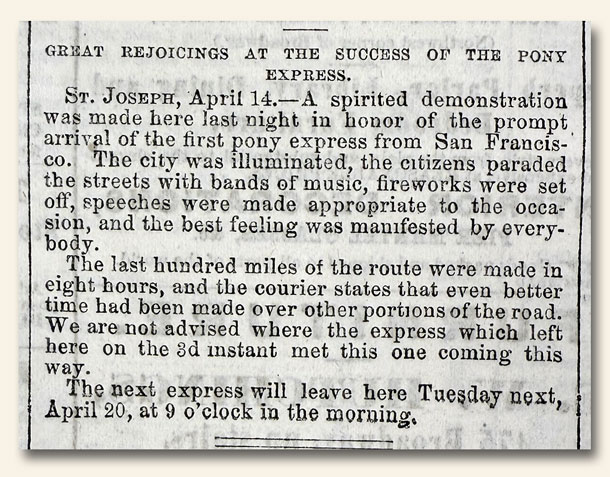
That’s exactly what happened to me recently while examining the April 16, 1860 issue of The Evening Post (New York). My original goal was to locate coverage of the completion of the first run of the Pony Express, and to my delight, I found not one but two front-page reports. Front-page coverage of such events is rare enough—but two related pieces? A true collector’s treat.
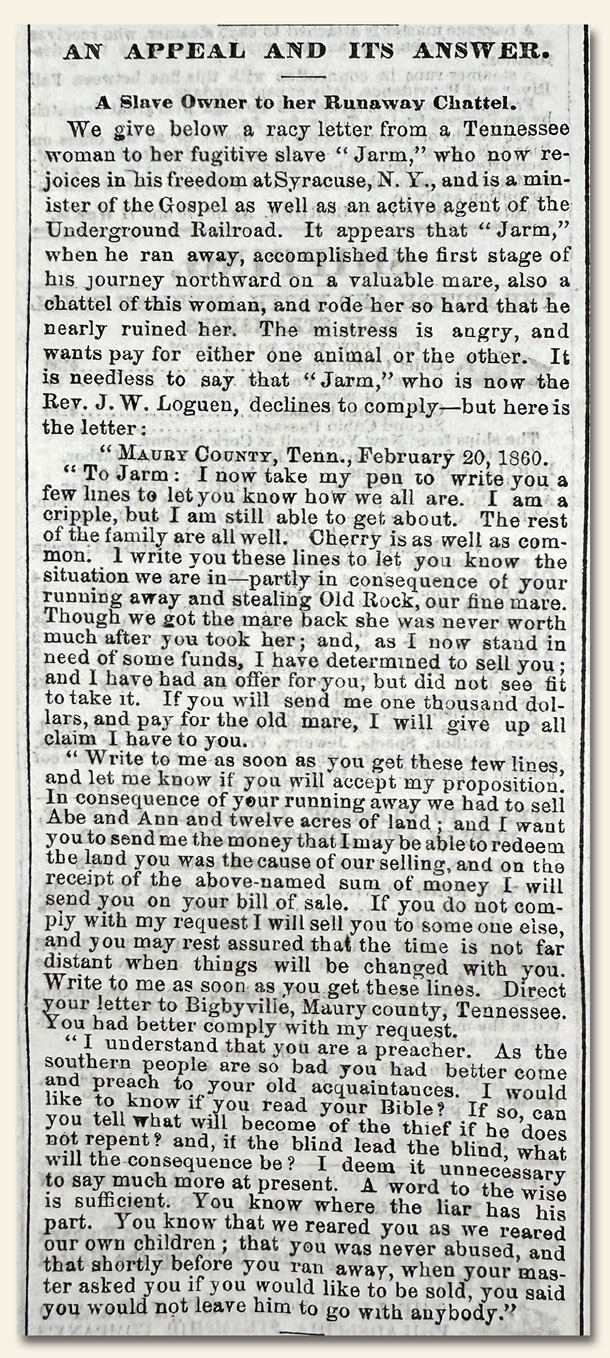
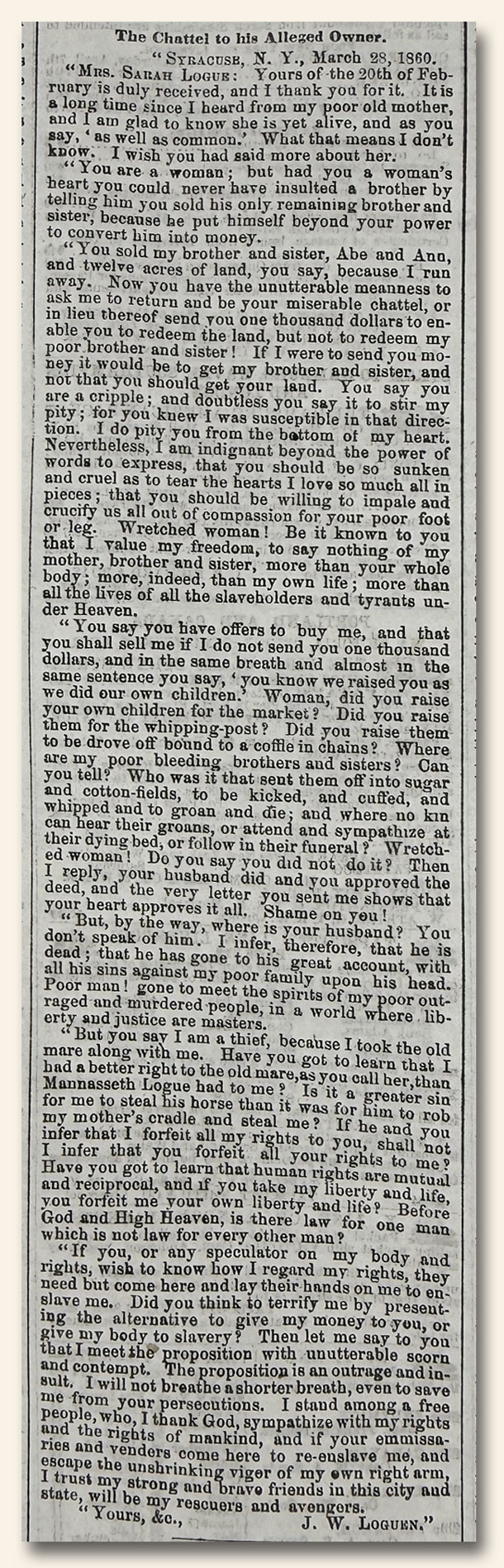
As I continued browsing for additional Pony Express material within the issue, I stumbled upon one of those unforgettable “hidden gems”: a printed exchange between a runaway slave and his former master. While not an account of a major historical event, few subjects evoke as much emotion as slavery, and reading such raw, personal correspondence in a period newspaper was deeply moving.
While the issue’s collectible value is likely anchored by its Pony Express reports, it’s this second discovery that continues to resonate with me. It serves as a poignant reminder—to me, my family, and my friends—of the immeasurable worth of every human being. Each of us, created in God’s image, carries equal and sacred value. Red and yellow, black and white—we are all precious in His sight.
All right, I’ll step down from my soapbox now. The photos below provide context for the discoveries mentioned above. Thanks for reading—and for sharing in the joy of finding history’s hidden treasures.
One of the Two Reports regarding the Pony Express
Correspondence Between the Runaway Slave and his former “Master”
1776-2026: The Dream Still Shines at Dawn’s Early Light!
January 5, 2026 by GuyHeilenman · Leave a Comment
Whether we call it the Semiquincentennial, America250, the Quarter Millennial, the Sestercentennial, or simply the 250th birthday of the boldest experiment in self-government, 2026 rises like a new dawn—filled with promise, reflection, and hope for every American and every friend of liberty across the world.
The front page below, taken from a newspaper celebrating the Centennial Fourth of July in 1876, carries us back to that earlier moment of celebration—a time when a young nation looked proudly to its past and eagerly toward its future. It reminds us of the countless generations whose courage and sacrifices made possible Franklin D. Roosevelt’s enduring truth:
“We are a nation of many nationalities, many races, many religions—bound together by a single unity, the unity of freedom and equality.”
That vision still lights our way. Yet we are also called to remember Frederick Douglass’s wise and urgent reminder, spoken on the 23rd anniversary of emancipation in the District of Columbia:
“The life of the nation is secure only while the nation is honest, truthful and virtuous.”
As we celebrate this extraordinary milestone, may we lift our hearts in gratitude for the Divine grace that has guided us through triumph and trial alike. And as we look ahead, may we renew our shared promise—to preserve every hard-won freedom and to keep lifting the banner of justice, opportunity, and dignity for all who call this land home.
Here’s to the journey still unfolding. Here’s to the dream still alive.
Happy 250th, America!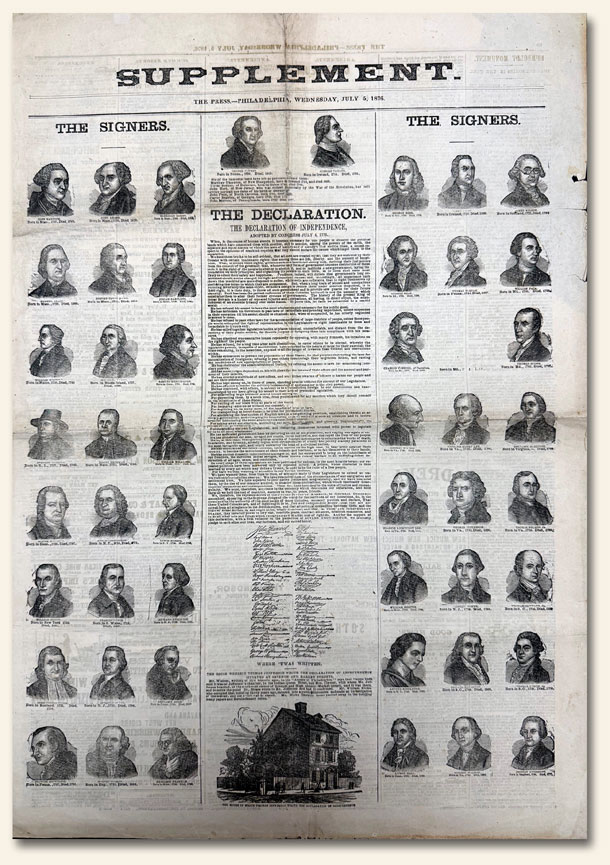
Christmas through the eyes of a newspaper from 1794…
December 25, 2025 by GuyHeilenman · Leave a Comment
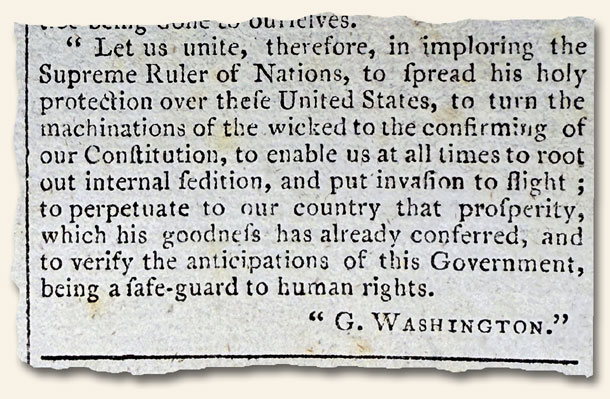
As I was searching through our newspapers published on Christmas from the past in the hopes of finding one which would be potentially meaningful to our collecting friends, I came across a December 25, 1794 London Gazette which seemed to hit the mark. I’d love to know if you agree.
Under the heading “AMERICA” on page three I found the entire text of President George Washington’s State of the Union address. It is quite lengthy, and the entire text can be found online, but I was struck by the first and last paragraph – both of which are shown below. Is it me, or could these words have been penned today? Merry Christmas!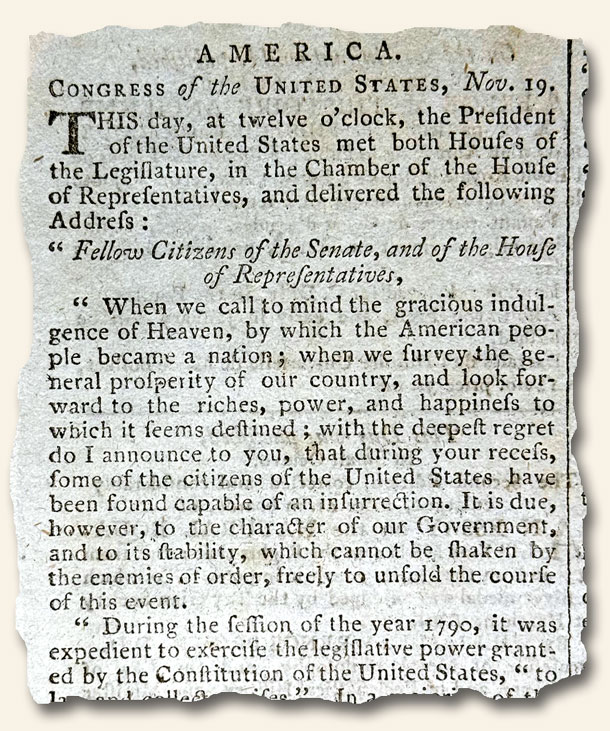
Publishing Under Fire: The Nippon Fijii and the Aftermath of Pearl Harbor…
December 8, 2025 by GuyHeilenman · Leave a Comment
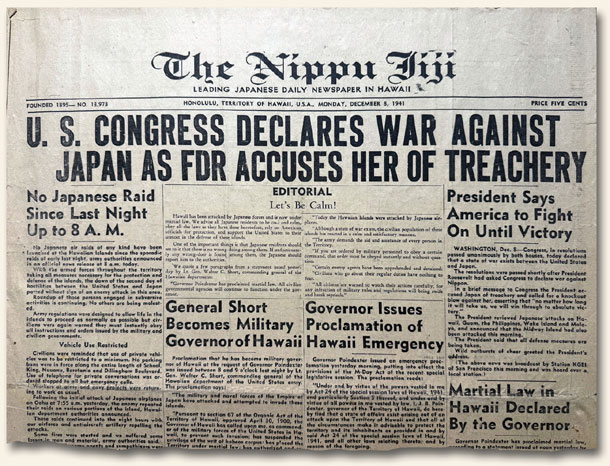
It’s difficult to fathom what it must have been like to be a Japanese-American living in Hawaii at the time of the Pearl Harbor attack. According to the 1940 census, more than 150,000 Japanese-Americans—roughly 35% of Hawaii’s population—suddenly found themselves in an impossible position, caught between loyalty to their home and suspicion from their neighbors.
Fear quickly swept through the islands. While the sheer size of the Japanese-American community made mass internment in Hawaii unfeasible, more than 2,000 individuals were arrested, many later sent to internment camps on the mainland. Their lives—and their trust in the nation they called home—were forever changed.
It was in the midst of this uncertainty and fear that the staff of NIPPON FIJI, Hawaii’s leading Japanese-language newspaper, produced their December 8, 1941 issue. The paper stands today as one of the most striking and rare firsthand publications from that dark and defining moment in American history.
Properly Directed Thankfulness – George Washington and the Foundations of a New Nation…
November 25, 2025 by GuyHeilenman · Leave a Comment
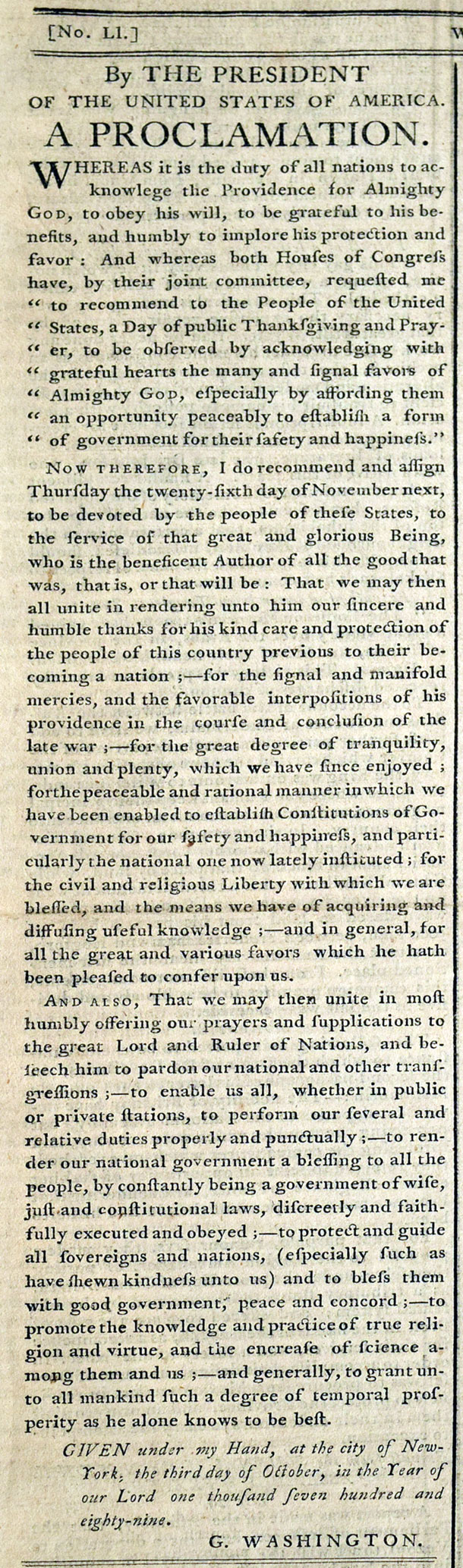
On October 3, 1789, just months into his presidency, George Washington issued the very first official presidential proclamation. Fittingly, his choice of subject set the tone for a new nation: a call for a national day of thanksgiving and prayer. In it, Washington urged the people of the United States to acknowledge “with grateful hearts the many signal favors of Almighty God, especially by affording them an opportunity peaceably to establish a form of government for their safety and happiness.” This was more than a holiday declaration—it was a reminder that gratitude, humility, and faith would form part of the nation’s foundation.
Below is the complete text of Washington’s Thanksgiving Proclamation as it appeared on the front page of the Gazette of the United States on October 7, 1789:
They Put It In Print – A U.S. President Seeks Permission…
October 27, 2025 by GuyHeilenman · Leave a Comment
In the U.S., only Congress can declare war. So how many wars have Americans actually fought since World War II? You might think of the Korean War, Vietnam, Kuwait, Iraq, or Afghanistan. But here’s the catch: the answer is technically zero.
How can that be? Modern presidents simply avoid the word “war,” using terms like “military engagement” or “conflict” instead. No official declaration, no congressional vote—problem solved.
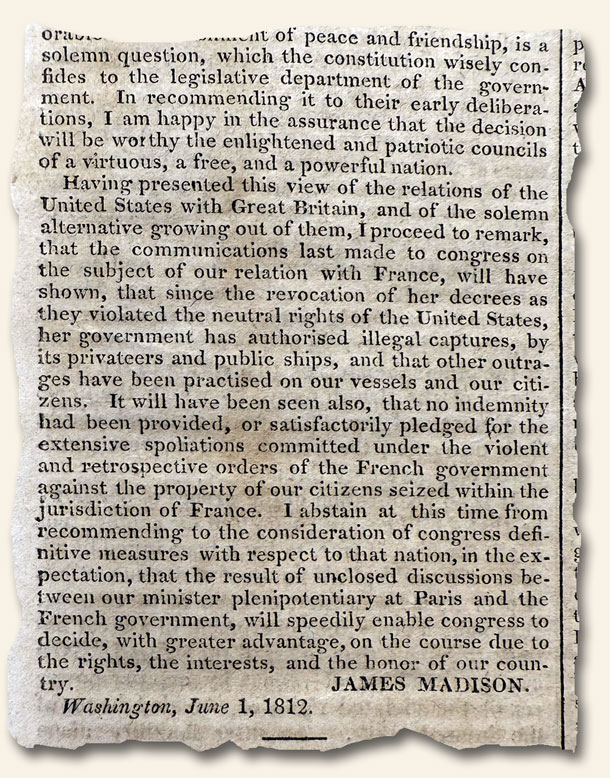
It wasn’t always this way. Take the War of 1812: President James Madison believed the U.S. needed to go to war with Great Britain. Did he send troops under a euphemism like “military operation”? No. He went straight to Congress with a detailed manifesto explaining why war was necessary. That document, printed in The War on June 27, 1812, shows just how seriously Madison took the Constitution’s war powers. The introduction and conclusion of his lengthy plea are shown below.
Today, renaming wars might serve convenience or strategy, but it raises a bigger question: if we can call war by any name we like, what happens to the checks and balances the Constitution set in place?
Do you think this trend is a necessary evolution—or a dangerous bypass of Congress?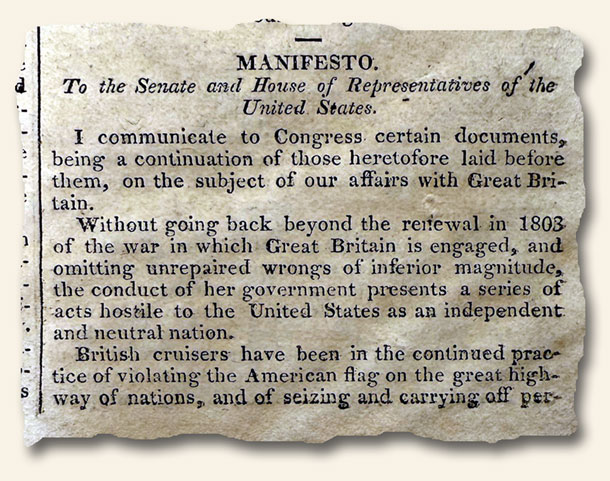
Headlines That Never Happened: Germany’s Loss and Its Lasting Echoes…
October 20, 2025 by GuyHeilenman · Leave a Comment
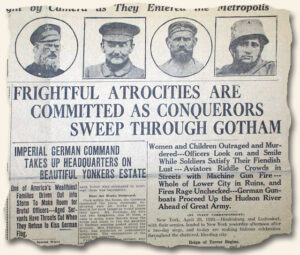
In April of 1918, a newspaper playfully speculated on what the headlines might have looked like if Germany had won World War I. A century later, we know the opposite outcome set in motion consequences far greater than most could have imagined. Germany’s defeat, and the way the Allies handled it, reshaped not just Europe but the modern world.
 The Ripple Effects of Germany’s World War I Defeat
The Treaty of Versailles (1919) imposed heavy reparations, territorial losses, and strict military limits on Germany. Instead of securing peace, these terms humiliated the nation and destabilized its young democracy. The resentment they bred became fertile ground for Adolf Hitler and the Nazi Party, leading to World War II and the Holocaust.
Europe’s New Order
Britain and France emerged victorious but weakened, while the United States stepped into global leadership. Versailles became a cautionary tale: punish a nation too harshly, and you may guarantee the next war. After World War II, the Allies took the opposite approach—rebuilding Germany through the Marshall Plan and anchoring it in NATO and the European Union. Today, Germany’s central role in both reflects that strategy.
Jews and the Holocaust
Germany’s turmoil fueled dangerous scapegoating. Conspiracy theories like the “stab-in-the-back” myth cast Jews as traitors, intensifying antisemitism that Nazi propaganda later weaponized. The Holocaust destroyed European Jewry and gave new urgency to the Zionist movement, leading to the founding of Israel in 1948.
Redrawing the Middle East
The collapse of Germany’s ally, the Ottoman Empire, allowed Britain and France to carve up the Middle East. Mandates in Iraq, Syria, and Palestine ignored ethnic and religious realities. Britain’s contradictory promises to Jews and Arabs in Palestine set the stage for the enduring Israeli-Palestinian conflict.
Lasting Echoes
The “war to end all wars” did not end conflict—it reshaped it. From NATO and the EU to Israel’s creation and Middle Eastern instability, the ripple effects of Germany’s defeat still define our world.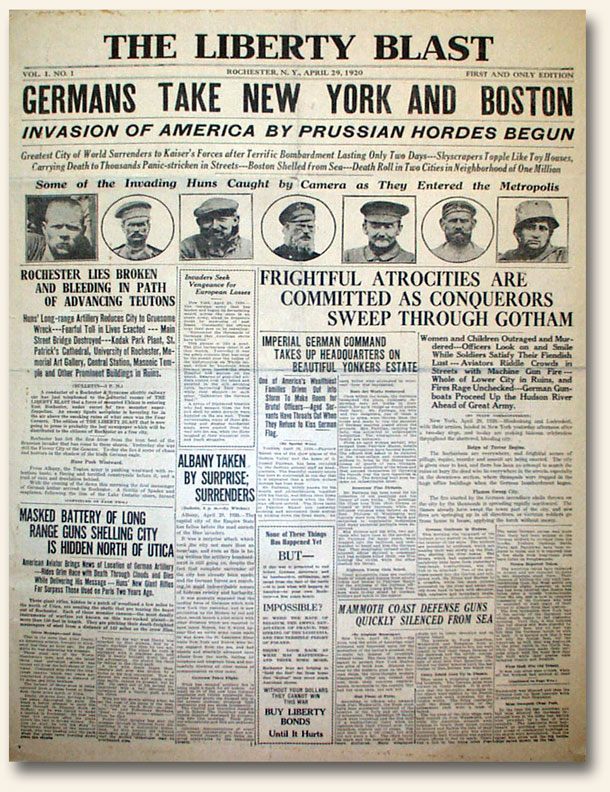
While the two photos above show The Liberty Blast with a dateline of April 29, 1920, this newspaper with “fictious reporting” was actually printed on April 20, 1918 “in the hope that in some small way it may serve to awaken in the hearts & minds of those who read it a realization of those horrors of a great world war, so far from and yet to near to American shores, American life, and American people…”.
Snapshot 1866 – Slavery: A Wound on the Soul of a Nation…
August 25, 2025 by GuyHeilenman · 1 Comment
 Few institutions in human history have inflicted more suffering or revealed deeper moral failings than slavery. Its cruelty was evident to many, even in its own time, and voices of conscience spoke out with clarity and passion against it.
Frederick Douglass exposed the hypocrisy of those who justified such inhumanity in the name of religion:
“The man who wields the blood-clotted cowskin during the week fills the pulpit on Sunday, and claims to be a minister of the meek and lowly Jesus.”
Abraham Lincoln, never one to shy away from blunt truths, offered this biting reflection:
“Whenever I hear anyone arguing for slavery, I feel a strong impulse to see it tried on him personally.”
William Lloyd Garrison cut to the heart of the injustice:
“The slave is doomed to toil, that others may reap the fruits.”
And Harriet Tubman, who risked everything to lead others to freedom, distilled its evil to its core:
“Slavery is theft — theft of a life, theft of work, theft of any opportunity to shape one’s own destiny.”
While President Lincoln’s Emancipation Proclamation, issued on January 1, 1863, marked a turning point, the road to slavery’s demise was long, brutal, and soaked in the blood of those who fought to end it. The institution did not go quietly—it clung on with all its bitter force until finally it was defeated, leaving behind a scar but also a renewed hope for the American promise.
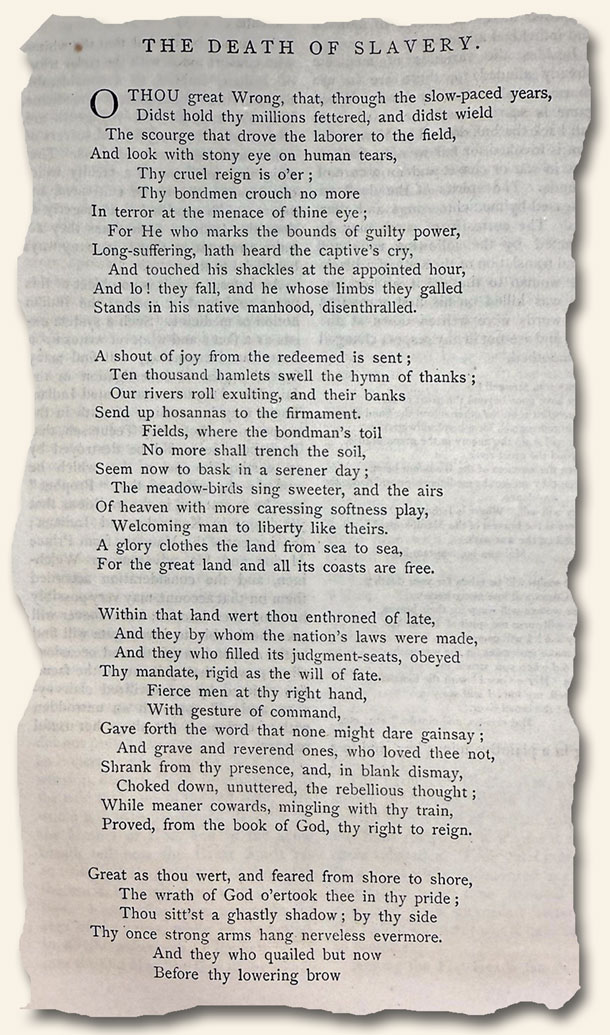
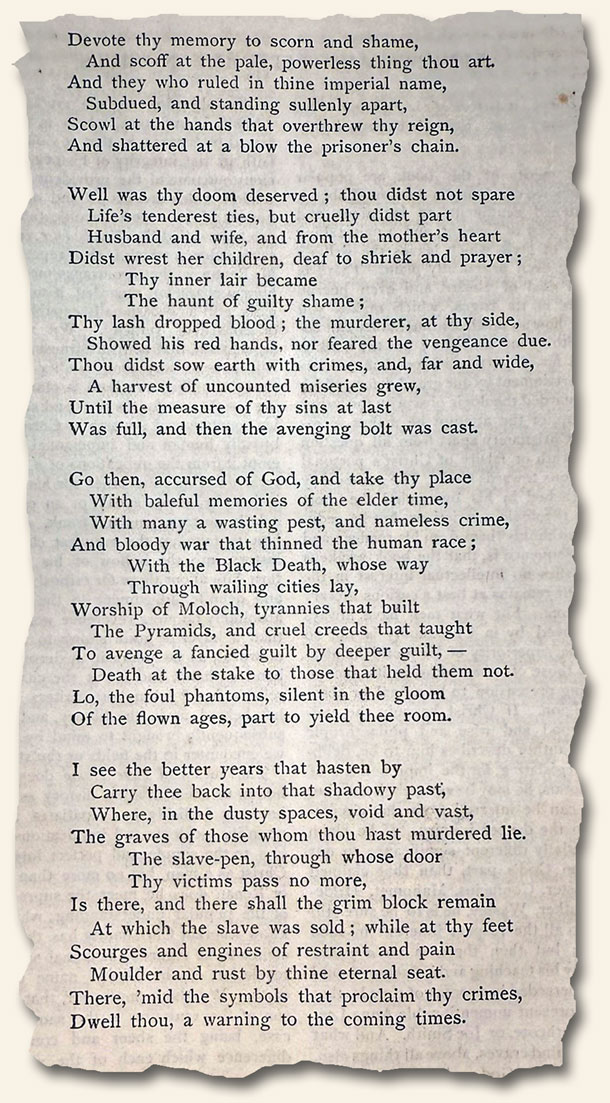
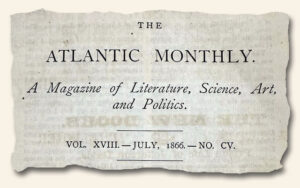
This complex and painful chapter was not lost on poet William Cullen Bryant. In 1866, just a year after the Civil War’s end, he shared his reflections in a powerful poem published in the July issue of The Atlantic Monthly. That poem, in its entirety, is presented below—a poignant reminder of what was endured, and what was overcome.