
Search
The Rare & Early Newspapers Hobby

Receive the Newsletter

Buy Historic Newspapers

Catalog 369 (for August, 2026) is now available!
July 31, 2026 by GuyHeilenman · Leave a Comment
August’s catalog (#369) is now available. This latest offering of authentic newspapers is comprised of over 300 new items, a selection which includes the following noteworthy issues: Cornwallis surrenders to Washington at Yorktown, Washington’s first inauguration, the “Cherokee Phoenix”, the Battle of Bunker Hill, a rare 18th century newspaper from Canada, a huge headline on 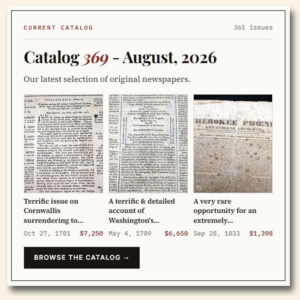 the end of World War II, a displayable issue on the death of Marilyn Monroe, and more. To view the entire catalog, go to:
Catalog #369 (for August, 2026)
What remains of last month’s discounted issues may be viewed at:
Discount (select items at 50% off)
Recent Posts on the History’s Newsstand Blog may be accessed at:
Our most recent video:
The Declaration Proclaimed – Military Challenges + Growing Confidence
|
The Moment Before the World Changes… Lincoln’s Assassination Day…
July 27, 2026 by Laura Heilenman · Leave a Comment
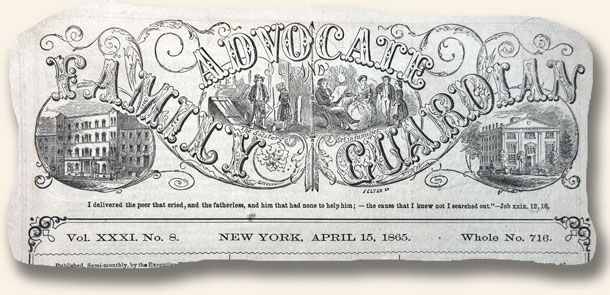
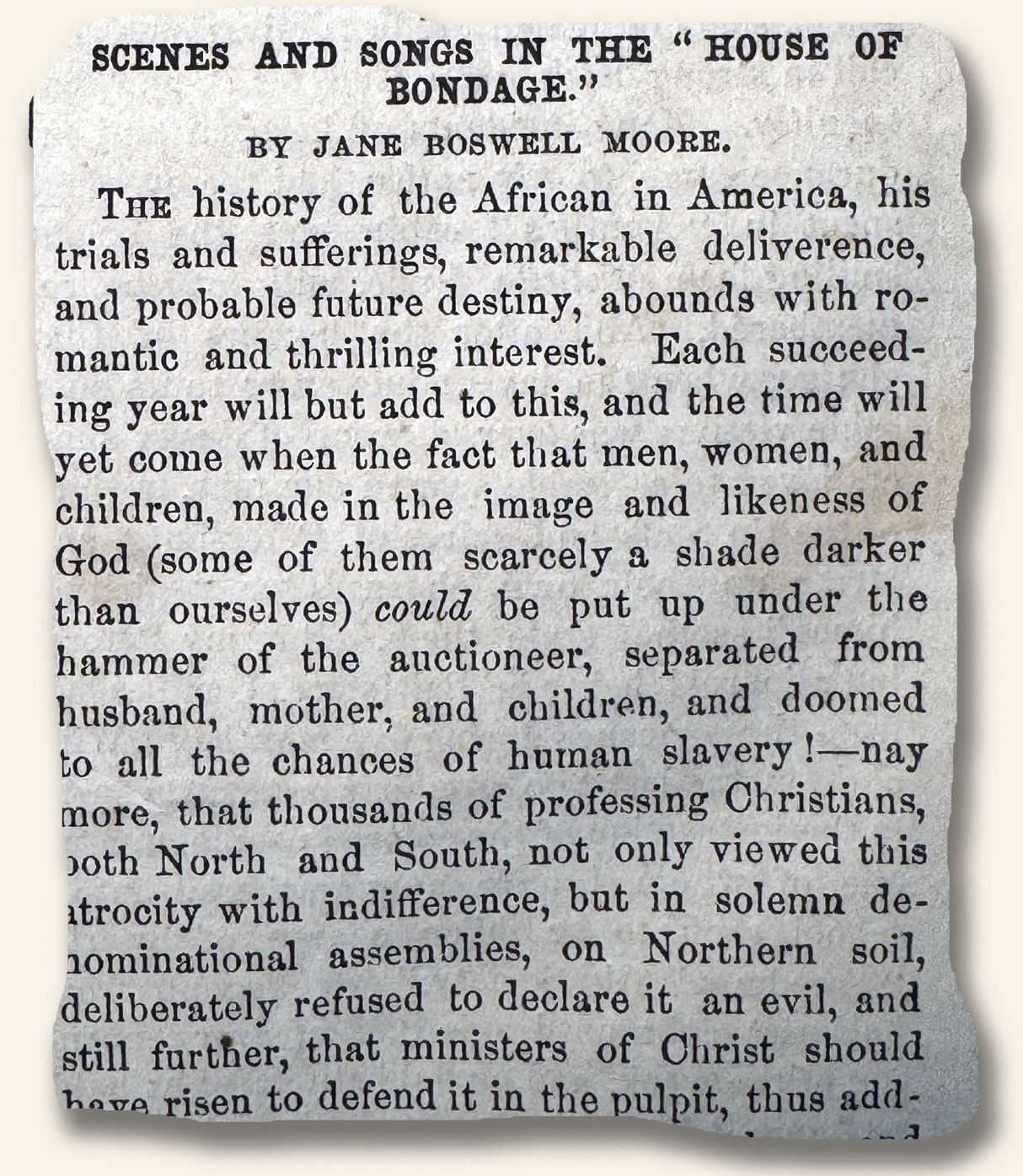
You can’t read historic newspapers for long before you are struck by how often people experience “the moment before”.
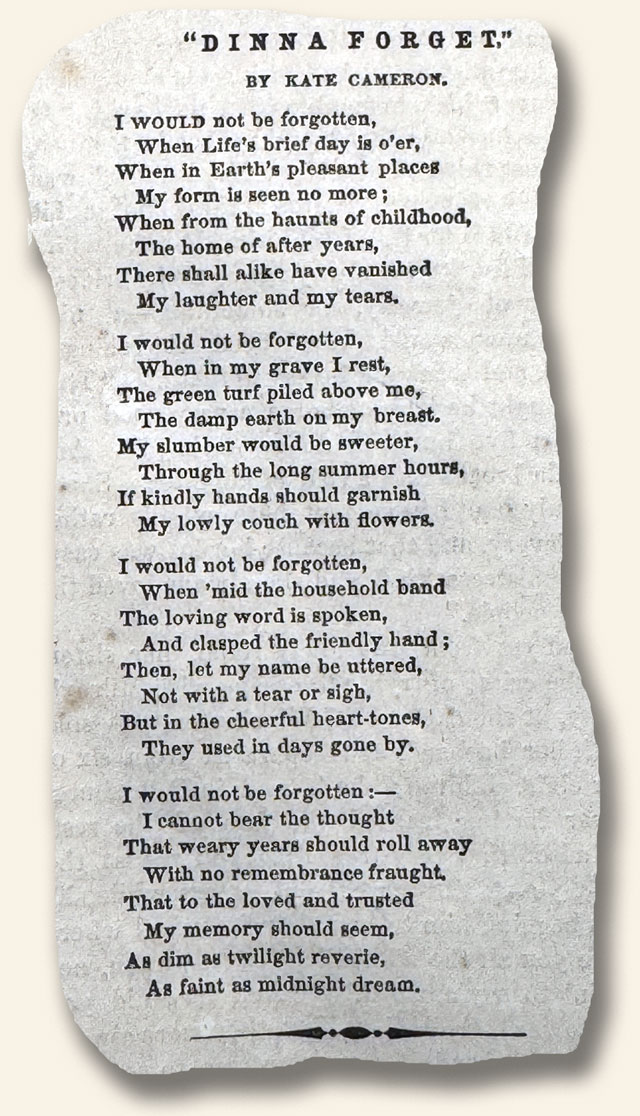
The April 15, 1865 issue of the ADVOCATE FAMILY GUARDIAN has a prime example with so much nuance that you can’t imagine it was not planned and yet, clearly it was not.
Hours before President Lincoln was Assassinated, the paper published their daily edition and the front page was framed by 2 articles. On the left side was a poem describing the death of someone and how they would never be forgotten. The right side had an article describing slavery and how God’s people should have risen to speak against it. What a beautiful, accidental tribute to the President who was about to be mourned and who did rise and stand against slavery. The irony of the frontpage coverage could not be lost on the reader… in hindsite.
Liberty Hangs in the Balance… The Midnight Ride of Caesar Rodney…
July 24, 2026 by Laura Heilenman · Leave a Comment
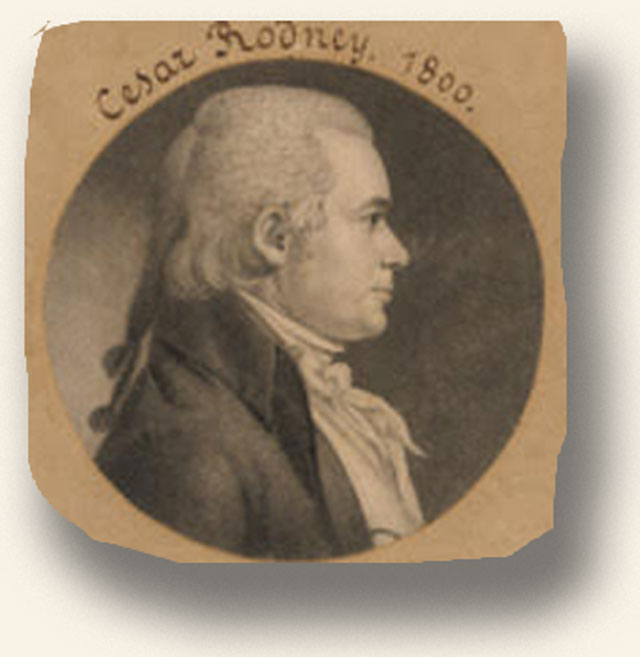 We have all heard the poem… THE MIDNIGHT RIDE OF PAUL REVERE. Fewer of us may have heard of the midnight ride of Ceaser Rodney and yet, he is certainly an unsung hero in America’s courageous journey to Liberty.
Rodney’s most legendary moment came during the Second Continental Congress in Philadelphia. By early July 1776, the Congress was debating Richard Henry Lee’s resolution for independence. Delaware’s three delegates were divided:
– Thomas McKean strongly favored independence.
– George Read opposed it.
– Caesar Rodney was absent in Dover, helping suppress Loyalist activity in Sussex County.
On the evening of July 1, 1776, McKean sent an urgent message to Rodney informing him of the deadlock. Rodney immediately set out for Philadelphia, roughly 70–80 miles away. Although his doctor forbade his going for his health’s sake, he rode through a severe thunderstorm all night. Despite suffering from lifelong asthma and facial cancer, he pushed through.
He arrived at Independence Hall on the morning of July 2, 1776, “in his boots and spurs,” muddy and exhausted. Thomas McKean reportedly met him at the door. Rodney voted with McKean, breaking the tie and allowing Delaware to support independence. This helped shift momentum; other colonies followed, leading to a unanimous vote. The formal Declaration of Independence was approved on July 4 and signed by Rodney on August 2. Rodney’s own account to his brother, Thomas, was incredibly modest: “I arrived in Congress (tho detained by thunder and rain) time enough to give my voice in the matter of independence.” Talk about an understatement! It just goes to show that some of history’s most courageous figures didn’t chase the spotlight—they just did what needed to be done.
The Founding of the CIA… John Jay’s Committee for Detecting and Defeating Conspiracies…
July 20, 2026 by Laura Heilenman · Leave a Comment
In a previous post we told the story of Thomas Hickey, the security guard for George Washington who was the 1st military execution.
The Hickey Plot exposed a dangerous reality: the Revolution faced threats not only from British armies on the battlefield but from spies, saboteurs, and disloyal citizens within Patriot-controlled territory. New York, with its large Loyalist population and strategic importance, was especially vulnerable.
In response, the New York Provincial Congress took decisive action. In mid-1776, it established what would become the Committee for Detecting and Defeating Conspiracies. This body was tasked with “inquiring into, detecting and defeating all conspiracies which may be formed in this State against the liberties of America.”
 Heading the committee was a 30-year-old lawyer and rising Patriot leader: John Jay.
Jay, who would later become the first Chief Justice of the United States and a co-author of The Federalist Papers, had already proven himself a skilled organizer. The committee operated as America’s first dedicated counterintelligence organization. Its members investigated suspected Loyalists, interrogated prisoners, gathered intelligence on enemy activities, made arrests, and even ran clandestine operations.
Over its existence, the committee handled more than 500 cases involving disloyalty, espionage, and subversion. It detained influential figures, broke up spy rings, and helped secure the Patriot rear lines during some of the war’s most critical early months. Historians and intelligence professionals today widely recognize Jay as the founding father of American counterintelligence.
The story of the Hickey Plot and Jay’s committee reminds us that threats to democracy often come from within as much as from without. It also shows how crisis can drive innovation. In the face of existential danger, a group of determined Patriots created one of the first organized intelligence efforts in American history — not out of ambition, but out of necessity.
Today, as we reflect on the Revolutionary era, we usually celebrate battles and declarations. But behind the scenes, quiet work by men like John Jay helped ensure the Revolution survived long enough to succeed.
July 2026 Newsletter – Rare & Early Newspapers…
July 17, 2026 by GuyHeilenman · Leave a Comment
|
 Welcome to the latest July, 2026 newsletter from
|
Lead-up to a Nation… as reported in the newspapers of the day (reflecting back on June/July, 1776)…
July 15, 2026 by GuyHeilenman · 1 Comment
- Revolution Gaining Momentum – Building on Resistance (Lead-up to a Nation – E44)
- Irreconcilable Actions of England – Royal Authority Suppressed (Lead-up to a Nation – E45)
- The Brink of Independence – England Clings to Hope of Peace (Lead-up to a Nation – E46)
- The Virginia Convention – Colonies urged toward Independence (Lead-up to a Nation – E47)
- Centuries of Struggle – One Declaration that Changed the World (Lead-up to a Nation – E48)
We hope you’ve are enjoyed this year-long trek to the 250th anniversary of The United States through the eyes of those who were fully engaged, first hand. As we continue with the next phase of the journey, as mentioned previously, all accounts will be rooted in what they read in the newspapers of the day.
“History is never more fascinating than when read from the day it was first reported.” (Timothy Hughes, 1975)
Stories Surrounding the Declaration of Independence… the Treason of Thomas Hickey…
July 13, 2026 by Laura Heilenman · Leave a Comment
In light of the historic birthday for the American Declaration of Independence, I thought it might be nice to look at some of the surrounding stories that occurred which could have helped or hindered this momentous time in history. Perhaps one of the more intriguing stories is the treason of Thomas Hickey and those who were likely involved at some level.
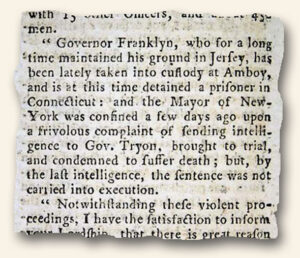 In June 1776, as British forces threatened New York, General George Washington faced betrayal within his own ranks. Thomas Hickey, an Irish-born soldier and member of Washington’s elite Life Guard, became central to a Loyalist conspiracy reportedly backed by New York Governor William Tryon. The plot allegedly involved recruiting guardsmen, sabotaging supplies, and possibly assassinating Washington when British troops arrived.
Hickey’s downfall began when he was arrested for passing counterfeit money. While jailed, he bragged to fellow prisoner Isaac Ketcham about enlisting Life Guardsmen and receiving payments from Loyalists. Ketcham alerted authorities, exposing the scheme.
On June 26, Hickey faced a swift court-martial. Charged with mutiny, sedition, and corresponding with the enemy, he was convicted on witness testimony and sentenced to death by hanging. Washington approved the sentence the next day.
On June 28—the same day John Adams was presenting Thomas Jefferson’s draft of the Declaration of Independence to the Continental Congress in Philadelphia—Hickey was hanged before an estimated 20,000 soldiers and civilians near Bowery Lane in Manhattan. Washington ordered the mass attendance to deter treason, making Hickey the first Continental soldier executed for such crimes. The event underscored the fragility of the Patriot cause and reinforced discipline on the eve of battle.
Coverage of this conspiracy can be found in THE LONDON CHRONICLE, August 8, 1776. Ironically, parts of this British plot can also be found in THE GENTLEMAN’S MAGAZINE, August 1776 … the same GENTLEMAN’S MAGAZINE containing the entire printing of the Declaration of Independence. 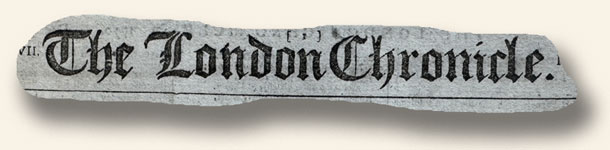
Strong Foundation … Liberty Takes Continual Work …
July 6, 2026 by Laura Heilenman · Leave a Comment
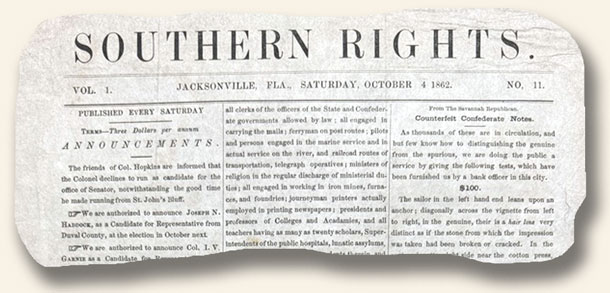
On October 4, 1862, the SOUTHERN RIGHTS out of Jacksonville, Florida had a fascinating issue with a story similar to that of the iconic Vicksburg Daily Citizen issue of July 4, 1863, when the Union troops found the newspaper still in the press, changed the final paragraph to report the Union takeover, and printed the issue.
The SOUTHERN RIGHTS newspaper’s story is found in a listing by the American Antiquarian Society and is as follows:
“Captain Valentine B. Chamberlain was in command of a company of the 7th Connecticut Volunteers who found the printing office and actually printed the issue for Oct. 4, 1862 from the standing type with Capt. Chamberlain’s addition in the first column on page 1 (see below). They then burnt the office and removed the press and types. The Oct. 4, 1862 issue was reissued in Hilton Head, South Carolina by Chamberlain, although retaining the Jacksonville imprint; and also reissued later in Jacksonville by the original printers once they had re-established their shop.
Printed at the bottom of this broadside issue is the following: Explanation–when the U.S. Forces under brigadier general J.M. Brannon visited Jacksonville, Fla., the form of the ‘Southern rights’ was found standing in this office just as it was left by the skedaddling rebels. The office was immediately ‘cleaned out,’ and–there being more ‘devils’ than printers present– the form was thrown into ‘pi’ in less time than it takes to write it. A proof sheet coming into our possession, we re-print the sheet as near like the original as possible, for the purpose of showing to our friends in the North, the ‘talent, vigor, heroism and military ardor’ that is not displayed in this trophy of Jacksonville.”–signed: Printers.
Captain Chamberlain’s addition mentioned above is headed: “Notice”, and reads, much tongue-in-cheek: “The Editor of this paper is absent from town for a few days on urgent business in the interior. It is therefore announced that the publication of this paper will hereafter be weekly suspended as it has been heretofore, weakly continued.
The taking of our battery after a loss of courage, but no blood, and the presence of the Yankee fleet, and the fearful proximity of Gen. Brannan and his forces, render the ‘Southern Rights’ precarious.”
The Declaration of Independence…Our Lives, Our Fortunes and Our Sacred Honor…
July 4, 2026 by Laura Heilenman · Leave a Comment
 For roughly 5,000 years of recorded history, human civilization largely moved at a glacial pace. Empires rose and fell under kings, emperors, and tyrants. Most people lived under arbitrary rule, with limited rights, widespread slavery or serfdom, and slow technological and economic advancement. Then, in a remarkable burst beginning in the late 18th century, progress exploded, accelerated by the American Founding.
The Founders didn’t invent ideas from nothing—they synthesized the best principles from millennia of human experience, rooted in natural law, Judeo-Christian morality, English common law, and selective Enlightenment thought. They implemented these ideas into a new system of government that protected individual liberty and unleashed human potential like never before.
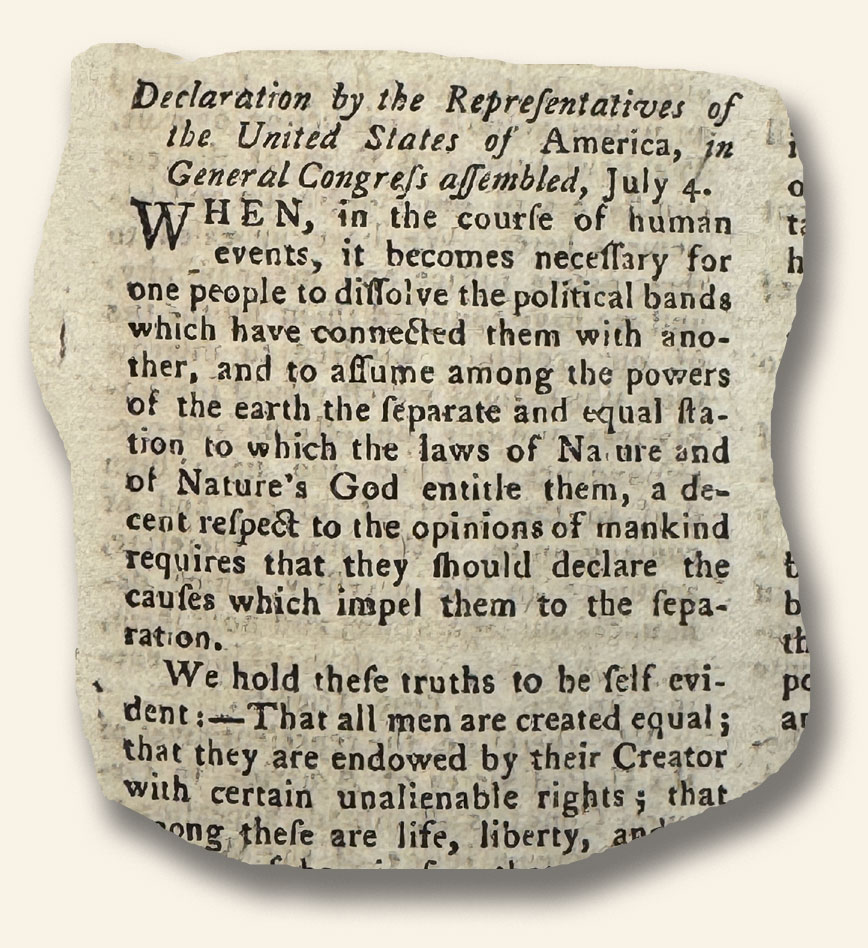
The intellectual roots of the Declaration of Independence (photo shown is from The Gentleman’s Magazine, London, August, 1776) stretch back thousands of years. Natural Law formed the bedrock with ancient thinkers like Aristotle and Cicero describing universal principles of justice discoverable by reason. Medieval Christian philosophers, especially Thomas Aquinas, integrated this with divine order. English common law and documents like the Magna Carta (1215) began limiting monarchical power and affirming rights.
Judeo-Christian traditions emphasized the inherent dignity of every person created in God’s image, moral accountability, and the idea that rulers are not above the law.
The Enlightenment provided key modern refinements. John Locke’s Second Treatise of Government (1689) powerfully argued for natural rights to life, liberty, and property; government by consent of the governed; and the right of the people to overthrow tyranny. Montesquieu influenced ideas of separated powers.
The American colonists, steeped in these traditions through education, sermons, and experience with British overreach, saw the Crown’s actions as violations of these timeless principles. They didn’t seek to create something entirely novel but to restore and perfect ancient liberties in a new republic.
The Declaration didn’t end history’s challenges, but it marked a turning point. By grounding government in natural law, consent, and unalienable rights—while building institutions around virtue, limited power, and free enterprise—the Founders created conditions where human potential could flourish as never before.
Below you will find the fruit of the painstaking assembly of thoughts these Founders labored through, searching history & the heart of their creator to lay a framework for all mankind. Today of all days, may we appreciate their singular focus on creating a republic that would last and inspire others.
Declaration of Independence: A Transcription | National Archives
Catalog 368 (for July, 2026) is now available!
July 2, 2026 by GuyHeilenman · Leave a Comment
|
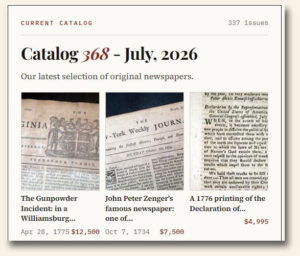 Catalog #368 (for July) is now available. For those residing in the United States: Happy 250th! For everyone… the links below will take you to the new catalog, a new video in the “Lead-Up to a Nation” series, a set of discounted newspapers, and the most recent post on the History’s Newsstand blog. Please enjoy!
|