

Search
The Rare & Early Newspapers Hobby

Receive the Newsletter

Buy Historic Newspapers

Phillis Wheatley… From Slave to Hero…
June 29, 2026 by Laura Heilenman  Email This Post
|
Email This Post
|  Print This Post
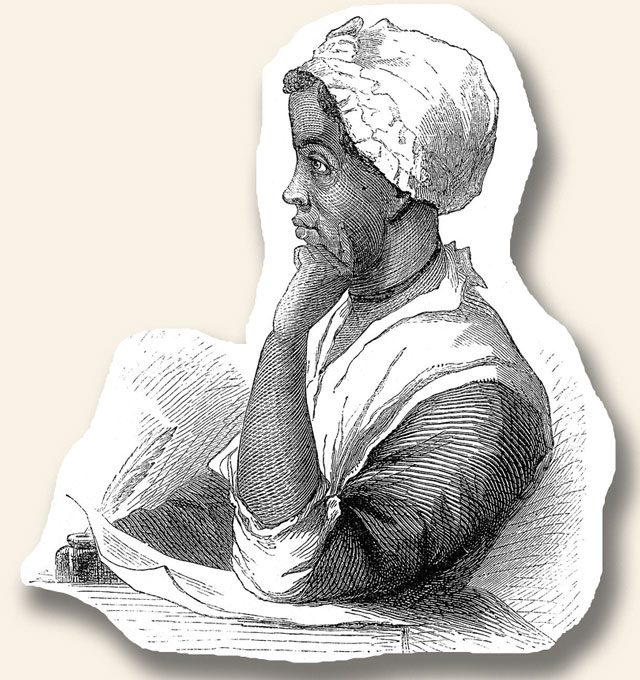 Few of us began our lives with hardships remotely resembling being kidnapped from Africa as a child, transported to a foreign land, and sold into slavery. The comfortable First World culture so many of us live in does not usually place upon our shoulders the kind of burden a child would carry from such an origin story. Although one might assume such a beginning would doom a child to destruction, that is not always the case. Sometimes people rise above their circumstances and seize any silver lining that comes their way. This is precisely what happened with Phillis Wheatley.
In the midst of unimaginable hardship, an enslaved teenager in colonial Boston penned verses that would echo through the centuries and earn her the distinction of being the first African American woman to publish a book of poetry. Her 1773 collection, Poems on Various Subjects, Religious and Moral, astonished readers on both sides of the Atlantic and challenged the era’s deeply held prejudices about race and intellect.
Among her most striking works is “On Imagination,,” a soaring neoclassical ode that celebrates the boundless power of the human mind. In it, Wheatley personifies Imagination as an “imperial queen” capable of transcending winter’s frost, traveling among the stars, and transforming harsh reality into beauty and joy. Written while she was still enslaved, the poem stands as a profound testament to mental freedom and creative resilience—the idea that even when the body is chained, the spirit and intellect can soar.
Though composed some 250 years ago, Wheatley’s words still resonate powerfully today, reminding us of the enduring strength of imagination in the face of adversity. Below is the entirety of this masterpiece. Perhaps allow your imagination to run free.
On Imagination
by Phillis Wheatley (1773)
Thy various works, imperial queen, we see,
How bright their forms! how deck’d with pomp by thee!
Thy wond’rous acts in beauteous order stand,
And all attest how potent is thine hand.
From Helicon’s refulgent heights attend,
Ye sacred choir, and my attempts befriend:
To tell her glories with a faithful tongue,
Ye blooming graces, triumph in my song.
Now here, now there, the roving Fancy flies,
Till some lov’d object strikes her wand’ring eyes,
Whose silken fetters all the senses bind,
And soft captivity involves the mind.
Imagination! who can sing thy force?
Or who describe the swiftness of thy course?
Soaring through air to find the bright abode,
Th’ empyreal palace of the thund’ring God,
We on thy pinions can surpass the wind,
And leave the rolling universe behind:
From star to star the mental optics rove,
Measure the skies, and range the realms above.
There in one view we grasp the mighty whole,
Or with new worlds amaze th’ unbounded soul.
Though Winter frowns to Fancy’s raptur’d eyes
The fields may flourish, and gay scenes arise;
The frozen deeps may break their iron bands,
And bid their waters murmur o’er the sands.
Fair Flora may resume her fragrant reign,
And with her flow’ry riches deck the plain;
Sylvanus may diffuse his honours round,
And all the forest may with leaves be crown’d:
Show’rs may descend, and dews their gems disclose,
And nectar sparkle on the blooming rose.
Such is thy pow’r, nor are thine orders vain,
O thou the leader of the mental train:
In full perfection all thy works are wrought,
And thine the sceptre o’er the realms of thought.
Before thy throne the subject-passions bow,
Of subject-passions sov’reign ruler thou;
At thy command joy rushes on the heart,
And through the glowing veins the spirits dart.
Fancy might now her silken pinions try
To rise from earth, and sweep th’ expanse on high:
From Tithon’s bed now might Aurora rise,
Her cheeks all glowing with celestial dies,
While a pure stream of light o’erflows the skies.
The monarch of the day I might behold,
And all the mountains tipt with radiant gold,
But I reluctant leave the pleasing views,
Which Fancy dresses to delight the Muse;
Winter austere forbids me to aspire,
And northern tempests damp the rising fire;
They chill the tides of Fancy’s flowing sea,
Cease then, my song, cease the unequal lay.
If you liked this post, you may also enjoy...
- Who’s Who in Newspapers – Robert Smalls edition…
- Juneteenth Revisited – “The rest of the story”…
- July 2026 Newsletter – Rare & Early Newspapers…
- Announcing: Catalog #261 (for August, 2017) is now available…
- Snapshot 1863… A slave mother’s attempted escape…
Comments
One Response to “Phillis Wheatley… From Slave to Hero…”
Feel free to leave a comment...
and oh, if you want a pic to show with your comment, go get a gravatar!
[…] Phillis Wheatley… From Slave to Hero… […]