
Search
The Rare & Early Newspapers Hobby

Receive the Newsletter

Buy Historic Newspapers

1st Man in Space… No Controversy Here…
September 25, 2026 by Laura Heilenman · Leave a Comment
Astronauts in space may be controversial in the USA, however, even conspiracy theorists don’t argue about Yuri Gagarin. On April 13, 1961, the Soviet newspaper Komsomolskaya Pravda captured that undeniable triumph on its front page. A large, heroic photograph of the 27-year-old cosmonaut dominated the layout, his confident smile and flight suit projecting the image of a new Soviet hero. The previous day, April 12, Gagarin had become the first human to travel into outer space, completing a single orbit aboard Vostok 1 in just 108 minutes. The paper’s bold headlin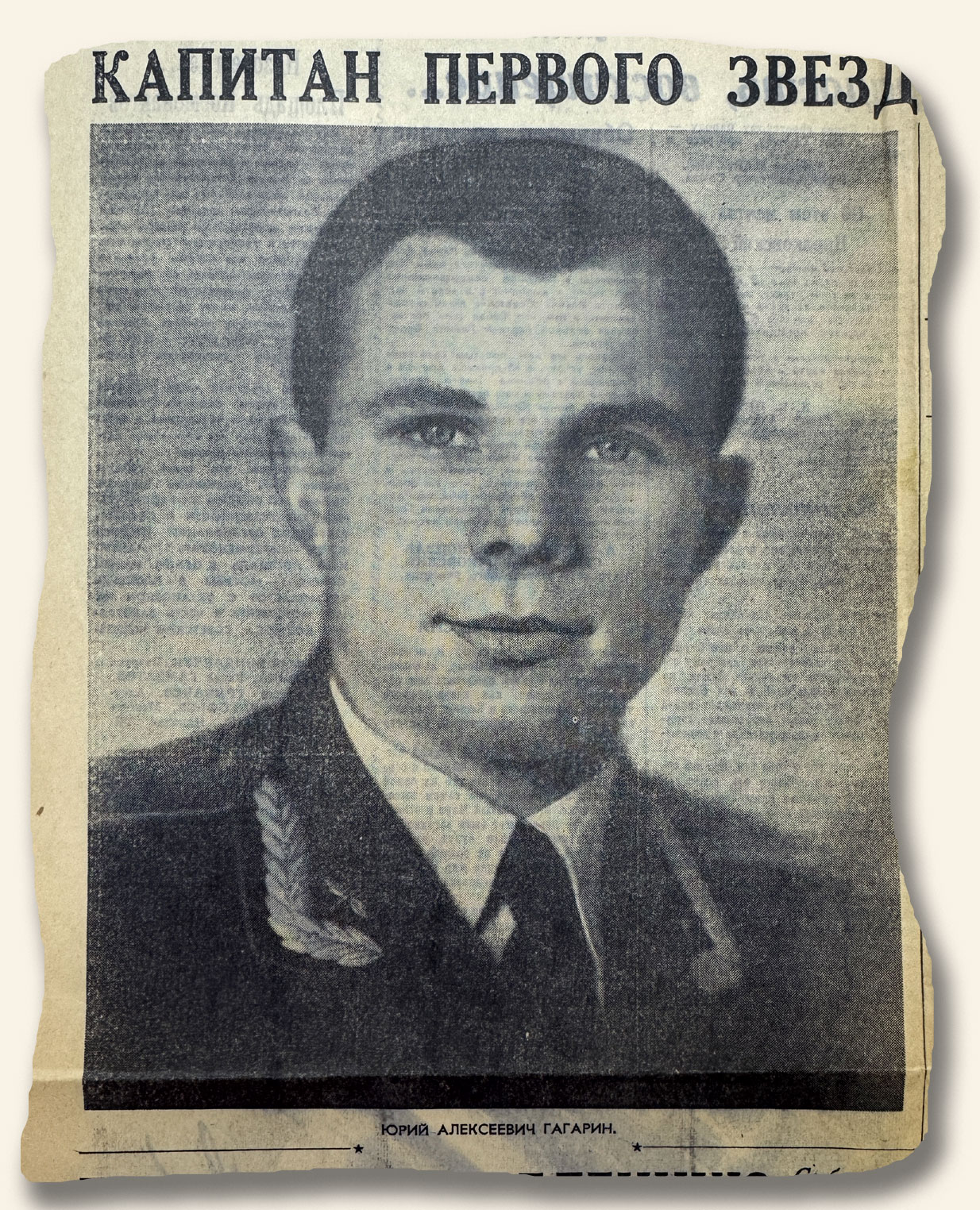 es and celebratory tone reflected pure national pride. Gagarin’s flight was presented not merely as a scientific milestone but as definitive proof of socialist superiority in the unfolding Space Race. While American efforts still lagged—Alan Shepard’s suborbital hop would not occur until May 5… the Soviet press framed the achievement as an irreversible lead. Readers saw Gagarin’s face as the face of progress, youth, and the future. Komsomolskaya Pravda, the official organ of the Communist Youth League, specialized in reaching a younger audience. Its coverage blended technical details of the mission with accessible, uplifting language designed to inspire. The large portrait on the front page served a dual purpose: it humanized the extraordinary feat and turned Gagarin into an instant icon. Ordinary citizens could look at that image and feel connected to the cosmos. This April 13 edition remains a vivid historical artifact. It shows how the Soviet Union communicated victory in real time, using bold photography and confident prose to shape public memory. Gagarin’s flight marked a genuine first for humanity, and this issue of Komsomolskaya Pravda preserved the excitement of that moment for its readers… and for history.
The Slow Death of a President… The Doctor Whose Name Became a Punchline…
September 21, 2026 by Laura Heilenman · Leave a Comment
On July 2, 1881, President James A. Garfield was shot twice at a Washington, D.C. train station by Charles Guiteau. One bullet grazed his arm; the other lodged in his back. Neither wound was immediately fatal, and the president would linger for 80 agonizing days. Ultimately, what killed him was not the assassin’s marksmanship, but the “care” that followed.
The man who seized control of the case was Dr. Doctor Willard Bliss (whose first name was act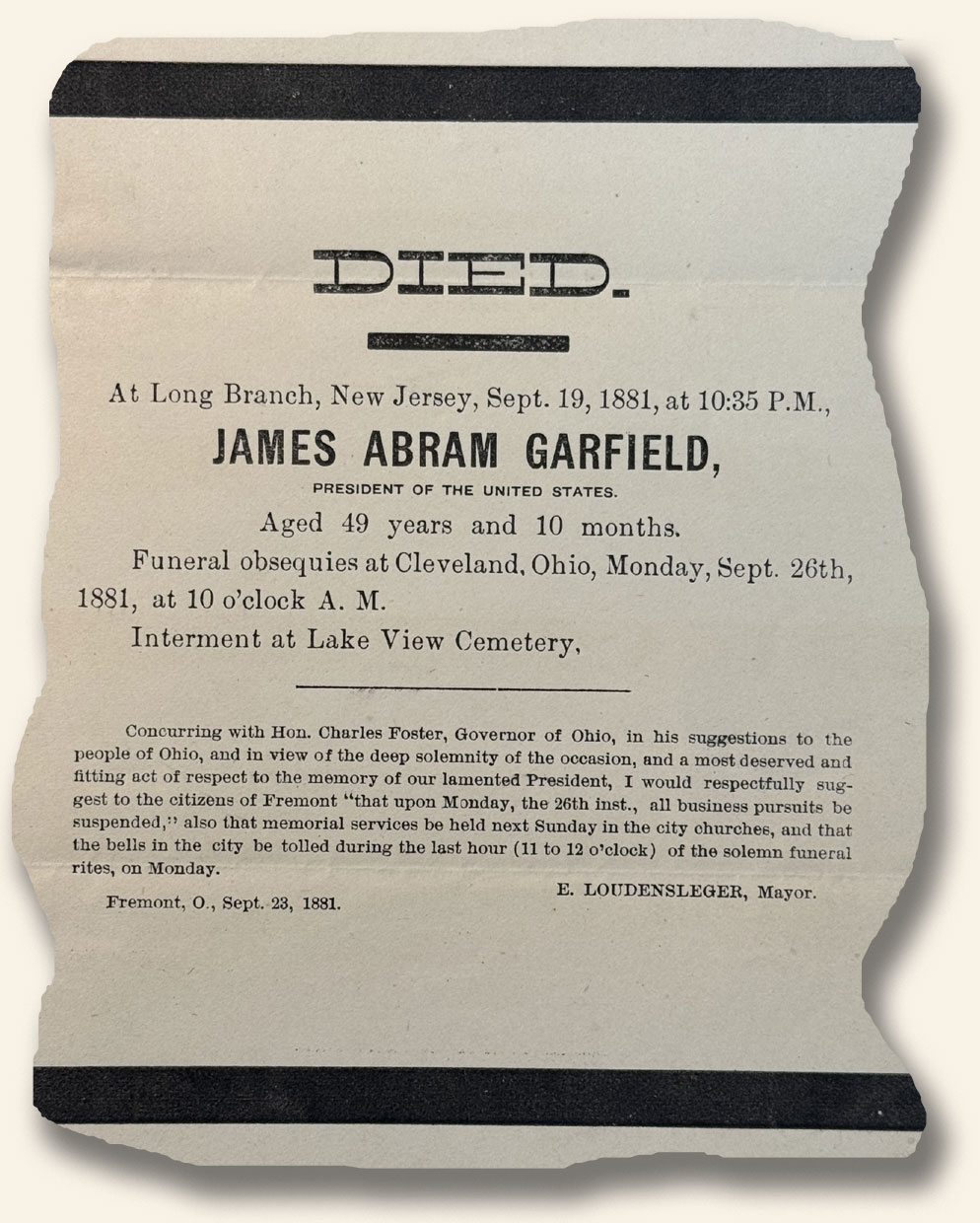 ually “Doctor”). Summoned to the scene, Bliss immediately took charge, sidelined other physicians, and restricted access to the president. He was convinced the bullet sat on the right side of Garfield’s body near the liver. It did not. A post-mortem examination revealed it lodged safely on the left side, embedded near the pancreas without harming any vital organs. Bliss, however, never accepted he was wrong.
Worse than his misdiagnosis was his method of treatment. Though Joseph Lister’s antiseptic techniques were gaining traction in Europe and among progressive American physicians, Bliss effectively rejected them. He repeatedly probed Garfield’s wound with unwashed fingers and unsterilized instruments, transforming a minor entry wound into a massive, pus-filled infection channel. He subjected the president to painful examinations without anesthesia, fed him rectally with concoctions of beef bouillon and egg yolks, and heavy-dosed him with quinine and morphine. Garfield lost nearly 100 pounds as his body broke out in systemic abscesses. On September 19, he succumbed to sepsis and a ruptured splenic artery.
At his trial, Guiteau famously—and with grim accuracy—claimed: “I deny the killing, if your Honor please. We admit the shooting.” He argued that while he had merely shot the president, the doctors had killed him. The public record increasingly backed that assertion.
Critics fiercely condemned Bliss’s arrogance and stubborn refusal to adopt modern medicine. A popular 19th-century jab soon circulated with particular sting: “Ignorance is Bliss.”
The phrase itself was far older, coined by English poet Thomas Gray in 1742 (“Where ignorance is bliss, ’tis folly to be wise”). But after Garfield’s death, the old line took on a bitter new life. Bliss’s name and vanity turned a classic poetic observation into a sharp medical epitaph. The pun stuck in popular retellings, granting an 18th-century idiom an extra layer of tragic dark humor no poet ever intended.
Garfield’s wound was easily survivable by modern standards—and likely survivable even by the best medical practices of 1881. Instead, he received confident ignorance dressed as expertise.
Did it All Start with a Laugh?… Political Cartoons Across Time…
September 14, 2026 by Laura Heilenman · 1 Comment
Which of us doesn’t love a good laugh, especially when we need a healthy way to relieve a bit of the built-up pressure? The presence of political cartoons can sometimes take the sting out of the craziness of reality. While still popular today in print and digital form, political cartoons have been with us for centuries. Originally, they were not printed in newspapers but sold as individual prints, such as William Hogarth’s “An Emblematical Print on the South Sea Scheme” (1721), a satirical engraving which critiques the financial speculation, corruption, and public credulity that fueled the South Sea Bubble of 1720–21. Eventually, these satirical statements on society made their way into the newspapers of the day and across the ocean to the New World. Benjamin Franklin’s famous “Join, or Die,” appearing in the Pennsylvania Gazette, helped spur the colonies toward Revolution. Decades later, Thomas Nast’s work in Frank Leslie’s Illustrated Newspaper and Harper’s Weekly aided Lincoln’s reelection and helped define the modern two-party system by popularizing both the Republican elephant and the Democratic donkey. Eventually, these artistic gems ventured into color, impacting audiences at a whole new level. Today we are inundated with political satire, some of which is comparable to the talent of the 1700s and 1800s and much of which falls well short. Regardless, our culture would be less rich without this creative way to help us laugh our way through more stressful times.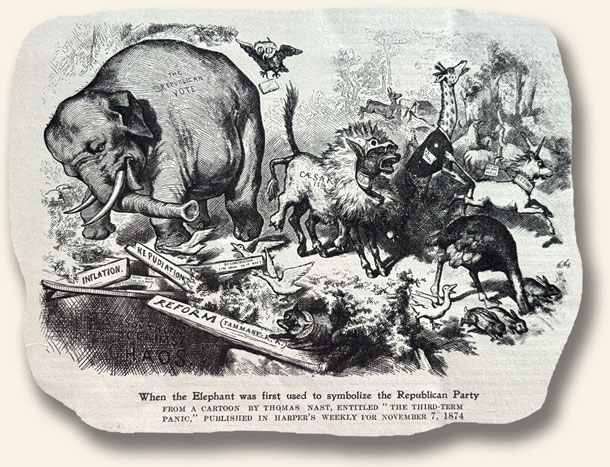
The Jamestown Charter… The Start of Something Great…
September 11, 2026 by Laura Heilenman · Leave a Comment
In the pages of Mercurius Politicus… London, 27 May 1652, readers encountered one of the most consequential documents of early colonial America. This rare newsbook, edited by the chameleon-like Marchamont Needham in service of the Commonwealth, carried the full text of the Treaty of Jamestown. Virginia’s royalist governor, Sir William Berkeley, had clung to the Stuart cause even after Charles I’s execution in 1649. Parliament responded with an embargo and, in the autumn of 1651, a fleet of fifteen ships. Commissioners summoned Berkeley and the House of Burgesses. On the 12th of March 1652, the colony surrendered at James City. The twelve articles were remarkably generous: full indemnity for past resistance, confirmation of all existing land grants and boundaries, freedom of trade (defying Parliament’s Navigation Acts), and limited religious continuity. The governor, council, and burgesses signed for Virginia; the parliamentary commissioners signed for England. Earlier treaties with Native nations—Hartford in 1638 and the 1646 Virginia agreement—exist, yet this appears to be the first formal political settlement between an English colony and the home government ever printed in a periodical. Surviving records of the era are sparse; the Mercurius Politicus printing therefore stands as a primary window onto a pivotal, largely peaceful transfer of power. The Treaty of Jamestown preserved property rights, granted amnesty, and allowed Virginia to continue under new masters with minimal disruption. In a single newsbook we glimpse both the reach of the English Civil Wars across the Atlantic and the pragmatic realism that shaped early American self-government.
Labor Day. . . End of Summer, Hurricanes Ramp Up…
September 7, 2026 by Laura Heilenman · Leave a Comment
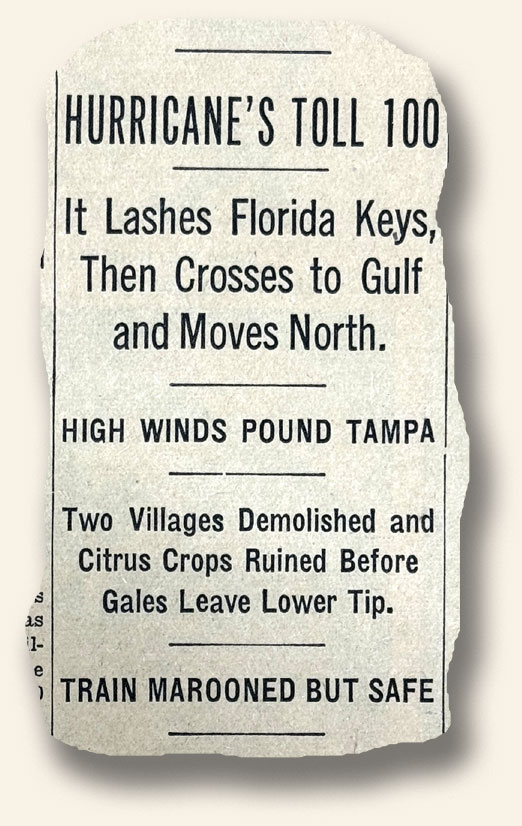 Labor Day once marked the final lazy days of summer. . . the last stretch before school began. These days, many kids head back weeks earlier and while family picnics and yard games still happen, the holiday loses a little of its shine when it no longer feels like summer’s true close. September’s arrival often brings more than just last of those firefly filled evenings. Although Atlantic hurricane season officially begins on June 1, my family never bothered with travel insurance for our Outer Banks vacations unless our trip began in September. Risky? Maybe. . . especially given how destructive East Coast storms can be. Those hoping for a relaxed Labor Day in 1935 faced far worse. The powerful Labor Day Hurricane devastated the Florida Keys, killing hundreds (many of them World War I veterans working on a highway project). On its front page, the September 4, 1935, New York Times reported the Morgan liner Dixie stranded on a reef with more than 350 people aboard, rescue ships blocked by heavy seas, while the captain radioed that all remained well. We can only speculate that family picnics were put on hold; it was truly, all hands-on deck.
Reasons for the Declaration of Independence. . . Step by Step Logic…
August 28, 2026 by Laura Heilenman · Leave a Comment
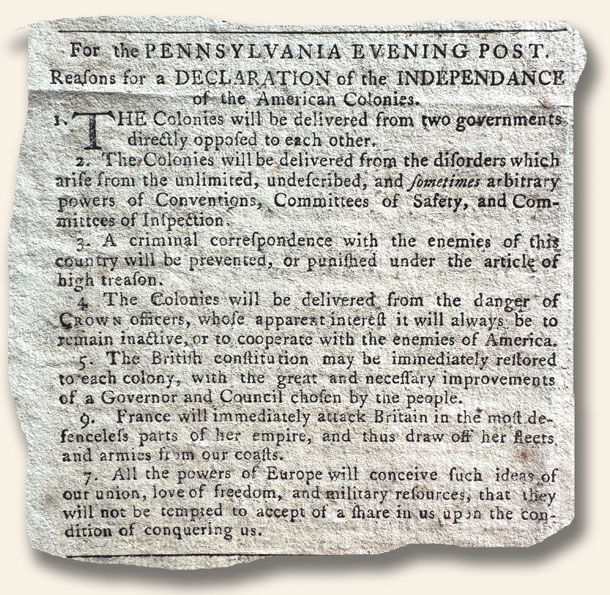 Often as we have big decisions ahead of us, wise council around us may prompt us to ask ourselves the question. . . why? Knowing the whys can often help point us to answer the more logistical question of how. In April of 1776, the Pennsylvania Evening Post attempted to lay out the why of the enormous decision facing the colonies. Below, read the text and reasoning laid before the citizenry.
Reasons for a DECLARATION of the INDEPENDANCE of the American Colonies.
- THE Colonies will be delivered from two governments directly opposed to each other.
- The Colonies will be delivered from the disorders which arise from the unlimited, undescribed, and sometimes arbitrary powers of Conventions, Committees of Safety, and Committees of Inspection.
- A criminal correspondence with the enemies of this country will be prevented or punished under the article of high treason.
- The Colonies will be delivered from the danger of Crown officers, whose apparent interest it will always be to remain inactive, or to cooperate with the enemies of America.
- The British constitution may be immediately restored to each colony, with the great and necessary improvements of a Governor and Council chosen by the people.
- France will immediately attack Britain in the most defenseless parts of her empire and thus draw off her fleets and armies from our coasts.
- All the powers of Europe will conceive such ideas of our union, love of freedom, and military resources, that they will not be tempted to accept of a share in us upon the condition of conquering us.
If only we could all present our logical arguments in such a concise and impactful manner.
A recently released video related to this post is available at: Independence was Destiny – The Case for Independence
Blockbusters of the Past. . . Movies Bring Nostalgia…
August 21, 2026 by Laura Heilenman · Leave a Comment
Summer blockbusters and Christmas releases are often a highlight as family and friends gather for celebrations. As evenings grow darker in late summer, or as the last of the Thanksgiving or Christmas dinner dishes are washed and dried, those big-budget Hollywood movies often tempt merrymakers out of the house and down the street to the local theater. One of the delights of working at RareNewspapers is unearthing nostalgic ads for movies from our past. We often shake our heads and remark to each other, “They don’t make them like that anymore.” While that sentiment may or may not be true, those films will always hold a special place in our hearts. If you love old movies. . . especially those from the final decades of the 20th century. . . perhaps the following full-page movie ads from the Los Angeles Times, Hollywood’s hometown paper, will renew your memories, hopefully bringing a smile to your face and possibly inspire a trip down the street to your local theater.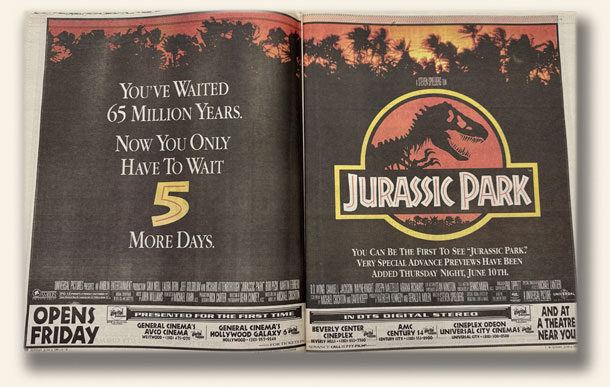
Ballot Box Standoff…Veterans Bring Justice…
August 7, 2026 by Laura Heilenman · Leave a Comment
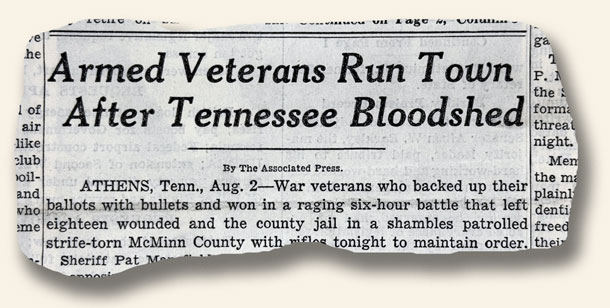 On August 2, 1946, as reports from the previous night’s violence in McMinn County began reaching national newsrooms, The New York Times carried early accounts of the Ballot Box Standoff in Athens, Tennessee. Initial wire dispatches described a chaotic election-day confrontation in which returning World War II veterans, alleging that a corrupt local machine was preparing to steal the vote. Clashes ensued with heavily armed deputies, and one early headline erroneously claimed a sheriff had been slain, reflecting the confusion of overnight bulletins as the story was still unfolding. By the next morning’s August 3 edition, the Times gave the story prominent front-page treatment with an Associated Press report headlined “Armed Veterans Run Town After Tennessee Bloodshed.” Datelined Athens, August 2, the article detailed how GI-backed citizens had besieged the county jail after deputies seized ballot boxes, exchanged gunfire for hours, used dynamite, and ultimately forced the surrender of roughly fifty deputies. Eighteen people were wounded; the veterans then patrolled the streets with rifles to maintain order while the ballots were recovered and counted. An editorial on page 10, titled “Election in Tennessee,” weighed the deeper meaning of the events. It acknowledged the veterans’ conviction that a dictatorial political machine had long falsified results and that peaceful avenues of reform seemed closed. Yet the editorial also cautioned that taking the law into one’s own hands—however understandable the grievances—threatened the orderly processes essential to democracy, leaving readers with a sober reflection on both the courage and the risks of the armed stand for honest elections.
California’s Workaround… a Prohibition loophole…
August 3, 2026 by Laura Heilenman · Leave a Comment
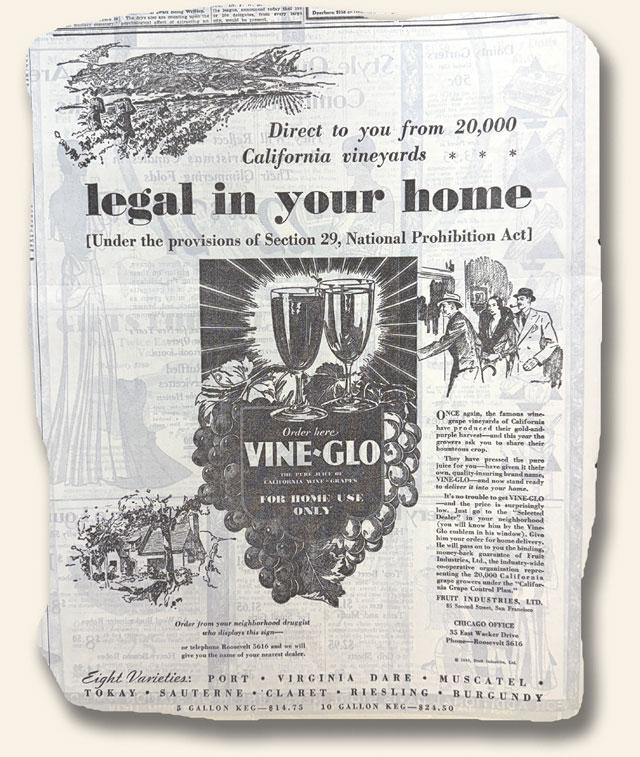 When Prohibition took effect on January 17, 1920, under the 18th Amendment and the Volstead Act, American grape growers and winemakers faced a philosophical crisis. Commercial production, sale, and transportation of alcoholic beverages were suddenly illegal, threatening to wipe out California’s thriving vineyards. Many growers considered ripping out their vines and planting other crops. Yet a crucial loophole in Section 29 of the Volstead Act offered a lifeline: households could legally produce up to 200 gallons of non-intoxicating fruit juices or cider each year strictly for personal home consumption. Demand for wine grapes soared almost overnight as people began crushing and fermenting them themselves, and prices climbed dramatically.
Enterprising producers soon refined this workaround into a convenient product known as grape bricks (or wine bricks). Companies such as Vino Sano (appearing around 1921) and later Vine-Glo compressed concentrated grape juice into solid, shelf-stable blocks that could be shipped anywhere and stored for months. Customers simply dissolved a brick in a gallon of water to create grape juice. The bricks came in flavors that conveniently matched popular wines—port, sherry, burgundy, claret, muscatel, and others—making the intended use obvious to anyone paying attention. An ad for these grape bricks, by the company Vine-Glo, is found in THE CHICAGO DAILY TRIBUNE for December 8, 1930.
This innovation kept many vineyards alive and even made some growers wealthy during the dry years. The most memorable feature of these bricks was the carefully worded “warning” printed on the packaging. Labels instructed buyers on how to reconstitute the juice and then solemnly cautioned them not to leave the mixture in a cool cupboard for twenty or twenty-one days, not to add sugar in certain amounts, and not to fail to add benzoate of soda—because otherwise the liquid would ferment into wine. These reverse instructions served as a thinly veiled recipe while allowing the sellers to claim they were only providing a legal non-alcoholic product. The wink-and-nod approach worked for years, turning grape bricks into one of Prohibition’s most ingenious (and widely enjoyed) workarounds until court challenges and the eventual repeal of the ban in 1933.
The Moment Before the World Changes… Lincoln’s Assassination Day…
July 27, 2026 by Laura Heilenman · Leave a Comment
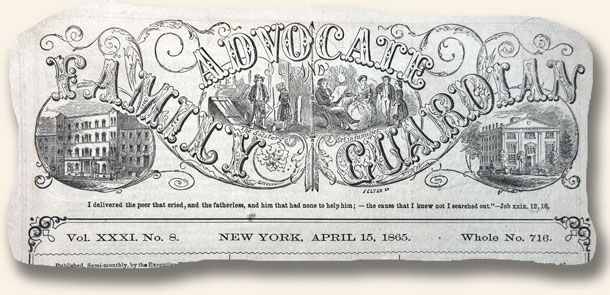
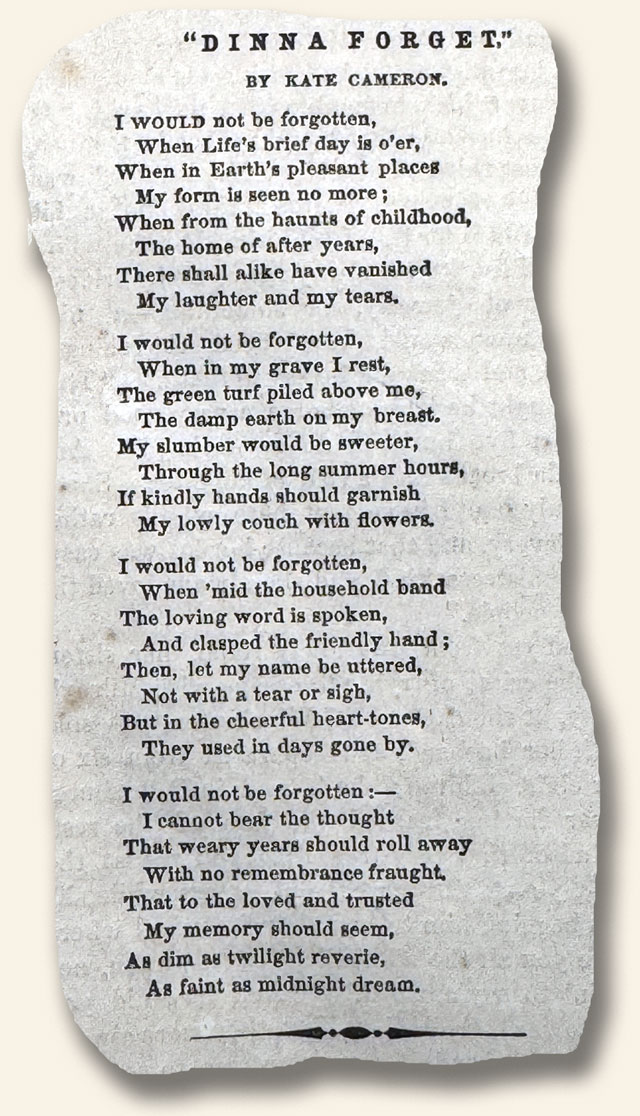
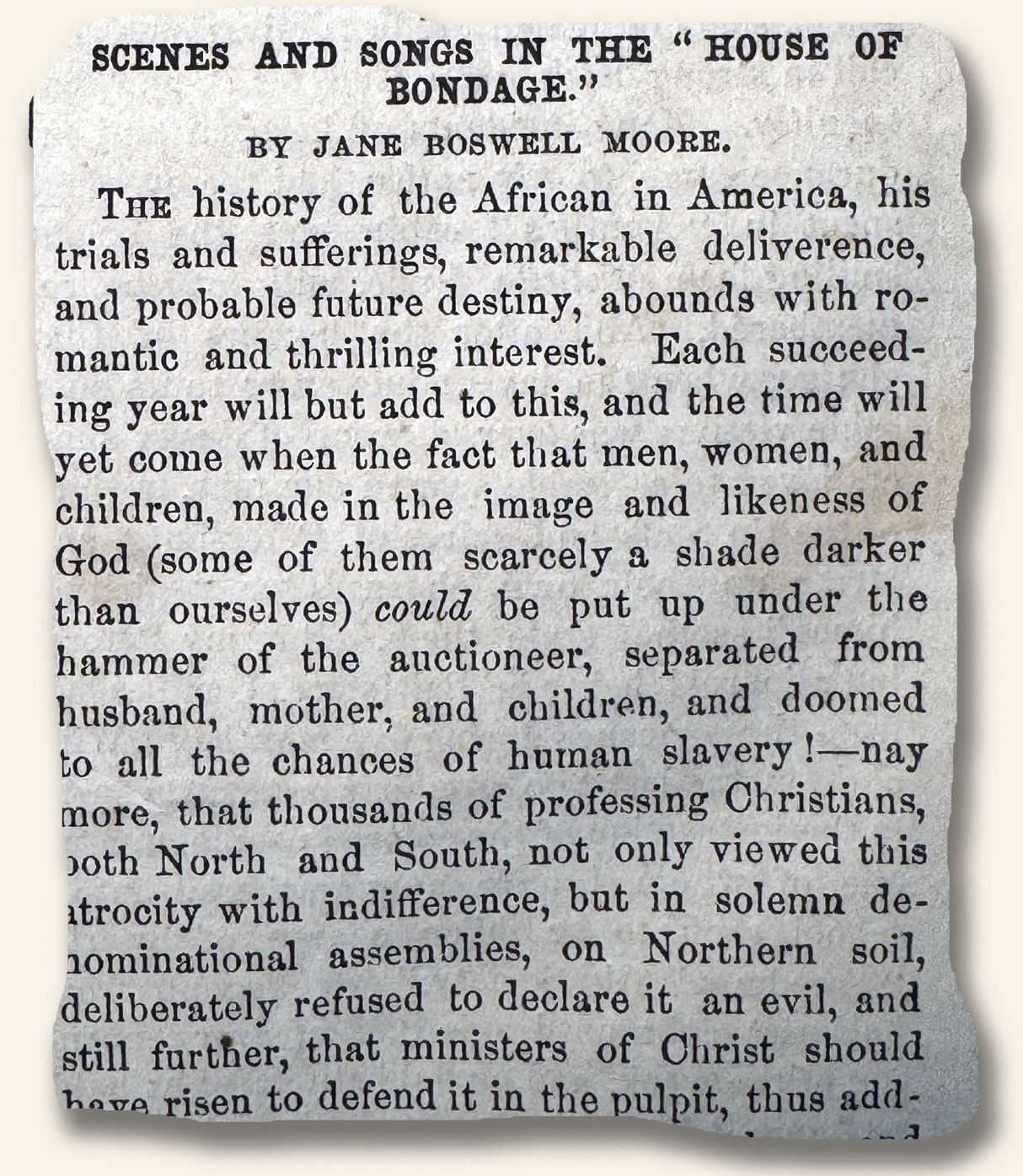
You can’t read historic newspapers for long before you are struck by how often people experience “the moment before”.
The April 15, 1865 issue of the ADVOCATE FAMILY GUARDIAN has a prime example with so much nuance that you can’t imagine it was not planned and yet, clearly it was not.
Hours before President Lincoln was Assassinated, the paper published their daily edition and the front page was framed by 2 articles. On the left side was a poem describing the death of someone and how they would never be forgotten. The right side had an article describing slavery and how God’s people should have risen to speak against it. What a beautiful, accidental tribute to the President who was about to be mourned and who did rise and stand against slavery. The irony of the frontpage coverage could not be lost on the reader… in hindsite.