
Search
The Rare & Early Newspapers Hobby

Receive the Newsletter

Buy Historic Newspapers

Stories Surrounding the Declaration of Independence… the Treason of Thomas Hickey…
July 13, 2026 by Laura Heilenman · Leave a Comment
In light of the historic birthday for the American Declaration of Independence, I thought it might be nice to look at some of the surrounding stories that occurred which could have helped or hindered this momentous time in history. Perhaps one of the more intriguing stories is the treason of Thomas Hickey and those who were likely involved at some level.
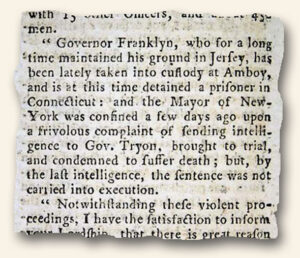 In June 1776, as British forces threatened New York, General George Washington faced betrayal within his own ranks. Thomas Hickey, an Irish-born soldier and member of Washington’s elite Life Guard, became central to a Loyalist conspiracy reportedly backed by New York Governor William Tryon. The plot allegedly involved recruiting guardsmen, sabotaging supplies, and possibly assassinating Washington when British troops arrived.
Hickey’s downfall began when he was arrested for passing counterfeit money. While jailed, he bragged to fellow prisoner Isaac Ketcham about enlisting Life Guardsmen and receiving payments from Loyalists. Ketcham alerted authorities, exposing the scheme.
On June 26, Hickey faced a swift court-martial. Charged with mutiny, sedition, and corresponding with the enemy, he was convicted on witness testimony and sentenced to death by hanging. Washington approved the sentence the next day.
On June 28—the same day John Adams was presenting Thomas Jefferson’s draft of the Declaration of Independence to the Continental Congress in Philadelphia—Hickey was hanged before an estimated 20,000 soldiers and civilians near Bowery Lane in Manhattan. Washington ordered the mass attendance to deter treason, making Hickey the first Continental soldier executed for such crimes. The event underscored the fragility of the Patriot cause and reinforced discipline on the eve of battle.
Coverage of this conspiracy can be found in THE LONDON CHRONICLE, August 8, 1776. Ironically, parts of this British plot can also be found in THE GENTLEMAN’S MAGAZINE, August 1776 … the same GENTLEMAN’S MAGAZINE containing the entire printing of the Declaration of Independence. 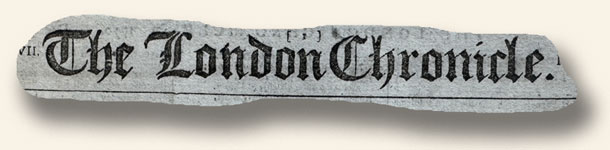
The Declaration of Independence…Our Lives, Our Fortunes and Our Sacred Honor…
July 4, 2026 by Laura Heilenman · Leave a Comment
 For roughly 5,000 years of recorded history, human civilization largely moved at a glacial pace. Empires rose and fell under kings, emperors, and tyrants. Most people lived under arbitrary rule, with limited rights, widespread slavery or serfdom, and slow technological and economic advancement. Then, in a remarkable burst beginning in the late 18th century, progress exploded, accelerated by the American Founding.
The Founders didn’t invent ideas from nothing—they synthesized the best principles from millennia of human experience, rooted in natural law, Judeo-Christian morality, English common law, and selective Enlightenment thought. They implemented these ideas into a new system of government that protected individual liberty and unleashed human potential like never before.
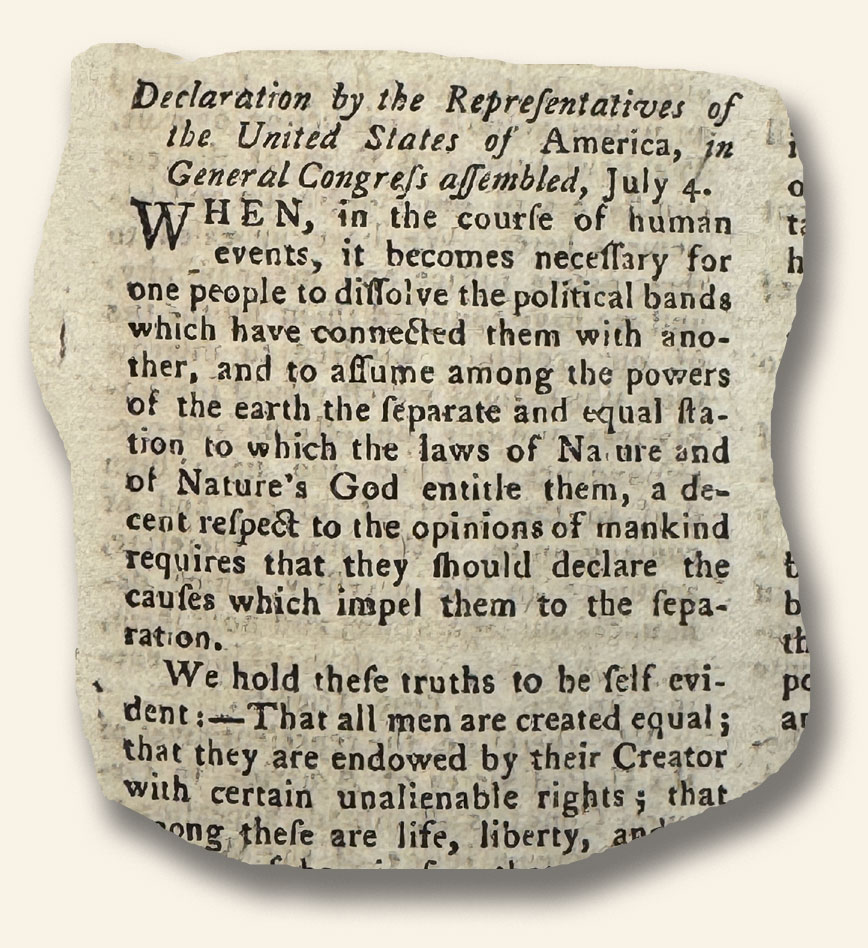
The intellectual roots of the Declaration of Independence (photo shown is from The Gentleman’s Magazine, London, August, 1776) stretch back thousands of years. Natural Law formed the bedrock with ancient thinkers like Aristotle and Cicero describing universal principles of justice discoverable by reason. Medieval Christian philosophers, especially Thomas Aquinas, integrated this with divine order. English common law and documents like the Magna Carta (1215) began limiting monarchical power and affirming rights.
Judeo-Christian traditions emphasized the inherent dignity of every person created in God’s image, moral accountability, and the idea that rulers are not above the law.
The Enlightenment provided key modern refinements. John Locke’s Second Treatise of Government (1689) powerfully argued for natural rights to life, liberty, and property; government by consent of the governed; and the right of the people to overthrow tyranny. Montesquieu influenced ideas of separated powers.
The American colonists, steeped in these traditions through education, sermons, and experience with British overreach, saw the Crown’s actions as violations of these timeless principles. They didn’t seek to create something entirely novel but to restore and perfect ancient liberties in a new republic.
The Declaration didn’t end history’s challenges, but it marked a turning point. By grounding government in natural law, consent, and unalienable rights—while building institutions around virtue, limited power, and free enterprise—the Founders created conditions where human potential could flourish as never before.
Below you will find the fruit of the painstaking assembly of thoughts these Founders labored through, searching history & the heart of their creator to lay a framework for all mankind. Today of all days, may we appreciate their singular focus on creating a republic that would last and inspire others.
Declaration of Independence: A Transcription | National Archives
A Time of Transition… Washington’s Funeral…
January 20, 2025 by Laura Heilenman · Leave a Comment
 As I sit down to write this post, I wonder if there has ever been the death of a former president within 2 weeks of the inauguration of another. It is a lot of change for a country to lay to rest a former president (President Carter) while welcoming in a new leader (President Trump), however, it must have been significantly more unsettling for a nation to put to rest their 1st president. His legacy and wisdom were now gone from public discourse and there was still so much to be done. The blend of sadness and uncertainty must have been quite unsettling – yet, the nation moved forward.
We are now entering our own days of transition with hope that the upcoming weeks may not be days of tumult and that our new leaders will guide our nation with the same steady hand and heart General George Washington demonstrated during the early, formative, first-steps-era in our nation’s history. My prayer is that they look for wisdom and guidance from the same Source General Washington did so that 225 years from now, their life stories are also shared with pride and provide inspiration.
Last words can say it all – John Hancock’s thankful heart… Happy Thanksgiving!
November 11, 2021 by LauraH · Leave a Comment
Food for thought as we wish each other a Happy Thanksgiving.
What do the following sayings have in common: “A man’s last words reflect what he held most dear”… “He finished well”… “He ran with perseverance the race set before him”?
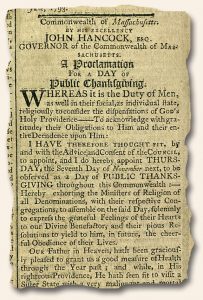
I would argue, based on a fascinating issue of the Columbian Centinel (Oct. 9, 1793) I found today, they are all applicable to John Hancock. What began as intrigue with a Proclamation for a Day of Thanksgiving by this notable Founding Father, turned to a swell of warmth as I noticed his death announcement within the same issue. At the end of his life, he was clearly focused on giving thanks: “Where as it is the Duty of Men, as well in their social, as individual state, religiously to consider the dispensation of God’s Holy Providence – To acknowledge with gratitude, their obligations to Him and their entire dependence upon Him: I have therefore thought fit, by and with Advice and Confident of the the council, to appoint, and I do hereby appoint Thursday, the Seventh Day of November next, to be observed as a Day of Public Thanksgiving throughout this Commonwealth…”
His well-run race, punctuated by an abundance of highlights along the way, stands as an emphatic reminder to never take thankfulness for granted. While it is easy to assume gratitude has always been in the hearts of men, truth is, its more rare than one would hope and needs to be proclaimed more often. In John Hancock’s case, his words and deeds proclaimed the overflow of his heart long before he signed off on this life and entered the next.