

Search
The Rare & Early Newspapers Hobby

Receive the Newsletter

Buy Historic Newspapers

One small step backward for humanity(?)… One giant leap forward for A.I.!
June 20, 2022 by GuyHeilenman · Leave a Comment  Email This Post
|
Email This Post
|  Print This Post
Dystopian movies featuring A.I. as the antagonist abound. The thought of a world in which a soulless “entity” is in the lead role with humanity at its behest is terrifying. How will the relationship between A.I. and humans play out over time is anyone’s guess, but with all the benefits artificial intelligence brings to the table, I feel a little like “a moth to a flame”, and it bugs me.
Why the angst? We recently came across a Los Angeles Times dated May 12, 1997, which had coverage of the historic(?) chess match between Gary Kasparov, the reigning world champion at the time, and “Deep Blue”, an IBM supercomputer. The strings of o’s and 1’s ruled the day, defeating Kasparov in the deciding game in 19 moves. I wonder if many moons from now, when/if A.I. decides to write its own developmental timeline, if this achievement will be listed as one of significance? Note: In case anyone is wondering, upon its victory, “Deep Blue” was NOT crowned the new World Champion of Chess.
If you liked this post, you may also enjoy...
- A gem from the American Antiquarian Society…
- Where game history, moral philosophy, and educational theory collide…
- The Traveler… in the line-up…
- World Series bound… Before the “Curse of the Bambino”… The Traveler…
- The Traveler… Too Much Pain and Suffraging…
Snapshot 1932 – Babe Ruth’s famous “called shot”…
June 17, 2022 by GuyHeilenman · Leave a Comment Email This Post
| Print This Post
Whether it’s a famous battle, a noteworthy feat, a tragedy, etc., in nearly every instance a report from the location in which a notable event occurred is significantly more desirable (therefore, more valuable) than a similar report within newspapers from other locations. One such case involves the report of Babe Ruth’s famous “called shot” during the 1932 World Series found in the October 2nd issue of the Chicago Sunday Tribune. In nearly 50 years we have only held one in our hands, and for those of us who respond enthusiastically to such a tactile experience, it truly is a great item. Some might wonder why a New York Times wouldn’t be more collectible, after all, Ruth played for the Yankees. However, the game was against the Chicago Cubs, and the historic moment transpired at Wriggley Field, Chicago. A photo of a portion of the front page is shown below, but if you are unfamiliar with his called shot, you may find the story quite interesting: Babe Ruth’s Called Shot (Wikipedia)
If you liked this post, you may also enjoy...
- Collector Eric Fettmann on Babe Ruth & Yankee Stadium…
- World Series bound… Before the “Curse of the Bambino”… The Traveler…
- The “experts” don’t always get it right…
- The Traveler… Babe Ruth signs on the dotted line…
- For whom the Baby Ruth candy bar was named…
The Fight Against Slavery… 1822…
June 13, 2022 by GuyHeilenman · Leave a Comment Email This Post
| Print This Post
 If asked to name famous men and women who fought to free slaves and/or to bring an end to this horrible era in American history, most short-lists would likely include Frederick Douglass, Harriet Beecher Stowe, Sojourner Truth, Harriet Tubman, and John Brown, but many others were also sacrificially and emphatically committed to the cause who are relatively (if not completely) unknown. Such is the case of Telemaque, a free former slave who was executed for conspiracy. If you are from Charleston, SC, you likely know his name long with a handful of his accomplishments; however, the remainder of us would do well to learn more about him: Telemaque (Denmark Vessey)
If you liked this post, you may also enjoy...
- Who’s Who in Newspapers? Denmark Vesey edition…
- The impact of Newspapers on the abolition of slavery…
- “Uncle Tom’s Cabin” – impacting The Senate and The South (1853)…
- Time-Lapse… Frederick Douglass (1834) to Henry Garnett (1865)…
- Help needed to understand – Rev. J.W.C. Pennington’s correspondence…
Journalism from Early America to the Digital Age… Election Fraud and more…
June 10, 2022 by GuyHeilenman · Leave a Comment Email This Post
| Print This Post
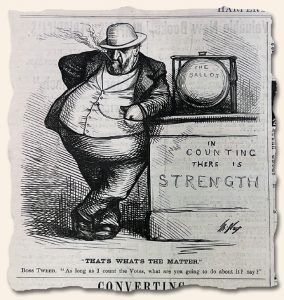 Someone recently brought to my attention an article posted on the website “Brewminate: A Bold Blend of News and Ideas”. While scanning the article I was intrigued by the presence of illustrations of newspapers we have or have previously offered. One in particular which caught my attention was the timely political cartoon by Thomas Nast found in the Oct. 7, 1871 issue of Harper’s Weekly. While a degree of election fraud is (unfortunately) part-and-parcel of the election process, I was inspired to read through the entire article, and in so doing, found it to be quite informative… and wondered if the friends of Rare & Early Newspapers might also find it interesting. Hopefully you will also enjoy reading it:
“Journalism from Early America to the Digital Age”
If you liked this post, you may also enjoy...
- Snapshot 1844 – Voter Fraud… “death by a thousand cuts…”
- The Political Season Has Arrived. Next Up – An October Surprise (?)…
- The Traveler… seeking Governor Wilson… the cats meow…
- Snapshot 1886… Mark Twain – yet another hidden gem…
- From the Vault: Creating Harper’s Weekly engravings: a fascinating process…
The Lure of Swashbucklers…
June 6, 2022 by LauraH · Leave a Comment Email This Post
| Print This Post
Nothing grabs the public’s attention quite like stories of pirates, whether they be historical accounts of actual people or stories of those who play a pirate on the big screen. Of all the legends both real and created, none can surpass the real-life drama of Captain Kidd. Scottish born in 1645, he grew to be both pirate and privateer – the distinction fueled by the encounters he had with those who crossed his path. In the end, betrayed by the governor of New York, as reported in The London Gazette, May 26, 1701, he was hung twice by the neck until dead.
If you liked this post, you may also enjoy...
- Death of Blackbeard, the pirate…
- The Traveler… Black Beard, somewhat live… “Wonderful Woman”…
- The Traveler… tired of pirating… checking out early?…
- Swashbuckling Adventures…
- The Traveler… times at odds… three shots, but not dead…
A President’s Call for Sacrifice…
June 3, 2022 by LauraH · Leave a Comment Email This Post
| Print This Post
I am sure a quick perusal of American history would yield an abundance of occasions in which a President called for American citizens to tighten their belts, rise to the challenge, or sacrifice for the greater good. We certainly hear those sentiments often enough today. So, you can imagine how the following headline in a May 25, 1961 issue of the LEOMINSTER DAILY ENTERPRISE caught my attention. In this case, President Kennedy was casting a vision for the stars and America’s hope to send a man to the moon before 1970. We were sold and tightened our belts to rise to this other worldly challenge. This Space Race caught our imaginations and propelled us to the front of the line. If only all challenges were this exceptional and easy to embrace.
If you liked this post, you may also enjoy...
- America stunned by Soviet success in the space race…
- There must be a man in the moon…
- Great Headlines Speak for Themselves… The First Moon Walk…
- Mission to Mars… Climb aboard…
- The Traveler… the President takes office, again…
Announcing: Catalog #319 (for June, 2022) – Rare & Early Newspapers (for purchase)
May 31, 2022 by GuyHeilenman · Leave a Comment Email This Post
| Print This Post
|
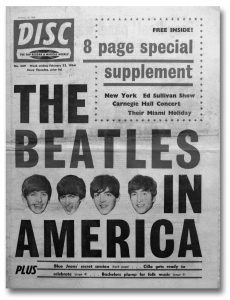 June’s catalog (#319) is now available. Also shown below are links to a video featuring highlights from the catalog, our currently discounted newspapers, and recent posts to the History’s Newsstand Blog. Please enjoy.
|
The links above will redirect to the latest catalog in approx. 30 days,
upon which time it will update to the most recent catalog.
If you liked this post, you may also enjoy...
- Announcing: Catalog #318 (for May, 2022) – Rare & Early Newspapers (for purchase)
- Announcing: Catalog #316 (for March, 2022) – Rare & Early Newspapers (for purchase)
- Announcing: Catalog #320 (for July, 2022) – Rare & Early Newspapers (for purchase)…
- Announcing: Catalog #327 for February, 2023 – Rare & Early Newspapers for collectors…
- Announcing: Catalog #328 for March, 2023 – Rare & Early Newspapers…
Memorial Day – How many generations does it take to… (?)
May 27, 2022 by GuyHeilenman · Leave a Comment Email This Post
| Print This Post
Generation 1 – The Call to Sacrifice
The oppressed are willing to sacrifice their very lives to throw off oppression – and many of them do, giving their last breath for the sake of their children and their children’s children.
Generation 2 – Picking Up the Pieces
Those recently freed from oppression begin to reap the rewards of their new freedom, but many scars remain – particularly those caused by the loss of loved ones.
Generation 3 – Enjoying Freedom’s Bounty
The sacrifices of the past are still discussed, but the wounds are largely well-healed, and the benefits born of the sacrifice of others is fully embraced.
[an unspecified number of generations – usually not many]
Generation End (Minus 2) – Freedom Is & Always Will Be
Freedom is so commonplace, it begins to be taken for granted. The oppression and sacrifices of the past are long forgotten.
Generation End (Minus 1) – Heads in The Sand
Freedom, is it really all that important? Comfort and ease is what we want. Sacrifice? For what! A blind eye is turned to the new oppressors at the gate.
Generation End – The Demise!
Where did our freedom go? Why are we being oppressed?? How did this happen???

Memory – it’s indispensable. A simple internet search for “lest we forget”, “those who fail to remember”, or similar will return a plethora of warnings about the consequences which go hand-in-hand with not remembering the lessons, sacrifices, blessings, etc. of the past.
As an example, it would be hard to argue that the Jews/Israelites, through time, have been one of the most oppressed people-groups on the planet – a chain of horror which began with their enslavement in Egypt. One would have thought their eventual “deliverance” by the hand of God would have set them up for eternity, yet, just a few generations after their new-found freedom was realized, they found themselves enslaved once again. Why? “The Israelites failed to remember the LORD their God who had delivered them from the hands of all their enemies on every side (Judges 8:34).”
While each generation needs to take personal responsibility for “remembering”, one cannot remember that which one never knew. Therefore, we, as the current generation, must take ownership of teaching ourselves, keeping what we learn in the forefront of our minds, and then teaching the next generation – lest they never know. Will this take considerable effort? Sure, but the sacrifice of time and energy pales in comparison to the sacrifices of the past.
To this end, perhaps the following will be useful:
Previous Memorial Day Themed Posts
Memorial Day Themed Newspapers
PS I am grateful for the men and women who have given their lives so my family, friends, and neighbors, whether we be politically or philosophically divergent or parallel, can enjoy the freedoms which fall under the umbrella of “inalienable Rights which are endowed to each one of us by our Creator”.
If you liked this post, you may also enjoy...
- Contemplating Memorial Day in light of the last 15 months…
- Yesterday & Today… Memorial Day & Tariffs…
- Perhaps not a perfect system, but… Happy Memorial Day!
- Memorial and Independence Day’s behind us… Veteran’s Day before us…
- Reflections on Decoration Day: Honoring the Ultimate Sacrifice…
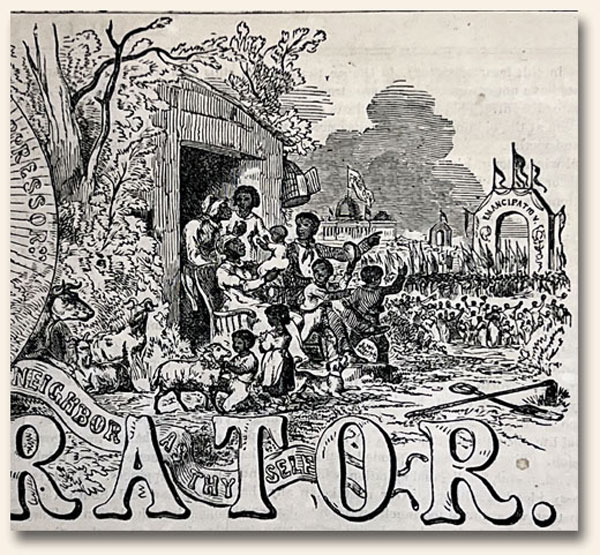
A woodcut masthead is worth a thousand words… Slavery…
May 16, 2022 by GuyHeilenman · Leave a Comment Email This Post
| Print This Post
A few weeks back my favorite person posted: Take a Closer Look … The Delicate Details of Woodcut Prints…
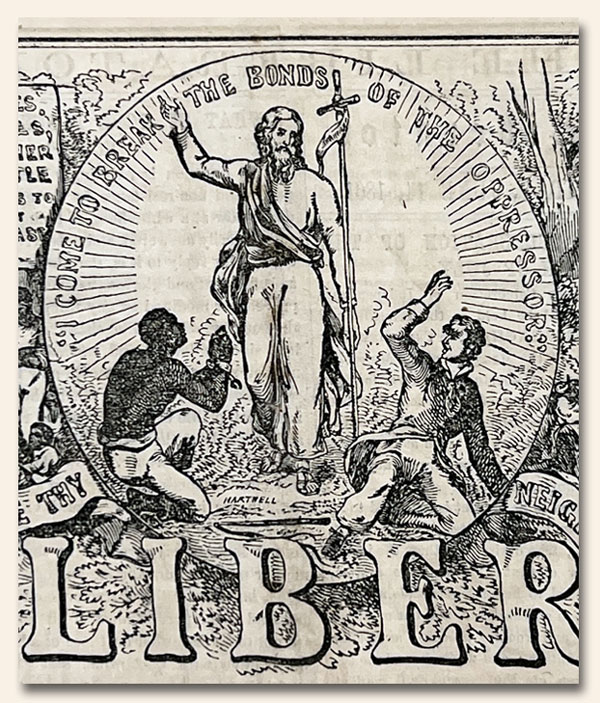
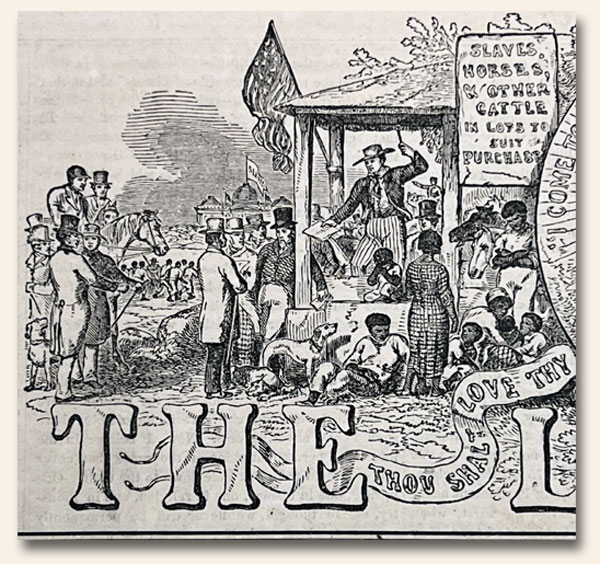
Such prints are truly amazing. However, as is the case with (most?) works of art, to some degree they tell a story. One such story is that of “Slavery – The Cry for Emancipation”, as told through the masthead of The Liberator. While we have many historic newspapers containing articles chronicling the path from the horrors of slavery, through emancipation, then on to suffrage and beyond, few rival what is communicated through this most-amazing, intricate, illustration which was present at the top of nearly every issue. At a distance its beauty speaks to the eyes, but a close-up view shouts to the heart: ENOUGH!
See for yourself:

If you liked this post, you may also enjoy...
- The Traveler… The Emancipation… the last look… and today…
- Take a Closer Look … The Delicate Details of Woodcut Prints…
- June 19, 1865 – The historical foundation of “Juneteenth”…
- The impact of Newspapers on the abolition of slavery…
- Who’s Who in Newspapers – Robert Smalls edition…
“The Times They Are A-Changin'”… Martha’s Vineyard… 1867 (updated)
May 13, 2022 by GuyHeilenman · Leave a Comment Email This Post
| Print This Post

Elkman at en.wikipedia
We’ve made a few updates to a prior post…
Most are familiar with the Martha’s Vineyard of today, but few know of its early spiritual roots – at least I wasn’t. However, while scanning issues in search for content which might be of interest to collectors of Rare & Early Newspapers, a front-page article in a Springfield Republican dated August 21, 1867 caught our attention. Under the front page heading: “From Martha’s Vineyard,” appears considerable details regarding Wesleyan Grove (Wesleyan Camp Grove), with the subheading: “The World at a Camp-Meeting – The Sound, Its History and Associations,” followed by considerable detail. One might find it interesting to read the article (through the link above), and then dig a little deeper at Wesleyan Grove. While some elements of the Camp Meeting have undergone dramatic change over time, some things still remain the same. Please enjoy.

If you liked this post, you may also enjoy...