
Search
The Rare & Early Newspapers Hobby

Receive the Newsletter

Buy Historic Newspapers

Remember these names from the “golden era”?
June 23, 2014 by TimHughes · Leave a Comment
One of our more recent purchases was a sizable collection of newspapers from the West Coast which included many 20th century issues covering the deaths of famous movie stars or  entertainers. Not surprisingly, Los Angeles newspaper gave much coverage to the passing of some of the more iconic names of stardom from the “golden era”. Those of a certain age well remember many of famous names of the 1930’s-1950’s (totally unknown to the millennial generation) and I count myself among them, so it was with a certain amount of nostalgia that I read the reports as I was writing up the newspapers for future catalogs.
If I had any common reaction to the reports I read it was to the age of many when they died. When I think of such stars I always presumed they were in their late 60’s or late 70’s when they were still acting & much older when they died. But that was when I was in my teens and 20’s, and anyone who had been “around for awhile” seemed like they were much older than they actually were. I was struck by the ages of many when they died, and perhaps you might be as well. Here is a sampling:
 Tyrone Power 45
Humphrey Bogart 57
Rudolph Valentino 31
George Gershwin 38
Nat “King” Cole 45
Clark Gable 59
Jean Harlow 26
Cary Cooper 60
Mario Lanza 38
Jayne Mansfield 34
Steve McQueen 50
Judy Garland 47
The Traveler… the largest single arrest of Rabbis in American history…
June 16, 2014 by The Traveler · Leave a Comment
 Today I traveled to New York City by the way of The New York Times dated June 19, 1964. There I found a photo on the front page entitled “16 Rabbis Arrested as Pool Dive-In Sets Off St. Augustine Rights Clash”. The photo shows a policeman jumping into the pool at the Monson Motor Lodge to arrest the rabbis. The rabbis were there in response to a letter asking for assistance written by Dr. Martin Luther King, Jr.’s letter that he sent while being imprisoned in St. Augustine due to the civil rights unrest, due to that area not following the segregation policies. This became the largest arrest of rabbis in American history.
~The Traveler
Great Headlines Speak For Themselves… Lionel Barrymore death…
June 13, 2014 by The Traveler · Leave a Comment
The best headlines need no commentary. Such is the case with the DAILY NEWS, Los Angeles, November 16, 1954: “LIONEL BARRYMORE, STAGE GREAT, DIES“
“Wrongway” Corrigan is honored with a backwards headline…
June 9, 2014 by TimHughes · Leave a Comment
The Los Angeles “Herald Express” newspaper of August 5, 1938 honored the interesting exploits of Douglas Corrigan with a rarity in the newspaper world: a headline printed backwards.
This was one of the fascinating tidbits of aviation history. Corrigan flew from Long Beach, California to New York & wanted to fly to Ireland but was denied. So he filed his flight plan to return to Long Beach but flew instead to Ireland, stating “navigational errors” due to heavy cloud cover, etc. (see hyperlink for details). He was given a ticker tape parade in New York City with the banner headline reporting: “N.Y. Millions In Bedlam of Noise and Tons of Confetti Greet L.A. Air Hero” with subheads and a large photo of the parade.But the fascinating part of this item is the banner headline at the very top of the ftpg: ” ! NAGIRROC YAW GNORW OT LIAH” and with a small note below it stating: “If You Don’t Know, Read this the Way Corrigan Flew–Backwards!“
Great Headlines Speak For Themselves… The Rosenberg’s Executed!
May 30, 2014 by GuyHeilenman · Leave a Comment
The best headlines need no commentary. Such is the case with the Los Angeles Examiner, June 20, 1953: “Atom Spies Executed For Aid To Russians”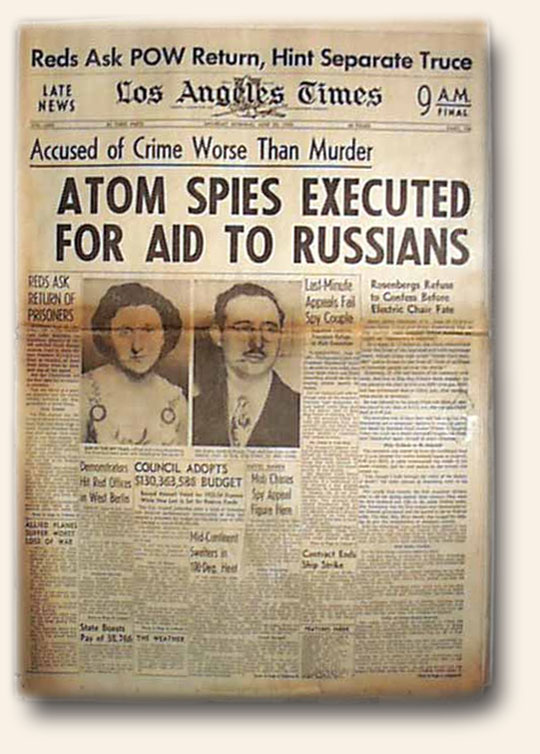
Seeking the best of the 20th century…
May 23, 2014 by TimHughes · Leave a Comment
 The introduction to collecting old newspapers for most typically comes through finding a newspaper of recent past with a headline remembered from history class. They turn up in flea markets, garage sales, and attics, but wherever the discovery, there is a fascination which—for many—begins a quest to find more and better.
Of the five centuries from which old newspapers can be found, the 20th century has one distinct advantage and that is displayability. It was just before the turn of the 20th century that newspaper competition was rampant in the United States and bigger and bigger headlines became one method of grabbing attention over a competitor’s newspaper on the corner newsstand. Headlines from the Spanish-American War of 1898 were often large and dramatic, and that format carried well into the 20th century. Although the aim was to sell more newspapers, the unintended long-term consequence was to intrigue the collector with an enticing headline that would look great on display.
I will touch on some of the more notable events of the 20th century, in chronological order, which may present a “checklist” of events which would be great additions to any collection.
Their can be little question that the oil industry transformed the American landscape, and the first major discovery happened at the beginning 20th century with the Spindletop well near 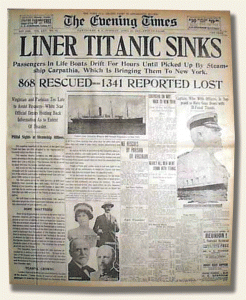 Houston. Just two years later the Wright brothers would make history with their first powered flight, again an event which would transform that way the entire world lives. The first major natural tragedy would be the San Francisco earthquake of 1906, and many newspapers provided graphic details.
The sinking of the Titanic was the next major tragedy which dominated the headlines for not just a day but for several weeks, and newspapers did much to dramatize the event & its investigation. While some newspaper maintained a very conservative format, others sported full banner headlines in bold type with illustrations and photos to make for an appealing front page. Just 3 years later the sinking of the Lusitania would receive similar response by newspaper publishers across the country.
World War I made headlines in American newspapers beginning in 1915, but it was America’s entry in the war in 1917 that would spark more detailed coverage of the war that would end in 1918. News of the armistice ending the war would result in some of the largest & most dramatic headlines to appear in newspapers up to that time.
Following the war, baseball would enter its golden era when Babe Ruth came on the scene, he becoming one of the first of the major stars of the 20th century and capturing headlines in newspapers across the country. But just prior to his hay-day was the infamous “Black Sox” 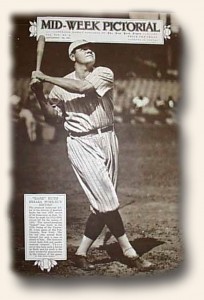 scandal of the Chicago White Sox, with charges of fixing the 1919 World Series games involving several Chicago players. But those headlines would soon be supplanted by the exploits of Ruth as his record-breaking streak added much excitement to the game of baseball and newspapers were only too happy to comply with considerable coverage. Other stars would find prominence as well, including fellow Yankees Lou Gehrig & Joe DiMaggio, and later on Ted Williams & Jackie Robinson among the more notable.
Charles Lindbergh’s accomplishment of being the first to fly solo across the Atlantic caused him to be one of the most famous men in the world at the time, and newspaper coverage was exceptional. But shortly after his 1927 flight the gangster era came to the attention of newspaper, the St. Valentine’s Day massacre of 1929 being one of the first major events to find front page coverage across the country. This fascinating era would extend into the mid-1930’s and names such as Al Capone, John Dillinger, “Baby Face” Nelson, “Legs” Diamond and “Dutch” Schultz were commonly found on front pages.
The stock market crash of 1929 would trigger the Great Depression, which affect the entire nation in so many ways. Collectors look for the most dramatic wording in such a headline, with “Crash” “Tragedy” and similar cataclysmic words making for desirable collector pieces.
Other sports and sports stars would come to prominence in newspapers of the day, including golfer Bobby Jones and his Triple Crown accomplishment in 1930; Phar Lap, one of the 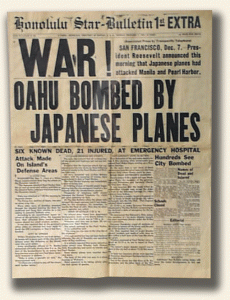 more famous race horses of the 20th century; Jim Thorpe and his Olympic and football prowess; Jesse Owens at the 1936 Olympics, World Cup soccer, Notre Dame football, boxing greats Jack Johnson, Jack Sharkey, Max Schmeling & Joe Louis commanding headlines, and so much more. There was such extensive coverage of sports in the 20th century that many build huge collections with this singular theme.
Perhaps the most defining event of the 20th century was World War II, begun with the ascendency of Adolf Hitler and the Nazi party in Germany and his invasion of Poland in 1939. With America’s entry in the war upon the attack on Pearl Harbor, barely a single newspaper for the next 4 ½ years would be devoid of war coverage. Because such issues were commonly saved and found in attics by their children, collectors pursue only the most major events and with the largest headlines. Tops of the list would be Pearl Harbor, battle of Midway, the D-Day invasion, the death of Hitler, the end of the war in Europe, the dropping of the atomic bomb, and the end of the war in the Pacific. Many tabloid-size newspapers had the entire front page consumed by headlines, lending themselves to displayability, particularly given their smaller size.
The Korean War would begin the 1950’s, and would be followed by events of the Cold War. At the end of the decade music would begin making some headlines, led by Elvis Presley and more tragically with the airplane death of Buddy Holly & Richie Valens. A few years later the Beatles would come on the scene to define the music world for the 1960’s.
 Politics always made headlines in the 20th century which began with McKinley and ended with Bill Clinton, but perhaps the most collectible political person would be John F. Kennedy. His assassination –the second of the 20th century–stunned the world , and some headlines were extremely dramatic. Always the “best of the best” would be newspapers from where the event happened, so it is no surprise that Dallas newspaper reports on the JFK assassination draw the most interest.
Although the space era began as early as 1928 with the work of Robert Goddard, it was the success of Sputnik & the resulting space race in the late 1950’s that would captivate the headlines. America made its mark in the early 1960’s with Alan Shepard and John Glenn, culminating in 1969 with the landing of men on the moon & their safe return.
Scattered throughout the 20th century are many memorable names which made the occasional headline, including Mark Twain, Thomas Edison, Houdini, Albert Einstein, Rudolph Valentino & Walt Disney to name but a few.
Regardless what events or themes a collector might pursue from the 20th century the challenge is to find the most dramatic and impactful report. Large headlines command a premium, and when photos or graphics accompany a headline it only adds to the appeal. Collectors know some great headline reports are lurking out there just begging to be found. The thrill is finding them, and make them prized additions to their collection.
Great Headlines Speak For Themselves… Salk’s Vaccine!
May 16, 2014 by GuyHeilenman · Leave a Comment
The best headlines need no commentary. Such is the case with the Journal American, April 12, 1955: “Salk’s Vaccine Works!”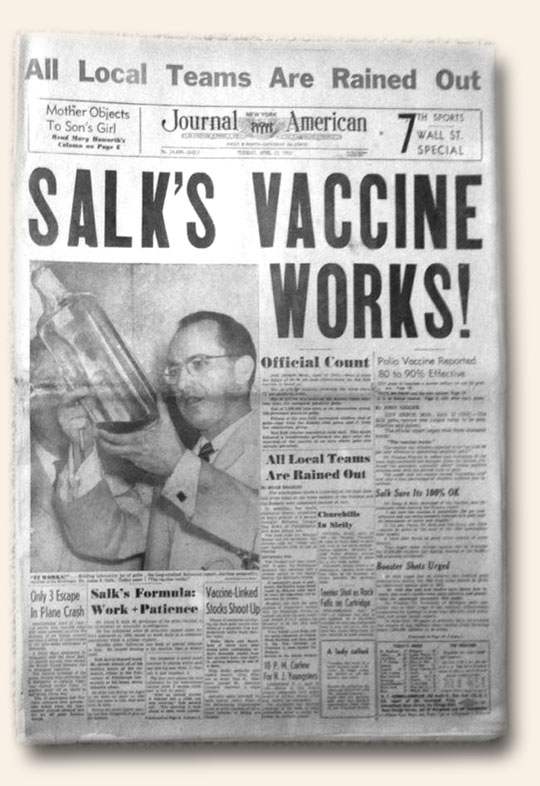
The Traveler… Mexican irony… dirty dancing prohibited!
May 5, 2014 by The Traveler · Leave a Comment
Today I traveled back to Boston by the means of The Boston Traveler and Evening Herald dated May 5, 1914. There I found a banner headline (see below) “Looting of Mexico City Planned”, with subheadlines, “New Plot to Down Huerta” and “Mexican Refugees at Vera Cruz Say Gen. Castro Is Stirring Army to Revolt.” How ironic to have this headline on the day of Cinco de Mayo — typically a special day of celebration in Mexico!
Also… The Boston school systems were being faced with a new dilemma… the dance craze, the tango! Due to this dance and other such “modern dances”, the headmasters were not going to take any chances with having these dances performed and were putting their foot down and cancelling all of the dances. And 3/4 of a century later, “Dirty Dancing” makes millions upon millions!
Additionally… The Leo Frank murder trial continues, with testimony that includes the accusation that he paid someone to lie for him.
~The Traveler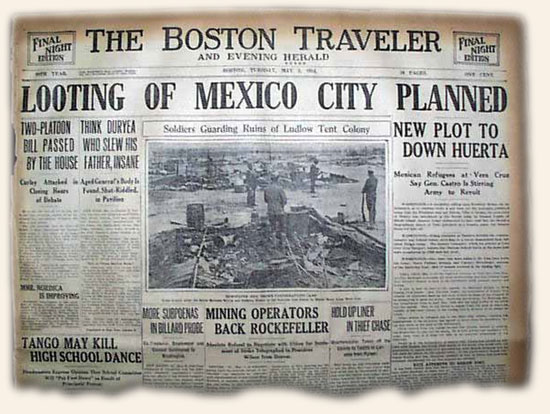
Exploring Mother’s Day with Rare Newspapers…
May 2, 2014 by GuyHeilenman · Leave a Comment
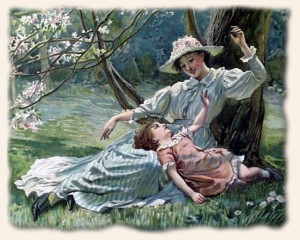
With not much more than a week to go: Flowers… a card… taking her out for dinner… going to visit her… While these may be the most common gift ideas for Mother’s Day, another source are the beautiful prints found on the covers of and within historic newspapers. We’ve created a number of Pinterest Boards which feature such decorative prints. Please enjoy:
 Mother-Themed Prints
The Traveler… Leo Frank… “Watchful, Waiting”…
April 7, 2014 by The Traveler · Leave a Comment
 Today I traveled through Atlanta, Georgia by the way of The Atlanta Constitution dated April 7, 1914. There I found the defense attorneys for Leo Frank had come into possession of a large number of new affidavits which would be made public shortly. Also coverage of the war in Mexico between Carranza and Pancho Villa. This also has the reporting of the Fall of Torreon with the reporting of the expulsions of the Spaniards.
“Watchful, Waiting” policy is how Lloyd Brown was dealing with his 14-year marriage as he was bringing a divorce suit to court. He said shortly into the marriage his wife “began to take a violent dislike to him… She had not only left the house, but had taken all the covers off the bed before so doing. I borrowed some more from a neighbor and, when my wife came back in the morning,…I explained to her that to her that things couldn’t go along that way much longer… I just sat there and said nothing. Well, that made her madder and madder, I just sat still and kept quiet. Finally she hit me over the head with a fire shovel.” She left that night and never returned. Divorce granted.
~The Traveler