

Search
The Rare & Early Newspapers Hobby

Receive the Newsletter

Buy Historic Newspapers

The Traveler… the Goree Merchants… Weales or Weasles…
October 6, 2016 by The Traveler · Leave a Comment
 Today I journeyed to London by the way of The London Chronicle dated October 4, 1766. I found a short article stating that they write from Senegal “… there have been lately upwards of two hundred French trading ships on the coast of Africa; — which was a principal cause of the price of slaves being so high, the Goree Merchants having contracted to supply the Spanish West India settlements with negroes.”
In Cambridge, the last Monday was the day that the new Mayor for the succeeding year was to be sworn into office. However, he was currently in North America on his Majesty’s service. Consequently with not appearing, no mayor was sworn in for the next year and the late mayor will continue to until another is chosen and sworn in. The name of the late mayor? Mr. Alderman Weales, but it certainly looks close enough to “weasles” now doesn’t it??
~The Traveler
An October, 2016 stroll back thru time – 50, 100, 150, 200, & 250 years ago…
October 3, 2016 by GuyHeilenman · Leave a Comment
 What news was reported in the month of October – 50, 100, 150, 200, and 250 years ago (1966, 1916, 1866, 1816, 1766)? Such a walk back through time via the eyes of those who read the daily and weekly newspapers of the period can be quite revealing. This is why we often say, “History is never more fascinating than when it’s read from the day it was first reported.” The following links will take you back in time to show the available newspapers from the Rare & Early newspapers website. There’s no need to buy a thing. Simply enjoy the stroll.
Introducing: RareNewspapers.com – The Civil War…
September 29, 2016 by GuyHeilenman · 2 Comments
Collectible Civil War Era Newspapers
 “History is never more fascinating than when it’s read from the day it was first reported.”
Records of a Nation in Turmoil
In the 1860s, Americans’ interest in the Civil War, and its collateral effects, caused a spike in demand for news reports. These were days of heightened concern, and newspapers were one of the few resources that people were able to rely upon for war news.
Aside from specific war news, Civil War newspapers also reported on citizens’ reactions to how the war was shaping the American economy and politics, and opinions about slavery.
Reading an authentic Civil War newspaper and holding the original print paper between your fingers will transport you to the frontlines of battle, and provide a glimpse into the psyche of Civil War-era citizens, politicians, and soldiers.
Original Civil War newspapers are genuine pieces of American history a collector or anyone interested in American history must have.
Harper’s Weekly
Harper’s Weekly was one of the most popular newspapers during the Civil War. Although its base was in New York, its moderate stance on slavery (pre-war) was seen as a way not to upset the newspaper’s Southern readership. However, once the Civil War began, President Lincoln and the Union received Harper’s complete loyalty and support.
As the war went on, the many illustrations and prints from Thomas Nast and Winslow Homer provided a vivid visual account of the battlefields, the people, and the bloodshed—”I’m hoping next week’s edition will show scenes of the battle of Fort Sumter in Charleston Harbor. I’ve read all about it, now I want to see it!” – A Harper’s Weekly reader in 1861. Another Harper’s reader noted, “I look forward to the end of the month and seeing just what transpired at Charleston.”
The illustrations and prints from Harper’s Weekly remain striking in both their detail and artistry. We have several noteworthy issues of Harper’s Weekly in our inventory.
Civil War People & Generals
The Southern States’ call for secession from the Union grew louder after the election of Abraham Lincoln in 1860. A disagreement between President Lincoln and Confederate leader Jefferson Davis over control of Fort Sumter led to overwhelming demand for war. Many men began enlisting for military service shortly after the battle of Fort Sumter.
Our vast inventory of genuine, historic Civil War newspapers highlight the efforts of military heroes from the North and the South that we have all come to know, including Ulysses S. Grant, George McClellan, Robert E. Lee, George Meade, “Stonewall” Jackson, William T. Sherman, and more.
Significant Civil War Battles & Events
Battle reports were common, including struggles at Fort Sumter, Bull Run, Manassas, Antietam, Shiloh, Gettysburg, Chickamauga, Vicksburg, Fredericksburg, Richmond, and so much more.
We have newspapers covering the first shots at Charleston Harbor to the final surrender at Appomattox, plus the Lincoln assassination.

Southern Illustrated News
The Southern Illustrated News was to the Confederacy what Harper’s Weekly was to the Union. Based in Richmond, Virginia, Southern Illustrated News had a rather ornate masthead and its front pages regularly featured portraits of notable Confederate figures, such as Robert E. Lee, “Stonewall” Jackson, and John S. Mosby. Southern Illustrated remains one of the most sought-after Civil War-era titles in the collecting hobby to date. Visit our Southern Illustrated Pinterest board to view several interesting portraits.

Reporting the Civil War
Before the start of the war, there were 3,725 newspapers in the United States. American newspapers accounted for one-third of all newspapers printed in the world. Most of them were weeklies. At the time, standards for what constituted sound, thorough, and responsible journalism did not exist on the eve of the war, according to Ford Risley, a Civil War journalism expert and head of the Department of Journalism at Penn State University.
Newspapers printed news dispatches, editorials, illustrations, maps, and various other tidbits, such as President Lincoln’s famous letter to Mrs. Bixley “…to have laid so costly a sacrifice upon the altar of freedom.” At times, the dispatches were entirely hearsay and wildly inaccurate, such as this series of short reports from the Daily Journal of Wilmington, NC or this report from the New York Tribune stating that Stonewall Jackson was “Dead Again.”
The Reporters
Reporters were a diverse group. Some had previous experience, but many reporters were lawyers, teachers, clerks, bookkeepers, and ministers. Their levels of education ranged from Ivy-league educated to only basic schooling.
Civil War reporters faced many difficulties, among them uncooperative and unreliable sources, difficulties with dispatching reports back to their newspapers, and even death. One correspondent closed a story with “Your readers must pardon a short letter. No man can write in a happy vein or style while minnie [sic] balls are flying uncomfortably close to his head.” Needless to say, conditions for Civil War reporters were not safe or ideal. More on how reporters lived and worked can be found here.

Unique Printing and Reporting Conditions
After the Union won the Battle of Memphis in June 1862, the Memphis Daily took to the road and became known as the Moving Appeal. During just a four-year period, this newspaper published in nine different cities.
A truly one-of-a-kind newspaper was “printed on board Steamer Des Moines” on blue-lined ledger paper in 1864. This issue also contains a letter written by a soldier to his wife. Letters from soldier correspondence frequently contained glorified accounts of battlefield glory meant to inspire confidence in the readers back home. Occasionally, letters from soldiers had reliable news and insights.
—————————–
Much more can be said regarding newspapers from the Civil War, but for now, please enjoy the Rare Newspapers dedicated page dedicated to original and historic issues from this era:
The Civil War
Introducing: RareNewspapers.com – The Revolutionary War…
September 22, 2016 by GuyHeilenman · Leave a Comment
Collectible Revolutionary War Era Newspapers
 “History is never more fascinating than when it’s read from the day it was first reported.”
First-hand Accounts of the American Revolution
What is now American history was once current news. Revolutionary War newspapers produced daily reports mentioning political leaders such as George Washington, Thomas Jefferson, Benjamin Franklin, John Adams, John Hancock, plus military leaders (both American & British) including Gates, Gage, Carleton, Howe, Clinton, John Paul Jones, Burgoyne, and the infamous traitor, Benedict Arnold, along with other noteworthy names, such as Paul Revere and Thomas Paine.
Follow The Stuggle Against Tyranny
We offer an opportunity to own complete, genuine newspapers from the era of America’s founding fathers. Read first-hand battle reports from including Lexington & Concord, Bunker Hill, Saratoga, Ticonderoga, and Valley Forge. Immerse yourself in significant political events, such as the Declaration of Independence, the “Causes and Necessity for Taking Up Arms,” Articles of Confederation, the Stamp Act, and other historical happenings. Read of soldiers protecting the liberty of their families; the British taking over our prized cities of Boston, Philadelphia, and New York; and the struggle of the 13 colonies as they fought to be freed from the tyranny of British rule and taxation.
The Relationship Between Great Britain and the Colonies
It’s always interesting to get a glimpse into how the British newspapers reported news about “her charter colonies in America.” The London Chronicle published some terrific content on that topic in April 1774, and another article about taxing the American colonies containing the quote: “Might not America, under tax masters thus interested in their oppression, be deemed in a state of abject slavery?”
Hold History in Your Hands
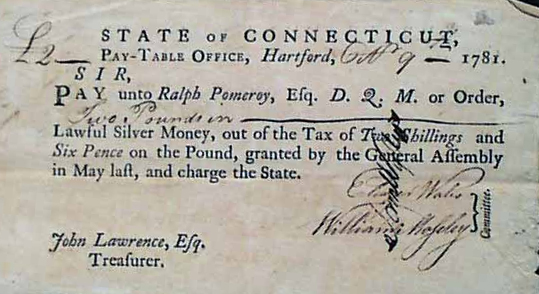
It comes as a surprise to many that newspapers from the Revolutionary War that are 200-plus years-old are available for purchase, and are reasonable priced and well preserved. The reason that 18th century newspapers have held up so well is mostly because they were printed on durable rag linen. Rag linen was a common type of paper that was made from pulping linen rags often from ship sails or clothing.
The Traveler… being “turn’d off”…
September 19, 2016 by The Traveler · Leave a Comment
Today my journey took me to London, England, by the means of The Post Boy dated September 20, 1716. There I found the Ottoman-Venetian War was going strong with little relief for the Turks. Even their truce request of a couple hours in order to bury dead had been denied. Then only to be faced with coming into  battle with nails and iron and iron spikes being hidden in the sand and planks at the Communication Bridge which lamed their horses and then to be fired upon by cannon and small shot, killing more men.
I found an interesting article on the back page. “…Last Wednesday night, a Man being at the Gallows, about to be hang’d, was pardon’d; and the Friday following, another being just ready to be turn’d off, the Duchess of Berry pass’d by that Place to the Opera, and ask’d what was the Matter. Being told, she order’d the Lieutenant-Criminal to deferr Execution, while she went back, and interceded for him to the Duke-Regent. Having obtain’d his Pardon, she sent one of her Pages with it; whereupon, the Cord was cut from about his Neck, and he with much ado brought down the ladder…”
~The Traveler
Introducing: RareNewspapers.com – The 1600’s and 1700’s…
September 15, 2016 by GuyHeilenman · Leave a Comment
Collectible 1600s & 1700s Newspapers
 “History is never more fascinating than when it’s read from the day it was first reported.”
It might not be your first thought, but newspapers from the 1600s and 1700s are very similar content-wise to modern newspapers. Early newspapers contained reports on wars, natural disasters, listed items for sale, and published death notices. Sound familiar? Newspaper content hasn’t changed drastically in 300-plus years. It is interesting to read accounts from this era and realize how similar we modern folk are to our ancestors. It seems that people at their core are mostly the same, and to this day, want to read news covering similar topics. That being said, some aspects of newspapers definitely have changed.
What has changed are the dimensions (smaller then, larger now), the number of pages (fewer then), paper quality (higher quality rag linen then), and the format. Newspapers of this period typically had an inflexible format, meaning that if page three was dedicated to foreign news, even if the most amazing foreign event occurred, it would appear on page three, not page one—period.
Due to the time it would take to typeset and print an issue, breaking news of major events would often be printed on a separate sheet called an “Extra” or an “Extraordinary” that was delivered with the daily issue or sometimes was not distributed until the following day.
Much more can be said regarding newspapers from the 1600’s and 1700’s, but for now, please enjoy the Rare Newspapers dedicated page dedicated to original and historic issues from this era:
The 1600’s and 1700’s
Announcing: The 250th Catalog from Rare Newspapers…
September 8, 2016 by GuyHeilenman · Leave a Comment
Catalog 250 is now available. This latest offering of authentic newspapers is comprised of nearly 350 new items. Some of the noteworthy content includes: a printing of the Constitution of the United States, an issue of The Royal Gazette from Charleston (1782), a 1659 newsbook we’ve never offered before, Winslow Homer’s famous “Snap The Ship”, an issue with the British response to the Declaration of Independence, coverage of Cornwallis surrenders at Yorktown, and more. Key items which include the remaining items from the above may be viewed at: Noteworthy Catalog 250
Whereas the entire catalog is shown at Catalog 250, the following links are intended to aid in quickly finding items from the catalog based on era:
• 1500-1799 (full view OR quick-scan “compact” view)
• 1800-1899 (full view OR quick-scan “compact” view)
• 1900-2015 (full view OR quick-scan “compact” view)
To view items from both the current and the previous catalog, go to: Combined Catalogs
A September, 2016 stroll back thru time – 50, 100, 150, 200, & 250 years ago…
September 1, 2016 by GuyHeilenman · Leave a Comment
 What news was reported in the month of September – 50, 100, 150, 200, and 250 years ago (1966, 1916, 1866, 1816, 1766)? Such a walk back through time via the eyes of those who read the daily and weekly newspapers of the period can be quite revealing. This is why we often say, “History is never more fascinating than when it’s read from the day it was first reported.” The following links will take you back in time to show the available newspapers from the Rare & Early newspapers website. There’s no need to buy a thing. Simply enjoy the stroll.
Anyone know anything about this newspaper?
August 22, 2016 by TimHughes · Leave a Comment
If any of our collectors are looking for an interesting puzzle to solve, here is one. We’ve come across a single sheet newspaper from Dublin, Ireland, “THE FLYING NEWS-LETTER“, with “Monday October 11” in the dateline. This would seems to be an exceedingly rare title as an internet search resulted in nothing with this title from Dublin.
 There is no issue number noted in the masthead as would be typical. There is also no year printed in the dateline, but a search notes that the only Mondays which fell on October 11 from the mid-18th century (my estimate based on paper, format, layout) in which the printer, Edward Exshaw, was working as a printer were 1736 and 1742 as he died in 1748. The years 1725, 1731 also had a Monday, October 11, but a website notes he was “active in Dublin from 1733-1748”. And 1756 and 1762 also had a Monday, October 11, but being after his death his name would not had been in the imprint at the bottom of the back page.
I would be curious to know which of these two years it was printed (no year is noted in any of the articles), and a bit more about how long the newspaper published. Is this issue unique?
Thanks for any help!
The Traveler… the first “learned society” of Washington, D.C.
August 15, 2016 by The Traveler · Leave a Comment
I traveled today to Washington, D.C. by the way of the National Intelligencer dated August 15, 1816. I found there the announcement of the creation of the first “learned society” in Washington D.C.: “A number of the citizens of the District of Columbia, impressed with the importance of forming an association for the purpose of promoting useful knowledge, met on the 28th day of June, 1816,… agreeably to public notice the committee appointed as aforesaid reported the following draft of a constitution which was unanimously agreed to, after having changed the name of the association to that of the COLUMBIAN INSTITUTION for the promotion of Arts and Sciences…” (see image below).
They were responsible for the acquiring the many different species of plants and trees, an idea to apply to Congress for “the appropriation of about 200 acres of ground called “the Mall” which was designed in the original plan of the city for a public garden, the beginning of the botanic garden, many items which are now in the Smithsonian Institute, and more. Many prominent people of the day became were members, including some Presidents.
~The Traveler