
Search
The Rare & Early Newspapers Hobby

Receive the Newsletter

Buy Historic Newspapers

Announcing: Catalog 363 – Released for February, 2026 – Rare & Early Newspapers…
January 30, 2026 by GuyHeilenman · Leave a Comment
Catalog 363 (for February): This latest offering of authentic newspapers is comprised of over 300 new items, a selection which includes the following noteworthy issues: a Massachusetts Spy with the desired “Join or Die” snake engraving, a Pennsylvania Ledger with the Olive Branch Petition, one of the rarest of early American magazines, The Jew Bill: striving for equal rights for Jews, a handsome colonial New York newspaper from 1745, a fine report on the death of George Washington, and more.
The following links are designed to help you explore all available items from this latest edition of our catalog:
- Abridged Catalog (EXCLUDES wholesale lots & titles sold only by year (not by a specific date)
- A PDF Version of the Catalog (printable)
- Entire Catalog grouped by Era:
1500-1799 (full view OR quick-scan/compact view)
1800-1899 (full view OR quick-scan/compact” view)
1900-Present (full view OR quick-scan/compact” view)
The following links focus on both this month’s and last months catalogs:
- Combined Catalogs (entirety of both)
Become a Premium Member to receive hard copy versions of our catalogs (U.S. residents only).
Two Discoveries, One Powerful Reminder – It Started with the Pony Express…
January 26, 2026 by GuyHeilenman · Leave a Comment
From the very beginning, a recurring theme on the History’s Newsstand blog has been the joy of finding hidden gems—those golden nuggets tucked within historic newspapers. Collectors of rare and early papers know this thrill well: you acquire an issue for one reason, only to uncover something unexpected that proves equally—if not more—captivating.
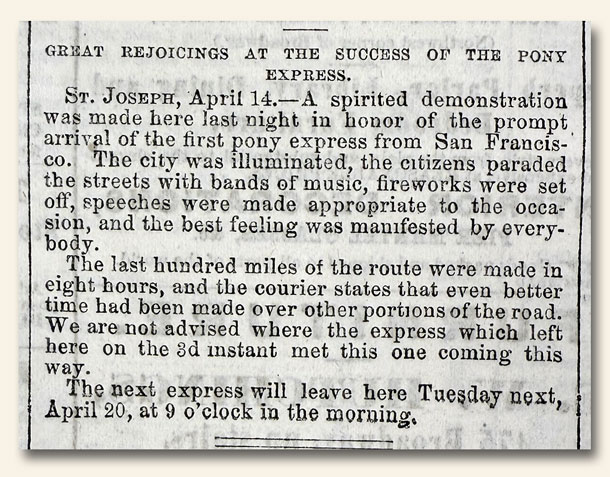
That’s exactly what happened to me recently while examining the April 16, 1860 issue of The Evening Post (New York). My original goal was to locate coverage of the completion of the first run of the Pony Express, and to my delight, I found not one but two front-page reports. Front-page coverage of such events is rare enough—but two related pieces? A true collector’s treat.
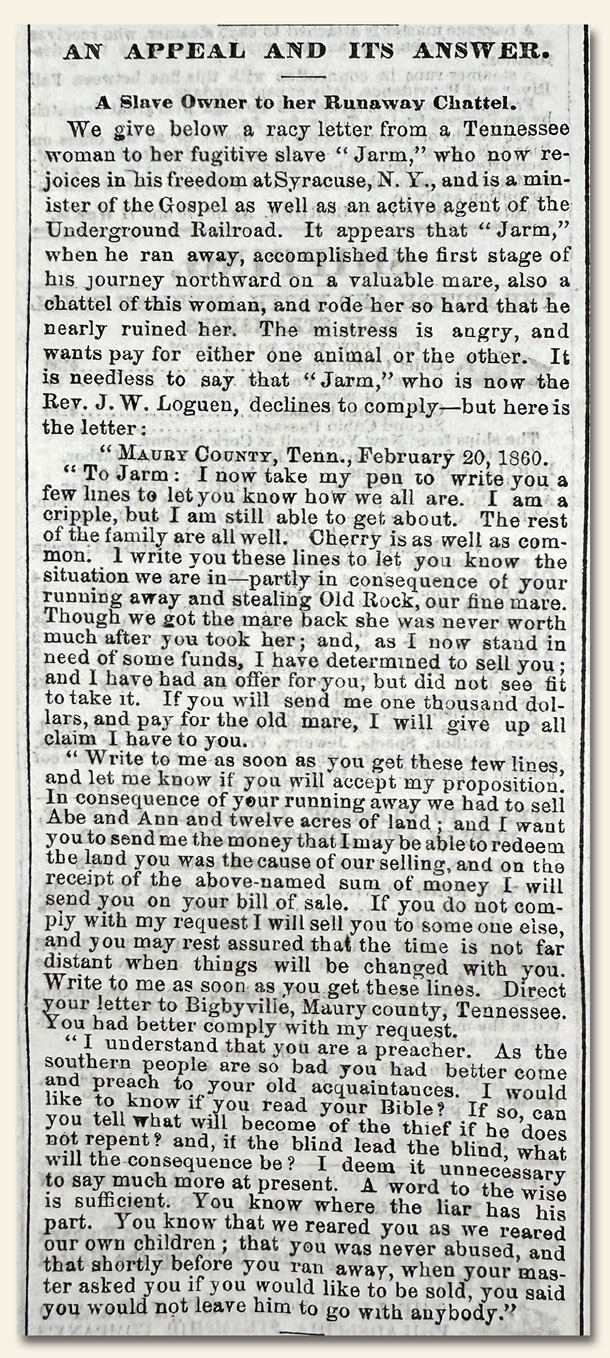
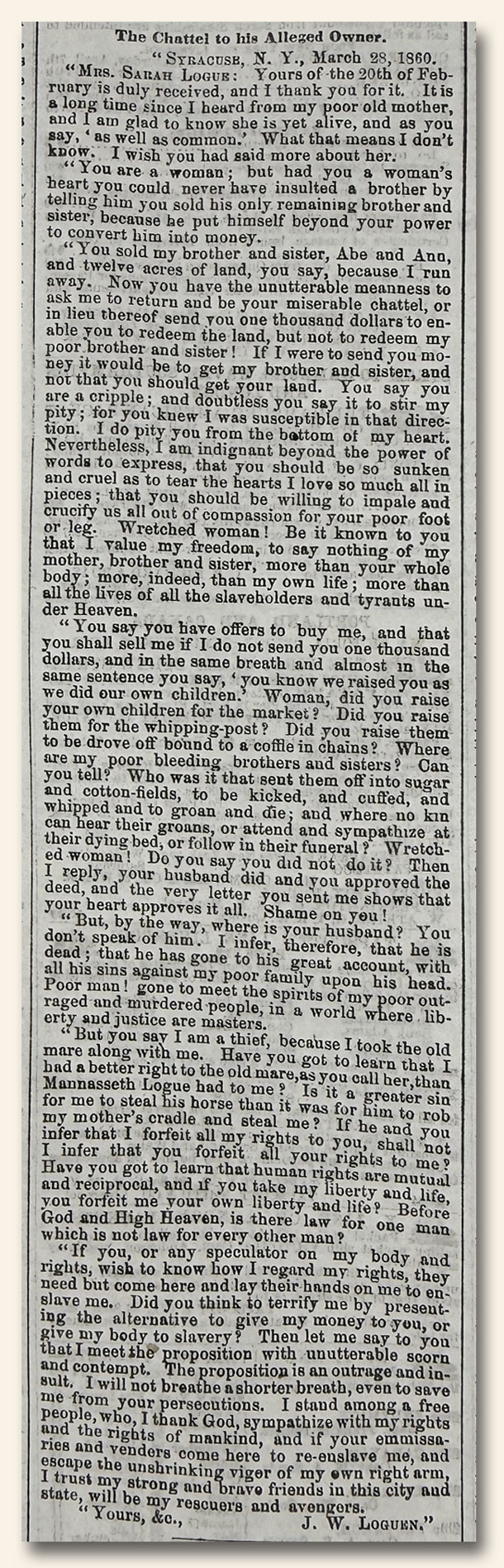
As I continued browsing for additional Pony Express material within the issue, I stumbled upon one of those unforgettable “hidden gems”: a printed exchange between a runaway slave and his former master. While not an account of a major historical event, few subjects evoke as much emotion as slavery, and reading such raw, personal correspondence in a period newspaper was deeply moving.
While the issue’s collectible value is likely anchored by its Pony Express reports, it’s this second discovery that continues to resonate with me. It serves as a poignant reminder—to me, my family, and my friends—of the immeasurable worth of every human being. Each of us, created in God’s image, carries equal and sacred value. Red and yellow, black and white—we are all precious in His sight.
All right, I’ll step down from my soapbox now. The photos below provide context for the discoveries mentioned above. Thanks for reading—and for sharing in the joy of finding history’s hidden treasures.
One of the Two Reports regarding the Pony Express
Correspondence Between the Runaway Slave and his former “Master”
The reason I collected it: an accordion fold newspaper…
January 23, 2026 by TimHughes · Leave a Comment
I’m sure I’ve commented before on the occasional need for “necessity” paper, meaning when supplies were restricted, printing conditions were stressed, or “siege” conditions prevented access to typical newsprint, publishers would be as resourceful as possible in finding something upon which to print.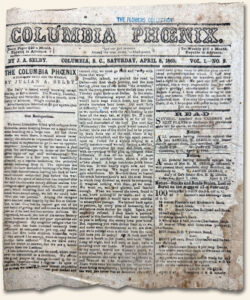 Not only was this issue (Columbia Phoenix, April 8, 1865) printed during the closing days of the Civil War, but due to the shortage of newsprint this publisher utilized short and uncommonly wide paper measuring just 8 3/4 inches high but over 24 inches long. As such it has an accordion fold which is unlike any other newspaper we have encountered.
During the Civil War, particularly in the South, securing newsprint was a common problem. During the closing days of the war, Columbia, South Carolina underwent siege conditions before it surrendered to Yankee forces on February 18, 1865. Although Columbia was occupied by Union forces on February 18 and largely destroyed by fire, this newspaper literally rose from the ashes [hence the phoenix title] and became the Confederate voice for the residents. So despite the city being in Union control, this newspaper kept its pro-Confederate leanings.
Information on the Library of Congress website provides further detail on this fascinating title and its Confederate publisher:
“The Columbia Phoenix arose out of the charred remains of Columbia, the capital city of South Carolina, in the aftermath of the Civil War to record its losses and bear witness to its gradual recovery. A triweekly newspaper, the Phoenix first appeared on Tuesday, March 21, 1865, mere weeks after fires had razed a third of the city. It struck a defiant tone, declaring, “Our city shall spring, from her ashes, and our Phoenix, we hope and trust, shall announce the glorious rising! God save the state!”
Proprietor Julian A. Selby boasted considerable experience in the newspaper business, having formerly owned the Tri-Weekly South Carolinian. In establishing the Columbia Phoenix, however, he literally started from scratch. In the weeks immediately following the city’s destruction, Selby scoured the state for paper, a press, and printing supplies. He and his assistants fashioned for themselves the things they could not find. He also secured the services of renowned Southern literary critic, novelist, and poet William Gilmore Simms as editor. Living conditions in the capital city were so desperate that, early on, the staff offered to accept food staples such as bacon, eggs, rice, and potatoes as payment in lieu of cash subscriptions. The first ten issues contained a detailed history of the burning of Columbia, which was separately published as Sack and Destruction of the City of Columbia, S.C., in October 1865 (itself edited and republished as A City Laid Waste in 2005).”
The content in this issue is great as well, being a few days after the fall of Richmond and just one day before Lee would surrender to Grant at Appomattox.
The front page has part 2 of: “Our Refugeeism” and some ads. Pages 2 and 3 are taking up with details of the: “Capture, Sack and Destruction of the City of Columbia” being chapters 30 thru 35. Half of another page is taken up with: “Evacuation of Richmond”. There is also an upbeat and obviously pro-Confederate report noting in part: “President Davis takes a right view of the results of the evacuation of Richmond. We have said elsewhere, that, in our opinion, it should have been evacuated long ago & that we should not have waited till this became a military necessity. The cheerful tones of President Davis is highly becoming…so long as the armies of Lee, Johnston and others are intact, they will speak and we trust to the purpose. God still rules in heaven.”
This issue is a fine example of the determination & resourcefulness of many early publishers.
January Newsletter (2026) – Timothy Hughes Rare & Early Newspapers…
January 19, 2026 by GuyHeilenman · Leave a Comment
| Welcome to the first newsletter of 2026. The past few weeks have been pregnant with in-house discoveries – several which are included within new listings or through the highlights shown below. For those who love to collect, appreciate history, and desire to be life-long learners, this hobby brings all of these together with the added bonus of “context” – the capacity to at least partially grasp how those who actually experienced key events perceived what we now call history. I love this collectible! No, my enthusiasm was not AI enhanced/generated. 🙂
Let’s jump right in with a few important links (don’t miss the “discoveries”):
Dr. B Church Jr – American Traitor (E22) Field Music Corps – The Drummer Boys of the Revolution (E23) Battle of Quebec – “Unsuccessful but Brave Attempt” (E24)
The Weekly Chronotype (turns out it’s a notable abolitionist newspaper) The Nippu Jiji… (turns out it’s not a Nippon Fiji)
The Spirit of the West Returns… America Returns to Her Roots… 1776-2026: The Dream Still Shines at Dawn’s Early Light! Popcorn, Principle, & the Presidency: JFK’s Quiet Stand for Artistic Courage… A Colonial “2nd forgery” with intriguing backstory… Cape Fear (pt. II)…
From Dreams to Reality… Dr. Martin Luther King Jr. Paves the Way… |
|
Who’s Who in Newspapers? Lewis H. Latimer edition…
January 16, 2026 by GuyHeilenman · 1 Comment
The 11th installment of: Who’s Who in Newspapers
Lewis who? A collecting-friend recently asked us if we had the death report of Lewis H. Latimer. He sends us similar requests quite frequently, but it rare that I have never heard of the person who’s obit he is seeking. Lewis Latimer is one of the exceptions, and the time spent bringing myself up to speed was worth the effort. Such explorations are one of the attributes of collecting historic newspapers so fascinating. Shown below, absent of any editorializing, is what was found in The New York Times for December 13, 1928, followed by a bit of background. I hope you enjoy.
Our Listing on www.RareNewspapers.com:
Black Americana: Lewis H. Latimer’s death report – member of the Edison Pioneers…
THE NEW YORK TIMES, Dec. 13, 1928
* Death report of Lewis H. Latimer
* Member of the Edison Pioneers
* Credited for drawing plans for Alexander Graham Bell’s telephone
Page 29 has a 2-paragraph obituary headed: “LEWIS H. LATIMER DEAD”, which tells of the death of Black-American Lewis Latimer, a member of the Edison Pioneers. See background details below.
Other news of the day is found throughout.
Complete in 60 pages, slightly irregular along the left spine, in very good condition.
Background (Lewis Latimer): Lewis Howard Latimer (1848–1928) was a groundbreaking African American inventor, engineer, and draftsman whose work significantly shaped modern technology. Born in Massachusetts to parents who had escaped slavery, Latimer faced racial barriers throughout his life but persevered through self-education and determination. After serving in the U.S. Navy during the Civil War, he taught himself mechanical drafting and was hired by a Boston patent law firm.
Latimer played a key role in drafting the patent drawings for Alexander Graham Bell’s telephone in 1876. He later worked with Hiram Maxim and Thomas Edison, where he improved the carbon filament for incandescent light bulbs, making them longer-lasting, more affordable, and suitable for widespread use. He also authored Incandescent Electric Lighting (1890), the first technical book on the subject.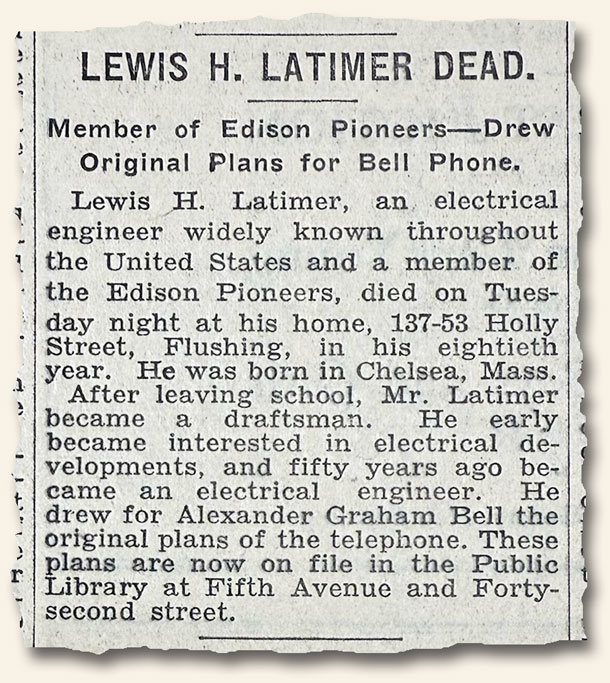
The Spirit of the West Returns… America Returns to Her Roots…
January 12, 2026 by Laura Heilenman · Leave a Comment
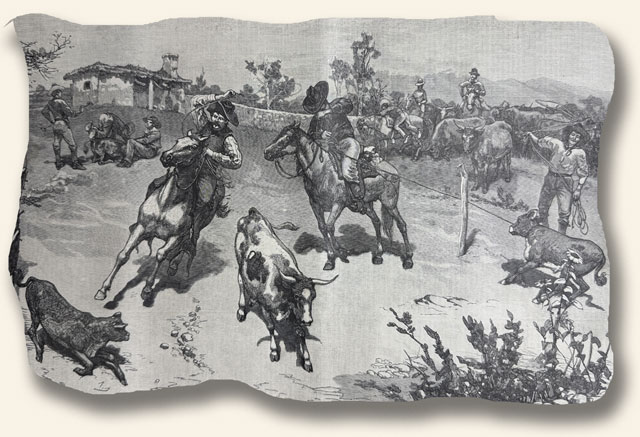 Over the past several years, there has been a resurgence of the American cowboy archetype– evident in cultural phenomena like the TV series Yellowstone, rodeo events, and broader Western imagery—as a reflection of a deeper shift in the American spirit.
Confirming this point, in a March 2025 monologue, a well-known podcaster described this “comeback” as a positive change, saying, “something has changed in America, for the better.” He argued that the cowboy represents an innate, long-dormant quality in Americans: fierce independence, unyielding grit, and a commitment to honor, faith, and self-reliance. He reasoned that there is a Reawakening of Core American Values: saying the cowboy embodies “a handshake that means something” and “a promise you don’t break, because your word is the only thing you own.” This spirit includes gestures of respect like “taking your hat off for a woman” and saying “Yes, ma’am” and “No, sir.”
Long before radio talk show hosts extolled the virtues of the American cowboy, Harper’s Weekly captured the essence of these men in stunning imagery proving that in fact, a picture is worth a thousand words, whether printed or spoken on the radio.
Lead-up to a Nation… as reported in the newspapers of the day (December, 1775)…
January 9, 2026 by GuyHeilenman · Leave a Comment
The Battle of Great Bridge – Decisive Patriot Victory (Lead-up to a Nation – E18)
The Capture of Montreal – High-water Mark (Lead-up to a Nation – E19)
Proclamation of Rebellion – Colonial Response (Lead-up to a Nation – E20)
Prohibiting Trade – Stopping trade between England and the Colonies (Lead-up to a Nation – E21)
We hope you are enjoying this year-long trek to the 250th anniversary of The United States through the eyes of those who were fully engaged, first hand. As mentioned previously, all accounts are rooted in what they read in the newspapers of the day.
“History is never more fascinating than when read from the day it was first reported.” (Timothy Hughes, 1975)
1776-2026: The Dream Still Shines at Dawn’s Early Light!
January 5, 2026 by GuyHeilenman · Leave a Comment
Whether we call it the Semiquincentennial, America250, the Quarter Millennial, the Sestercentennial, or simply the 250th birthday of the boldest experiment in self-government, 2026 rises like a new dawn—filled with promise, reflection, and hope for every American and every friend of liberty across the world.
The front page below, taken from a newspaper celebrating the Centennial Fourth of July in 1876, carries us back to that earlier moment of celebration—a time when a young nation looked proudly to its past and eagerly toward its future. It reminds us of the countless generations whose courage and sacrifices made possible Franklin D. Roosevelt’s enduring truth:
“We are a nation of many nationalities, many races, many religions—bound together by a single unity, the unity of freedom and equality.”
That vision still lights our way. Yet we are also called to remember Frederick Douglass’s wise and urgent reminder, spoken on the 23rd anniversary of emancipation in the District of Columbia:
“The life of the nation is secure only while the nation is honest, truthful and virtuous.”
As we celebrate this extraordinary milestone, may we lift our hearts in gratitude for the Divine grace that has guided us through triumph and trial alike. And as we look ahead, may we renew our shared promise—to preserve every hard-won freedom and to keep lifting the banner of justice, opportunity, and dignity for all who call this land home.
Here’s to the journey still unfolding. Here’s to the dream still alive.
Happy 250th, America!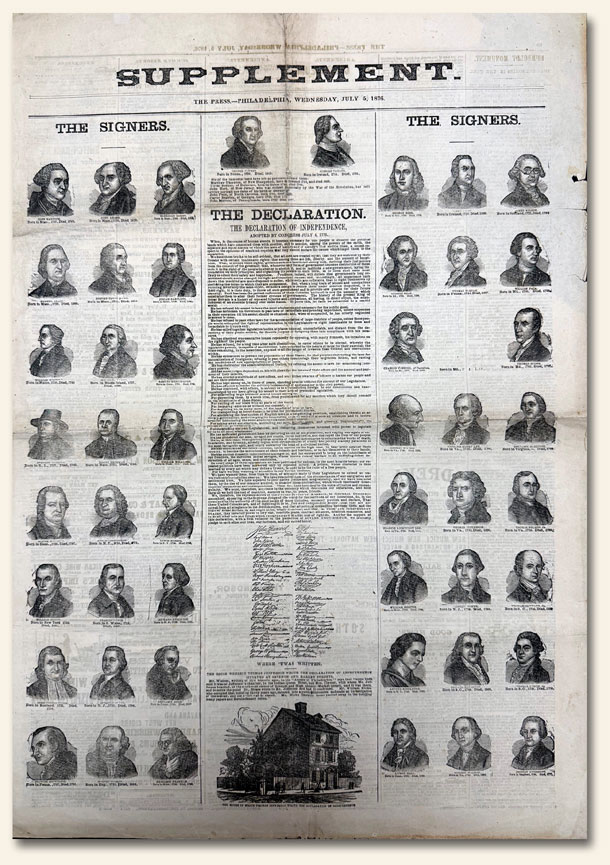
Helping to usher in The 250th Anniversary of the U.S. – January’s Catalog – #362 Now Available…
January 2, 2026 by GuyHeilenman · Leave a Comment
Our January 2026 catalog is live—and as we enter the year in which we celebrate America’s 250th anniversary, this collection offers a powerful reminder of how history was first reported.
Catalog #362 features 350+ newly listed authentic newspapers, including the definitive printing of the Bill of Rights, Washington’s letter to the Jewish Masonic Lodge, strong reporting on the Stamp Act, English accounts announcing American independence, a remarkable Lincoln assassination broadside, Hamilton’s appointment as Secretary of the Treasury, and more. We hope you enjoy.
The January, 2026 Catalog (#362)