

Search
The Rare & Early Newspapers Hobby

Receive the Newsletter

Buy Historic Newspapers

Seeking the best of the 20th century…
May 23, 2014 by TimHughes · Leave a Comment
 The introduction to collecting old newspapers for most typically comes through finding a newspaper of recent past with a headline remembered from history class. They turn up in flea markets, garage sales, and attics, but wherever the discovery, there is a fascination which—for many—begins a quest to find more and better.
Of the five centuries from which old newspapers can be found, the 20th century has one distinct advantage and that is displayability. It was just before the turn of the 20th century that newspaper competition was rampant in the United States and bigger and bigger headlines became one method of grabbing attention over a competitor’s newspaper on the corner newsstand. Headlines from the Spanish-American War of 1898 were often large and dramatic, and that format carried well into the 20th century. Although the aim was to sell more newspapers, the unintended long-term consequence was to intrigue the collector with an enticing headline that would look great on display.
I will touch on some of the more notable events of the 20th century, in chronological order, which may present a “checklist” of events which would be great additions to any collection.
Their can be little question that the oil industry transformed the American landscape, and the first major discovery happened at the beginning 20th century with the Spindletop well near 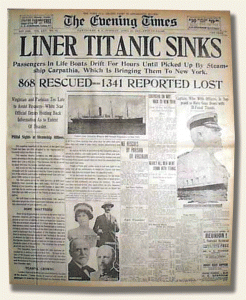 Houston. Just two years later the Wright brothers would make history with their first powered flight, again an event which would transform that way the entire world lives. The first major natural tragedy would be the San Francisco earthquake of 1906, and many newspapers provided graphic details.
The sinking of the Titanic was the next major tragedy which dominated the headlines for not just a day but for several weeks, and newspapers did much to dramatize the event & its investigation. While some newspaper maintained a very conservative format, others sported full banner headlines in bold type with illustrations and photos to make for an appealing front page. Just 3 years later the sinking of the Lusitania would receive similar response by newspaper publishers across the country.
World War I made headlines in American newspapers beginning in 1915, but it was America’s entry in the war in 1917 that would spark more detailed coverage of the war that would end in 1918. News of the armistice ending the war would result in some of the largest & most dramatic headlines to appear in newspapers up to that time.
Following the war, baseball would enter its golden era when Babe Ruth came on the scene, he becoming one of the first of the major stars of the 20th century and capturing headlines in newspapers across the country. But just prior to his hay-day was the infamous “Black Sox” 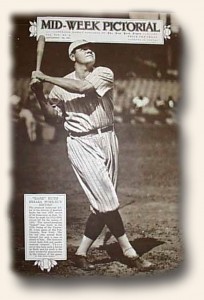 scandal of the Chicago White Sox, with charges of fixing the 1919 World Series games involving several Chicago players. But those headlines would soon be supplanted by the exploits of Ruth as his record-breaking streak added much excitement to the game of baseball and newspapers were only too happy to comply with considerable coverage. Other stars would find prominence as well, including fellow Yankees Lou Gehrig & Joe DiMaggio, and later on Ted Williams & Jackie Robinson among the more notable.
Charles Lindbergh’s accomplishment of being the first to fly solo across the Atlantic caused him to be one of the most famous men in the world at the time, and newspaper coverage was exceptional. But shortly after his 1927 flight the gangster era came to the attention of newspaper, the St. Valentine’s Day massacre of 1929 being one of the first major events to find front page coverage across the country. This fascinating era would extend into the mid-1930’s and names such as Al Capone, John Dillinger, “Baby Face” Nelson, “Legs” Diamond and “Dutch” Schultz were commonly found on front pages.
The stock market crash of 1929 would trigger the Great Depression, which affect the entire nation in so many ways. Collectors look for the most dramatic wording in such a headline, with “Crash” “Tragedy” and similar cataclysmic words making for desirable collector pieces.
Other sports and sports stars would come to prominence in newspapers of the day, including golfer Bobby Jones and his Triple Crown accomplishment in 1930; Phar Lap, one of the 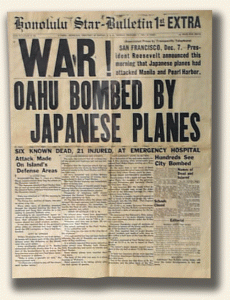 more famous race horses of the 20th century; Jim Thorpe and his Olympic and football prowess; Jesse Owens at the 1936 Olympics, World Cup soccer, Notre Dame football, boxing greats Jack Johnson, Jack Sharkey, Max Schmeling & Joe Louis commanding headlines, and so much more. There was such extensive coverage of sports in the 20th century that many build huge collections with this singular theme.
Perhaps the most defining event of the 20th century was World War II, begun with the ascendency of Adolf Hitler and the Nazi party in Germany and his invasion of Poland in 1939. With America’s entry in the war upon the attack on Pearl Harbor, barely a single newspaper for the next 4 ½ years would be devoid of war coverage. Because such issues were commonly saved and found in attics by their children, collectors pursue only the most major events and with the largest headlines. Tops of the list would be Pearl Harbor, battle of Midway, the D-Day invasion, the death of Hitler, the end of the war in Europe, the dropping of the atomic bomb, and the end of the war in the Pacific. Many tabloid-size newspapers had the entire front page consumed by headlines, lending themselves to displayability, particularly given their smaller size.
The Korean War would begin the 1950’s, and would be followed by events of the Cold War. At the end of the decade music would begin making some headlines, led by Elvis Presley and more tragically with the airplane death of Buddy Holly & Richie Valens. A few years later the Beatles would come on the scene to define the music world for the 1960’s.
 Politics always made headlines in the 20th century which began with McKinley and ended with Bill Clinton, but perhaps the most collectible political person would be John F. Kennedy. His assassination –the second of the 20th century–stunned the world , and some headlines were extremely dramatic. Always the “best of the best” would be newspapers from where the event happened, so it is no surprise that Dallas newspaper reports on the JFK assassination draw the most interest.
Although the space era began as early as 1928 with the work of Robert Goddard, it was the success of Sputnik & the resulting space race in the late 1950’s that would captivate the headlines. America made its mark in the early 1960’s with Alan Shepard and John Glenn, culminating in 1969 with the landing of men on the moon & their safe return.
Scattered throughout the 20th century are many memorable names which made the occasional headline, including Mark Twain, Thomas Edison, Houdini, Albert Einstein, Rudolph Valentino & Walt Disney to name but a few.
Regardless what events or themes a collector might pursue from the 20th century the challenge is to find the most dramatic and impactful report. Large headlines command a premium, and when photos or graphics accompany a headline it only adds to the appeal. Collectors know some great headline reports are lurking out there just begging to be found. The thrill is finding them, and make them prized additions to their collection.
The Traveler… Gen. Lee’s wagon train… Davy Crockett makes a monkey…
May 19, 2014 by The Traveler · 2 Comments
This week I traveled back to New York City by the means of Frank Leslie’s Illustrated Newspaper of May 21, 1864. There I found on the front cover the illustration of “Rebel Attack on Gen. Lee’s Wagon train at Mansfield, LA., April 8”.  “In the late reverses in Louisiana one of the most disgraceful points was the loss of the wagon train of Gen. Lee’s cavalry, which had been sent so far forward that it became impossible for the defeated cavalry to retreat. This led not only to the disgraceful rout of the men but also the capture of the train…”
Also in the issue was the following: “The celebrated David Crockett, on visiting a menagerie, was comparing the countenance of a monkey to that of one of his fellow-members of Congress. Turning, he saw the gentleman had overheard his remarks; so, to make matters pleasant, he said, ‘I do not know which to apologize to, you or the monkey.'”
~The Traveler
Niles’ Weekly Register, a newspaper rich in history…
May 12, 2014 by TimHughes · 2 Comments
This post is taken almost entirely from the work by Bill Earle at www.nilesregister.com, whose database of the entire run of this notable newspaper provides a very inclusive perspective of life not only in America but the world for much of the first half of the 19th century. But this post offers insight beyond the Niles’ Register. It provides a perspective of the broader scope of newspaper publishing from this significant era.
 The national and international newsweekly Niles’ Register is well known today primarily to collectors & those and genealogists who have sampled its treasures. But in the first half of the 19th century, the Register was as well known as the New York Times and Washington Post are known today. From 1811 to 1849, it was the principal window through which many Americans looked out on their country and the world. The scope of the work was immense, its circulation was large (the largest in the United States, by some accounts), and its influence was reflected in generous compliments from such readers of the publication as John Adams, Thomas Jefferson, and Andrew Jackson.
The Register was founded by Hezekiah Niles in Baltimore in 1811. A printer and journalist of Quaker background from the Wilmington-Brandywine-Philadelphia area, Niles had worked in Philadelphia and Wilmington before moving to Baltimore in 1805 as editor of the “Baltimore Evening Post”. When that paper was sold in 1811, he launched his “The Weekly Register“. The editor had large ambitions: he intended to be “an honest chronicler” who “registered” events not just for his contemporaries but for posterity as well. Although politics would be covered extensively, the Register would eschew any partisan slant — “electioneering,” as the editor called it. Furthermore, the paper would ignore local news in favor of national and international news. The paper would cost $5 per year, a premium price in an era when a dollar might constitute a generous day’s wages.
Niles had secured some subscribers before his first issue appeared on September 7, 1811, but those initial subscribers would be able to cancel after 13 weeks if the work did not meet their expectations. After six months, however, Niles was able to boast that few initial subscribers had withdrawn. Furthermore, so many new subscribers had signed on that the editor had had to produce three printings of some early issues to supply those who wanted complete sets of the new publication. Niles would never get rich producing the Register–his published complaints about slow subscription payments are a recurring theme throughout his career–but the paper was clearly well established almost from the outset.
The value that subscribers saw in the publication is easy to understand. It was exceptionally dense with material: there was no advertising, and only a handful of illustrations ever appeared (desired issues by collectors); consequently, the pages were packed with text. Furthermore, Niles frequently added extra value to the basic publication. He would occasionally reduce the type size if momentous events left him with important material that he needed to “get in,” or he would extend the regular 16-page length of the paper by adding extra pages. On a number of occasions, special supplemental volumes on topics of particular interest — occasionally amounting to hundreds of pages — were sent gratis to subscribers. One such supplement carried a very early printing of the Star Spangled Banner.
 In addition to the sheer volume of material, there were two other outstanding aspects of the Register which distinguished it. First was its scope. While The Register emphasized political, commercial, agricultural, and industrial news, and paid only limited attention to cultural or social issues, it reported on events worldwide. Foreign coverage was more abbreviated than domestic reporting, but major events abroad were routinely summarized. Furthermore, Niles drew both domestic and foreign news from a host of sources — his own reporting and extensive correspondence, foreign newspapers and domestic “exchange papers,” commercial correspondence received in the major international port of Baltimore, and private correspondence passed on to him by friends and acquaintances. Finally, he emphasized “getting in” texts of major documents — texts of treaties, laws, and court decisions, transcripts of speeches, official reports, and records of Congressional proceedings (perhaps a quarter of the 30,000 pages that the Register eventually contained were given over to proceedings in Congress). Collectors love that Niles included within its pages the declaration of War for the War of 1812, the constitutions of many states as they entered the Union, inaugural addresses of Presidents of the era as well as their annual state-of-the-union addresses, the Monroe Doctrine, and virtually every other national document of note. For any significant national event “Niles Register” can be counted on to provide a detailed account.
Second was its even handedness. Niles’ pledge in the first issue of The Register to avoid party politics distinguished the paper from much of the American journalism of the era. Many newspapers in that day represented parties, or factions within parties, or even particular candidates, and political reportage was usually one-sided and strident. The Register, however, ignored the petty disputes between “the ins and the outs.” As a result, there is a balanced quality to the Register that gave it an authority no other publication of its time could match.
One other great advantage favored the Register: the richness of events in the era. The Napoleonic Wars were still going on when the Register first appeared, and its pages were soon thereafter crowded with the events of the War of 1812, reporting in fine detail all major battles both on land & the sea. The Texas war for independence including a nice account of the Battle of the Alamo can be found within its pages. Indian wars and foreign revolutions erupted periodically, and the war between Mexico and the United States occurred late in the period. Domestic debates about major national issues–the tariff, public land policy, slavery, internal improvements–continued ceaselessly. Industrial and technological developments abounded (the steam engine, the building of the Erie Canal & other canals and railroads, introduction of the telegraph), and an ample cast of larger-than-life characters was readily available–Napoleon Bonaparte, Tsar Alexander, the Duke of Wellington, Queen Victoria, Andrew Jackson, Davy Crockett, Sam Houston, John C. Calhoun, and so many others. It was an accident of history that the Register had all these fascinating developments and personalities to cover, but Niles made the most of it.
 Hezekiah Niles’ editorship of the Register lasted 25 years. In 1836, advancing age and declining health obliged him to turn the paper over to his son, William Ogden Niles. William Niles had been raised as a printer/journalist, and was involved with other newspapers both before and after his term at the Register. His first editorial showed him to be his father’s son: he expressed himself determined to “maintain the well-earned reputation of the Register” and to “record facts and events without fear or favor, partiality or affection, — in brief, to preserve its national character.” However, he quickly showed that he had his own ideas, too. His first issue expanded the traditional format of the paper, he changed the paper’s name to “Niles’ National Register”, and he soon moved the paper to Washington, D,C., evidently hoping to extend the paper’s national political influence.
However, the move to Washington failed. The paper returned to Baltimore in 1839 and William Ogden’s tenure as editor ended that same year. During his editorship, legal title to The Register apparently remained with Hezekiah. When Hezekiah died in 1839, William Ogden’s step-mother, Hezekiah’s second wife, sold the property and William Ogden was out.
Jeremiah Hughes bought the franchise. A long-time resident of Annapolis (he was in his mid-fifties when he acquired the Register), Hughes was cut from the same cloth as his long-time friend, Hezekiah Niles. Both had served in the militia in the War of 1812. Most importantly, however, Hughes was a journalist, having been publisher of the Maryland Republican at Annapolis for many years. Thus, although the Whig partisanship of the Register increased notably during Hughes’ tenure, its essential news-reporting function was unimpaired.
Hughes’ editorship lasted until 1848 when business difficulties and declining health persuaded him that he could no longer publish The Register. It was suspended in March. The cause of the Register’s suspension is not clear. It may have resulted from nothing more than the ordinary ebb and flow of fortune in the publishing business. In a broader sense, however, the Register was clearly losing its special place in American journalism. The paper’s cachet had always been two-fold — its concise news summaries from around the United States and the world, and the relatively non-partisan tone of its political coverage — but the uniqueness of both these characteristics was being eroded by the late 1840s.
First, improved communications were making it easier for daily newspapers to offer the coverage from elsewhere that Hezekiah Niles had originally had to cull out of ship letters and exchange papers. By the 1840s, faster mail service via steamboats and railroads, as well as spreading telegraph lines, had deprived the Register of its exclusive franchise on this kind of reportage. Second, partisanship in American journalism was declining. By the 1840s, the newspaper business was established as an industry in its own right.
Rising literacy rates were giving the newspapers a growing market at the same time that improved printing processes were yielding a more affordable product to that market. The newly independent newspapers began to replace their former dependence on political ideology with a developing journalistic ideology, “objective” journalism, journalism without an obvious partisan slant. It is ironic that the Register missed this development in journalistic style. Hezekiah Niles had pioneered “objective” journalism–indeed, he is sometimes called its progenitor–but Jeremiah Hughes’ Register of the 1840s was much more clearly a partisan Whig publication than it had been in earlier years. Any partisan alliance would have hurt a paper such as Niles’ Register at a time when partisan journalism was waning, but an alliance with the divided and dying Whigs was particularly unfortunate.
Whatever caused the paper’s decline, it remained suspended until July, 1848. It then reappeared under the editorship of George Beatty from new headquarters in Philadelphia. Little is known about Beatty, but he apparently was a novice at publishing when the opportunity to acquire the Register arose. However, he made a serious effort to revive the franchise, and ran it for a year. But it was too little, too late. Beatty’s journalistic inexperience showed too clearly in the paper’s pages, and the Register’s place in the marketplace disappeared. The last regular issue appeared in June, 1849. Three abbreviated issues appeared in September, 1849, but they were the last.
In one sense, however, the publication never died. The full 38 years of the Register’s run is a common holding in libraries (either in paper or in 20th-century-produced microform), and bound volume commonly turn up in library deaccessionings. They are often found on booksellers shelves as well. Collectors relish the wealth of content while acknowledging its small size (some argue it was a magazine and not a newspaper) does not fit the expectation of a newspaper. But if any collector wished for a single-title collection of major events from 1811-1849, Niles’ Register would be the undisputed choice.
Consequently, it remains available for historians, genealogists, and certainly collectors of old newspapers. As one historian has said, “Probably no day passes without some researcher digging into the information supplied with so much care and responsibility by Hezekiah Niles.” The statement was made several decades ago — and Niles would be delighted to know it is still true.
#17 – Most historic: Pre-Revolutionary War… (*revisited)
May 9, 2014 by GuyHeilenman · Leave a Comment
As our last discussion point on the most historic event to have in an early American newspaper collection we’ll consider the pre-Revolutionary War era.
What a period of time, from the mid-1600’s thru 1775. Keep in mind that the only newspapers to be had with American content thru 1704 would be British, most likely limited to the Oxford/London Gazette. The “Boston News-Letter” as America’s first successful newspaper began in 1704 but it can be exceedingly difficult to find any American newspaper prior to 1730. In any case let’s consider the event & not the rarity of the newspaper itself. Remember, we’re dreaming here anyway.
Dig out your history books and give thought to what single historic event in American history from this period you would like to have in your newspaper collection.

Source: The Smithsonian
Much of the late 17th century was dealing with settling the “New World” and territorial issues not just with the Native Americans but the various European countries, all trying to establish a foothold, and increasing it at that. The early 18th century saw the creation of colonial governments and continuing territorial problems, leading to the French & Indian War, which in itself created financial problems in England which led to greater taxation in America to pay for related expenses. Of course the colonists were not keen on tightening controls and increased taxation levied by a government 3000 miles away and before long there was a revolution.
My choice would be the “Pennsylvania Journal & Weekly Advertiser” issue of Oct. 31, 1765. Known as the “tombstone edition” because of the great graphics, it signaled the beginning of the Stamp Act in America, the most hated of the taxes up to that point, only to be following by more from Great Britain. The Stamp Act was the catalyst for a disintegrating relationship with the mother country. This newspaper (see photo) is both visually dramatic and historically significant in presaging the biggest event in 18th century America history.
What’s your thought?
—————
*The Fall of 2013 marked the 5th anniversary of the History’s Newsstand Blog by Timothy Hughes Rare & Early Newspapers. We are grateful to have the opportunity to contribute to the newspaper collecting community, and appreciate those who have participated through guest posts, comments, and readership. This year (2014) we are revisiting the top 25 posts (measured by activity), with the number 1 post being re-posted during the first week of 2015. Please enjoy. If you would like to contribute a post for consideration of inclusion on the blog, please contact Guy Heilenman at guy@rarenewspapers.com.
The Traveler… Mexican irony… dirty dancing prohibited!
May 5, 2014 by The Traveler · Leave a Comment
Today I traveled back to Boston by the means of The Boston Traveler and Evening Herald dated May 5, 1914. There I found a banner headline (see below) “Looting of Mexico City Planned”, with subheadlines, “New Plot to Down Huerta” and “Mexican Refugees at Vera Cruz Say Gen. Castro Is Stirring Army to Revolt.” How ironic to have this headline on the day of Cinco de Mayo — typically a special day of celebration in Mexico!
Also… The Boston school systems were being faced with a new dilemma… the dance craze, the tango! Due to this dance and other such “modern dances”, the headmasters were not going to take any chances with having these dances performed and were putting their foot down and cancelling all of the dances. And 3/4 of a century later, “Dirty Dancing” makes millions upon millions!
Additionally… The Leo Frank murder trial continues, with testimony that includes the accusation that he paid someone to lie for him.
~The Traveler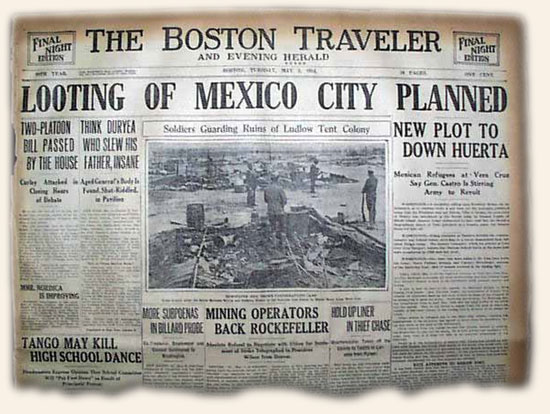
Exploring Mother’s Day with Rare Newspapers…
May 2, 2014 by GuyHeilenman · Leave a Comment
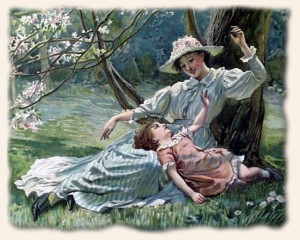
With not much more than a week to go: Flowers… a card… taking her out for dinner… going to visit her… While these may be the most common gift ideas for Mother’s Day, another source are the beautiful prints found on the covers of and within historic newspapers. We’ve created a number of Pinterest Boards which feature such decorative prints. Please enjoy:
 Mother-Themed Prints
Living in the moment…
April 28, 2014 by TimHughes · Leave a Comment
 One of the joys of reading newspapers of a bygone era is the opportunity to put yourself in a very special moment in history. One fine example is the report in the August 22, 1776 issue of “The Continental Journal” from Boston, which notes that: “…immediately after divine worship, the Declaration of Independence was read by Col. St. Clair, and having said, ‘God save the free independent States of America!’ the army manifested their joy with three cheers. It was remarkably pleasing to see the spirit of the soldiers so raised after all their calamities, the language of every man’s countenance was, now we are a people! we have a name among the states of this world.“
Such editorial commentary brings the excitement of the period to life. This is truly the way to enjoy history–what a wonderful hobby!
Not found in history books…
April 25, 2014 by TimHughes · Leave a Comment
It is often the commentary on events in history, as found only in newspapers of the day, which provide a window onto the events not to be found in history books. Such is joy of browsing through old newspapers.
 A great example is an eye-witness account of the surrender of Cornwallis at Yorktown as told in the November 13, 1781 issue of the “Pennsylvania Packet” of Philadelphia. found very inconspicuously on page 3 is: “Permit me to congratulate you on the success of the allied arms, the fall of the boast of Britain! the flower of its army…The allied army was drawn up in two straight lines, facing each other, leaving a space for the British column to pass. The commander in chief with his suite on the right of the American line; the count de Rochambeau opposite, on the left of the French. Lord Cornwallis pleading indisposition, the British were led by general O’Hara, conducted by general Lincoln, their colours cased, and they not allowed to beat a French or American march. The British officers in general behaved like boys who had been whipped at school; some bit their lips, some pouted, others cried…”. Only in a newspaper would this commentary be found. What a wonderful hobby!
The Traveler… premature death… Tecumseh… substituting…
April 21, 2014 by The Traveler · Leave a Comment
 Today I traveled to Boston, Massachusetts by the way of The Yankee dated April 22, 1814. There I found an article on an embargo of vessels in the American harbors. This also included “…[Here the Editor gives a report of the capture of the President by the Majestic; and, says the article, Commodore Rodgers was killed.]…” Considering he died on August 1, 1838, I would say that this was a premature reporting of his death!
The last page of this issue contains a great “Biographical – Character of Tecumseh.” “The celebrated aboriginal warrior, Tecumseh was in the 44th year of his age, when he fell at the battle of the Thames. He was of the Shawanoe tribe, five feet ten inches, high, well formed for activity and the endurance of fatigue, which he was capable of sustaining in a very extraordinary degree…”
A great story from Georgia. A “youthful citizen” had volunteered his services to the military. Approaching battle, he was afraid that he may not survive so he found himself a substitute and returned home to his “heart’s delight.” She had already heard of what he had done and was not pleased of his patriotic indignation. When he had informed her of his intentions of their engagement, she replied “I must refuse to fulfill my engagement, until you employ a substitute.”
~The Traveler
#18 – America’s first newspaper… Check your attics. (*revisited)
April 18, 2014 by GuyHeilenman · Leave a Comment
The very first newspaper printed in the American colonies was published in Boston in 1690 and titled “Publick Occurrences Both Foreign and Domestick”. It was a little paper with three pages of text. The fourth page was left blank for others to write handwritten pieces of news before being passed on to others. It was published by Benjamin Harris who had experience in publishing another newspaper in London several years prior to his arrival in the colonies, titled “Domestick Intelligence, Or News Both from City & Country”.
His Boston effort focused on local news but it also included gossip and unflattering reports. One account notes it contained: “…affections of a very high nature: As also sundry doubtful and uncertain Reports…”. The mixture of doubtful and uncertain reports, as well as a ban on printing without a license which Harris did not have, caused his first issue to also be his last. Reports note that the royal governor had the printing press destroyed and all known issues of that one date of September 25, 1690 confiscated.
To this day only one genuine issue of the newspaper is known to exist, and unfortunately it’s not in the United States: it is in the Public Records office in London. Some years ago it was loaned to The Newseum in Washington, D.C. (then located across the Potomac in Virginia) for a period of time, but I believe it has been returned to London.
The intriguing part of this story is that “all known issues were confiscated and destroyed”. But exactly when did this happen? Was it done several hours since it was printed, or a few days later? It was intended to be a monthly publication. Certainly the possibility exists that a few issues were not found & confiscated, and with the owners knowing of the search they may have purposely hidden them away.
Could an issue or two still exist in a Boston attic somewhere? Is there a private library where an issue was hidden among the pages of a book in hopes of not being confiscated? Could a renovation project to a Boston area home reveal an issue tucked within its walls over 300 years ago? It is fascinating to think that some examples could be found so long after being published. But to this date none have surfaced.
Speculation runs wild as to the value of an issue should it surface. It’s America’s very first newspaper, and none exist in America. What sort of price could be set on such an issue? What should be the future home of an issue should it be found?
Feel free to comment!
—————
*The Fall of 2013 marked the 5th anniversary of the History’s Newsstand Blog by Timothy Hughes Rare & Early Newspapers. We are grateful to have the opportunity to contribute to the newspaper collecting community, and appreciate those who have participated through guest posts, comments, and readership. This year (2014) we are revisiting the top 25 posts (measured by activity), with the number 1 post being re-posted during the first week of 2015. Please enjoy. If you would like to contribute a post for consideration of inclusion on the blog, please contact Guy Heilenman at guy@rarenewspapers.com.