

Search
The Rare & Early Newspapers Hobby

Receive the Newsletter

Buy Historic Newspapers

For sale: an army, and more…
December 10, 2011 by TimHughes · Leave a Comment  Email This Post
|
Email This Post
|  Print This Post
This tongue-in-cheek “For Sale By Auction…A Warlike Nation” advertisement appeared in “The Connecticut Courant” newspaper of Hartford, August 19, 1783, shortly after the end of the Revolutionary War. It offers some biting commentary on thoughts of the politicians of England and the military leadership after losing the Revolutionary War. Enjoy…
If you liked this post, you may also enjoy...
- It’s a family affair…
- Snapshot 1827… Fourth of July – New York abolishes slavery…
- Thoughts on titles in America…
- How to celebrate Christmas in 1780…
- First newspaper in Connecticut…
The Civil War… December 7, 1861…
December 7, 2011 by GuyHeilenman · Leave a Comment Email This Post
| Print This Post
This week we return to our reflection upon the Civil War events of 150 years ago… as seen through the eyes of the original readers of the Harper’s Weekly issue printed for December 7, 1861.
Note: The following commentary was written by Dr. James Robertson* as part of a weekly review for the reprint edition of the “Harper’s Weekly” which was done at the 100th anniversary of the Civil War. It provides much insight into the events of the day and scholarly commentary on both the illustrations and reporting found in the original 1861 newspaper.

* The Virginia Tech website provides the credentials of Dr. James Roberson:
“One of the most distinguished names in Civil War history, Dr. Robertson was Executive Director of the U.S. Civil War Centennial Commission and worked with Presidents Truman, Kennedy, and Johnson in marking the war’s 100th anniversary. Today his Civil War Era course at Virginia Tech, which attracts 300 students per semester, is the largest of its kind in the nation.
The Danville, Va., native is the author or editor of more than 20 books that include such award-winning studies as “Civil War! America Becomes One Nation”, “General A.P. Hill”, and “Soldiers Blue and Gray”. His massive biography of Gen. “Stonewall” Jackson won eight national awards and was used as the base for the Ted Turner/Warner Bros. mega-movie, “Gods and Generals”. Robertson was chief historical consultant for the film.”
If you liked this post, you may also enjoy...
- The Civil War… December 21, 1861…
- The Civil War… December 28, 1861…
- The Civil War… November 23, 1861…
- The Civil War… November 16, 1861…
- The Civil War… November 9, 1861…
The Traveler… Battle of Tippecanoe…
December 5, 2011 by The Traveler · Leave a Comment Email This Post
| Print This Post
 Today I traveled to December 5, 1811 where I found the Middlesex Gazette from Middletown, Connecticut carried an extract of a letter sent to a Member of Congress. This was reporting on “an action between the troops under Gov. Harrison and the Indians under the Prophet… There were 170 whites killed and wounded, and as many Indians… The battle was fought in sight of the Prophet’s Town…. There has been dreadful slaughter…”, being a report on the famous Battle of Tippecanoe.
Governor William Harrison later became our ninth President of the United States which had the campaign slogan “Tippecanoe and Tyler, too”. He also the shortest serving president and the first president to die in office.
A little tidbit of history for this day… 200 years past!
~The Traveler
If you liked this post, you may also enjoy...
- Be sure you are buying what you think you are buying…
- The Traveler… Battle of Baltimore…
- The Traveler… marching off to war…
- Niles’ Weekly Register documented the first half of the 19th century…
- A National calamity… What is one to do?
A cynical view on the Constitutional Convention…
December 3, 2011 by TimHughes · Leave a Comment Email This Post
| Print This Post
Perhaps it would not be a surprise that a British report on the beginning of the American Constitutional Convention would have a cynical slant, but this report seems to stretch the point. This observation appeared in the London “Gentleman’s Magazine” issue of July, 1787.
If you liked this post, you may also enjoy...
- A Fly on the Wall at the Constitutional Convention of 1787…
- When did the “Gentleman’s Magazine” print the Declaration of Independence?
- Editorial policy (?) and the potential impact upon an issue’s collectibility…
- Most historic: The Declaration of Independence in your collection…
- Collecting “bookend” newspapers…
The Civil War… November 30, 1861…
November 30, 2011 by GuyHeilenman · Leave a Comment Email This Post
| Print This Post
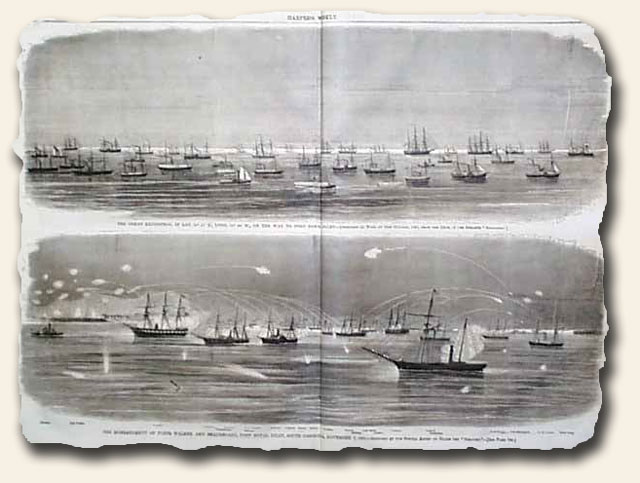 For a little more than 6 months we have reflected upon the Civil War by posting details of the CW era Harper’s Weekly issues which were printed for exactly 150 years prior to the post. This week’s corresponding issue is the HW dated November 30, 1861. Over the past few months we have enjoyed Dr. James Robertson’s* summary of each Harper’s Weekly issue chosen. Unfortunately we do not have access to his summary of the Nov. 30, 1861 issue. If anyone does have access to his summary, please let us know and we will revise this post by including it below (and give credit to the provider). 🙂 In the meantime, the link above will still enable our readers to view an authentic issue for November 30… from exactly 150 years ago today.
Our other posts re: Dr. James Robertson’s summaries may be accessed at: The CW… 150 Years Ago Today.
* The Virginia Tech website provides the credentials of Dr. James Roberson:
“One of the most distinguished names in Civil War history, Dr. Robertson was Executive Director of the U.S. Civil War Centennial Commission and worked with Presidents Truman, Kennedy, and Johnson in marking the war’s 100th anniversary. Today his Civil War Era course at Virginia Tech, which attracts 300 students per semester, is the largest of its kind in the nation.
The Danville, Va., native is the author or editor of more than 20 books that include such award-winning studies as “Civil War! America Becomes One Nation”, “General A.P. Hill”, and “Soldiers Blue and Gray”. His massive biography of Gen. “Stonewall” Jackson won eight national awards and was used as the base for the Ted Turner/Warner Bros. mega-movie, “Gods and Generals”. Robertson was chief historical consultant for the film.”
If you liked this post, you may also enjoy...
- The Civil War… November 23, 1861…
- The Civil War… November 16, 1861…
- The Civil War… November 9, 1861…
- The Civil War… November 2, 1861…
- The Civil War… December 21, 1861…
The Traveler… Thanksgiving proclamation… schooling that maybe should be revisited…
November 28, 2011 by The Traveler · Leave a Comment Email This Post
| Print This Post
 Happy belated Thanksgiving from “The Traveler”! Even though it is a few days past the U.S. observance, my travels found me back at Thanksgiving again with the November 29, 1911 issue of The Courier from Coldwater, Michigan. The front page of the issue features a large Proclamation from the Chase S. Osborn, Governor of Michigan, setting aside Thursday, November 30th for a day of prayer, feasting and thanksgiving.
Additionally on the front page is an article “Thanksgiving in Coldwater – At the Churches, the State School and City Schools” which begins “Every one of the ninety-two million American citizens is called upon by the President of the United States (Taft) and the Governor of his state to lift up to Heaven the praises of his heart to the Giver of All on Thursday…”. The article then continues about the programs which were held in the schools, including “In the High School, in place of the regular chapel exercises there was read the Governor’s and President’s proclamations…”.
Separation of church and state? Something about this report just seemed good. Maybe we should revisit the old school ways???
~The Traveler
If you liked this post, you may also enjoy...
- The Traveler… giving thanks… not on the Sabbath…
- Last words can say it all – John Hancock’s thankful heart… Happy Thanksgiving!
- Thanksgiving – only days away…
- The Traveler… the Thanksgiving proclamation…
- Thanksgiving Proclamations… a survey through American History…
And I thought we were the lazy generation…
November 26, 2011 by TimHughes · Leave a Comment Email This Post
| Print This Post
See what the “Scientific American” magazine of June 18, 1846 considered “Healthy Recreation”. The article notes that: “…it would be much more conducive to the health and happiness of the world if more encouragement as given to such modes of recreation among children & young people as are accompanied with wholesome exercise rather than the dull stagnating amusements of the nursery or parlor.” (see below)
If you liked this post, you may also enjoy...
- Sedentary? Perhaps all you need is a little Jolt to get you going…
- Cigarettes… Fitness you can…
- The American Dream at Work…
- The Traveler… new wheels to get around…
- Scientific American & The Columbian Exposition… A novice’s discovery…
The Civil War… November 23, 1861…
November 23, 2011 by GuyHeilenman · Leave a Comment Email This Post
| Print This Post
This week we continue with the our reflection upon the Civil War events of 150 years ago… as seen through the eyes of the original readers of the Harper’s Weekly issue printed for November 23, 1861.
Note: The following commentary was written by Dr. James Robertson* as part of a weekly review for the reprint edition of the “Harper’s Weekly” which was done at the 100th anniversary of the Civil War. It provides much insight into the events of the day and scholarly commentary on both the illustrations and reporting found in the original 1861 newspaper.

* The Virginia Tech website provides the credentials of Dr. James Roberson:
“One of the most distinguished names in Civil War history, Dr. Robertson was Executive Director of the U.S. Civil War Centennial Commission and worked with Presidents Truman, Kennedy, and Johnson in marking the war’s 100th anniversary. Today his Civil War Era course at Virginia Tech, which attracts 300 students per semester, is the largest of its kind in the nation.
The Danville, Va., native is the author or editor of more than 20 books that include such award-winning studies as “Civil War! America Becomes One Nation”, “General A.P. Hill”, and “Soldiers Blue and Gray”. His massive biography of Gen. “Stonewall” Jackson won eight national awards and was used as the base for the Ted Turner/Warner Bros. mega-movie, “Gods and Generals”. Robertson was chief historical consultant for the film.”
If you liked this post, you may also enjoy...
- The Civil War… November 16, 1861…
- The Civil War… November 9, 1861…
- The Civil War… November 2, 1861…
- The Civil War… December 21, 1861…
- The Civil War… December 7, 1861…
Nostradamus on the Civil War…
November 19, 2011 by TimHughes · 1 Comment Email This Post
| Print This Post
The “Stockton Daily Independent” newspaper of Oct. 28, 1861 includes an article headed: “A Strange Prophecy” concerning Nostradamus & the Civil War. In 1609 he predicted: “…About that time (1861) a great quarrel and contest will arise in a country beyond the seas…The war will not cease for four years…” and more (see).
Keep in mind it was in 1861, just 6 months after the start of the Civil War, that the write noted: “…in no way consoling for us poor devils and wretches…who will have to suffer this war for four years. Let us hope that the astrologer was mistaken, at least on this point.” (see) But the prediction would be true. The Civil War would run almost exactly 4 years after its beginning.
If you liked this post, you may also enjoy...
- The Civil War… November 30, 1861…
- Most historic Civil War event…
- Most historic Civil War event (revisited)…
- The Civil War… 150 years ago… February 1, 1862…
- Introducing: RareNewspapers.com – The Civil War…
The Civil War… November 16, 1861…
November 16, 2011 by GuyHeilenman · Leave a Comment Email This Post
| Print This Post
This week we continue with the our reflection upon the Civil War events of 150 years ago… as seen through the eyes of the original readers of the Harper’s Weekly issue printed for November 16, 1861.
Note: The following commentary was written by Dr. James Robertson* as part of a weekly review for the reprint edition of the “Harper’s Weekly” which was done at the 100th anniversary of the Civil War. It provides much insight into the events of the day and scholarly commentary on both the illustrations and reporting found in the original 1861 newspaper.

* The Virginia Tech website provides the credentials of Dr. James Roberson:
“One of the most distinguished names in Civil War history, Dr. Robertson was Executive Director of the U.S. Civil War Centennial Commission and worked with Presidents Truman, Kennedy, and Johnson in marking the war’s 100th anniversary. Today his Civil War Era course at Virginia Tech, which attracts 300 students per semester, is the largest of its kind in the nation.
The Danville, Va., native is the author or editor of more than 20 books that include such award-winning studies as “Civil War! America Becomes One Nation”, “General A.P. Hill”, and “Soldiers Blue and Gray”. His massive biography of Gen. “Stonewall” Jackson won eight national awards and was used as the base for the Ted Turner/Warner Bros. mega-movie, “Gods and Generals”. Robertson was chief historical consultant for the film.”
If you liked this post, you may also enjoy...