

Search
The Rare & Early Newspapers Hobby

Receive the Newsletter

Buy Historic Newspapers

Is this the earliest Presidential portrait in a newspaper?
February 4, 2021 by TimHughes · 5 Comments
We recently discovered the November 23, 1844 issue of the iconic “Illustrated London News” from England, featuring on the front page portraits of James K. Polk and Henry Clay, both candidates for the Presidency.
 Knowing this was a very early of a portrait of a President in a newspaper, I did a little digging to see if it might be, in fact, the earliest.
I could not confirm an earlier one. Research did note that the issue of April 19, 1845 of the same newspaper has a print showing the inaugural ceremonies and the procession to the Capitol, but that was 5 months later.
Given that most of the illustrated newspapers would not begin until the mid-19th century (Gleason’s Pictorial began in 1851), none of the more well-known American illustrated periodicals existed in 1844. Even Harper’s New Monthly, which had a wealth of small prints in each issue, did not begin until 1850.
Any collectors out there aware of an earlier print of a U.S. President in a periodical? It would be great to document the earliest, whether it’s this Nov. 23, 1844 issue or another.
My collecting story… M.M. in Freeport, NY…
January 25, 2021 by GuyHeilenman · Leave a Comment

Below we continue our series in which we post the “stories” graciously submitted by our collecting friends during the pandemic of 2020-2021.
I have always loved history from as far back as the 8th grade. My teacher started teaching us about Abraham Lincoln [during our unit on] the Civil War. Then one day I went to a garage sale [in upstate New York] with my brother. He knew I loved history, and he found an old school house picture of George Washington. So, I started reading about George Washington. Finally one day my friend called me and told me that he had a gift for me. When I got there he give me my gift – a November 23, 1963 New York Times. I couldn’t believe I was holding a newspaper older than me – and especially a newspaper on the assassination of JFK. From that point on I have never stopped buying [historic] newspapers. Thank you Rare & Early Newspapers for helping me have great collection of newspapers.
As additional “stories” are posted they will be available at: MY COLLECTING STORY. We did this many years ago as well – and their posts are also included.
The January (2021) Newsletter from Rare & Early Newspapers…
January 15, 2021 by GuyHeilenman · Leave a Comment
Monthly Newsletter ~ Rare & Early Newspapers
Welcome to the September 2020 edition of our monthly newsletter. This month we’d like to bring your attention to the following:
An Expanded Set of Discounted Newspapers – 50% Off
New Items Added to January’s Catalog
Since Catalog 302 went to print we’ve added approximately 50 additional items. Some of the topics/issues include: a mid-1700’s map of Eastern Canada, Convicts shipped off to America and Oglethorpe before the founding Georgia in the same issue, several different rare Confederate newspapers, George Washington rejects an honor and the delegates to the Constitutional Convention in the same American issue, a Philip Burke caricature of Donald Trump, and more.
Catalog 302
|
|

|
|
See what’s happening on our social sites
|


Snapshot 1886… Mark Twain – yet another hidden gem…
January 7, 2021 by GuyHeilenman · Leave a Comment
 This forum has often been used to highlight one of the unique benefits of the hobby of collecting Rare & Early newspapers – that is, collecting a newspaper for one purpose, only to later find a more precious item hidden within its pages. Such is the case with the Harper’s Weekly for September 29, 1866. For 40+ years we offered this issue with a spotlight on a variety of the interesting illustrations found within its 16 pages. However, we recently discovered yet another hidden gem: an article accompanying the popular print: “Burning of the California Clipper ‘Hornet'”. What’s so special about this uncredited article? It was written by Mark Twain – making it the first time an article written by him received national attention. What a find!
If you happen to be one of the lucky one’s to have purchased this issue without knowledge of the Mark Twain contribution, you now possess an issue of significantly greater notoriety (and therefore value) than what you previously had thought. Good for you.
Announcing: Catalog #302 (for January, 2021) is now available…
January 4, 2021 by GuyHeilenman · Leave a Comment
- Catalog 302 (in its entirety)
- Noteworthy Catalog 302 ($250+)
- Combined Catalogs (current, w/ remnants of previous)
Don’t forget about this month’s DISCOUNTED ISSUES.
The links above will redirect to the latest catalog in approx. 30 days,
upon which time it will update to the most recent catalog.
As we close the door on 2020…
December 31, 2020 by GuyHeilenman · Leave a Comment
Overall, 1923 was a pretty good year. However, even a decent year has its share of troubles. A few examples from 1923 include:
The Rosewood massacre, the eruption of Mount Etna, the unexpected death of the popular President Warren G. Harding, Gustav Stresemann being named Chancellor of Germany resulting in policies which led to hyperinflation crushing the German economy (paving the way for Hitler’s rise, the Great Kanto earthquake devastates Tokyo and Yokohama killing an estimated 142,807 people, 640 structures a burned to the ground in Berkley (CA), Adolf Hitler is arrested for his leading role in the Beer Hall Putsch greatly increasing his popularity among those who want to see change, the Gleno Dam (in Italy) bursts killing hundreds, multiple competing factions in China align themselves with the Communist Party – greatly strengthening their influence – and eventual dominance, Prohibition reigns, the largest peace-time U.S. Naval disaster (to-date) occurs off the coast near Santa Barbara (the Honda Point disaster), and more. Although somewhat under the radar, a number of world events took place during 1923 which, upon looking in the rear view mirror, helped pave the way for Communism in China, Nazism in Germany, and the severely ramped up conflict in the Middle East.
Yes, even a good year can have its share of warts. AND then, there’s 2020… Was it worse than the years impacted by the Spanish Flu epidemic, WW1, WW2, any of the Great plagues, the death and destruction brought by Atilla the Hun – to name a few? This doesn’t diminish the impact of the pandemic which defined much of 2020; rather, it’s intention was to merely put it in perspective (if possible).
Speaking of perspective…
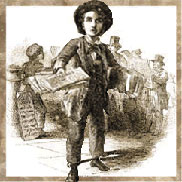
A few days ago the front page of a Rotogravure Section of a Detroit News for December 30, 1923 caught my eye. It was a great reminder that there are times when it’s simply best to look to the future with child-like faith. Happy New Year!
The United States elections – a bumpy walk through time…
December 11, 2020 by GuyHeilenman · Leave a Comment

(false report – Rutherford B Hayes won)
The first president of the United States, George Washington, was elected by a unanimous decision in 1789 [the election process started in 1788]. Since then few elections, whether for mayor, governor, president, etc., have sailed on such smooth waters – and the preponderance of elections outside the U.S. have not fared any better. While the privilege and responsibility of citizens of democracies to exercise their right to elect those whom they wish to lead them cannot be understated, the process is often fraught with civic and relational tension. However, once the election is in the rear view mirror, in most instances wounds are eventually healed and sunny skies return – even if it takes months.
We at Rare & Early Newspapers have created a link to our available election-related issues and arranged them in chronological order. There may be a few stray issues which do not belong in the list, but hopefully those who have an interest in such things will appreciate the somewhat tumultuous stroll through time.
Elections Through Time
My Collecting Story… G.F. in Lexington, Virginia…
December 3, 2020 by GuyHeilenman · Leave a Comment

Continued below in the next installment in our series in which we post the “stories” graciously submitted by our collecting friends during the pandemic which began in 2020.
I love US history and as soon as I earned a permanent salary, I started visiting historical sites and eventually turned to collecting items of interest, particularly US Civil War. I collected many of my Harper’s from numerous civil war shows; my favorite is a Richmond Examiner, 23 June 1864 (long before I knew about the RareNewspapers.com website); it talked of Sherman’s campaign and how it would end like Napoleon’s in Russia! Great reading. Years went by and I am a docent at the Stonewall Jackson House in Lexington, VA (come by when this contagion is past and we’re open again). I prepared a presentation on Jackson in the Mexican War; I came across your site and ordered a “National Intelligencer,” 16 Nov 1847 and “The Union,” also dated 1847. Future Civil War luminaries their exploits abound. Finally, and not about the Civil War, my wife loves to explore Scottish roots and your site had several papers regarding the Scottish rebellion of 1746, referencing the battle of Culloden – yep, I bought it as a Christmas gift for her. Your site piques my curiosity and I’ll remain a customer!
As additional “stories” are posted they will be available at: MY COLLECTING STORY. We did this many years ago as well – and their posts are also included.
Happy Birthday to us!
December 2, 2020 by GuyHeilenman · 1 Comment
 Timothy Hughes Rare & Early Newspapers celebrated its 45th birthday yesterday. Many changes have occurred since Tim Hughes’ first sale back on December 1, 1975, but the love of the hobby has never been stronger. A special thanks goes out to our collecting family who has made the last 45 years such a blessing. As we blew out the candles, our wish was for the peace, safety, current depth of life, and eternal hope for all those who have crossed our path. May it be so.
With gratitude,
Guy, Laura, Lyndsay, Brian, Mike, Eve, and Tim (The Rare Newspapers Family)
PS Full confession: We may have also wished for the continued sales of our historic newspapers. 🙂
Announcing: Catalog #301 (for December, 2020) is now available…
November 30, 2020 by GuyHeilenman · Leave a Comment
- Catalog 301 (in its entirety)
- Noteworthy Catalog 301 ($250+)
- Combined Catalogs (current, w/ remnants of previous)
Don’t forget about this month’s DISCOUNTED ISSUES.
The links above will redirect to the latest catalog in approx. 30 days,
upon which time it will update to the most recent catalog.