
Search
The Rare & Early Newspapers Hobby

Receive the Newsletter

Buy Historic Newspapers

Journalism from Early America to the Digital Age… Election Fraud and more…
June 10, 2022 by GuyHeilenman · Leave a Comment
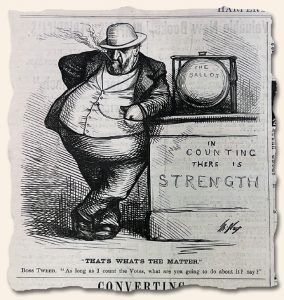 Someone recently brought to my attention an article posted on the website “Brewminate: A Bold Blend of News and Ideas”. While scanning the article I was intrigued by the presence of illustrations of newspapers we have or have previously offered. One in particular which caught my attention was the timely political cartoon by Thomas Nast found in the Oct. 7, 1871 issue of Harper’s Weekly. While a degree of election fraud is (unfortunately) part-and-parcel of the election process, I was inspired to read through the entire article, and in so doing, found it to be quite informative… and wondered if the friends of Rare & Early Newspapers might also find it interesting. Hopefully you will also enjoy reading it:
“Journalism from Early America to the Digital Age”
Announcing: Catalog #319 (for June, 2022) – Rare & Early Newspapers (for purchase)
May 31, 2022 by GuyHeilenman · Leave a Comment
|
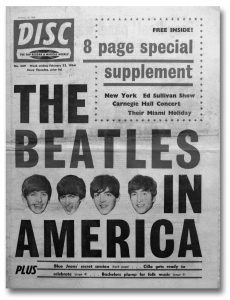 June’s catalog (#319) is now available. Also shown below are links to a video featuring highlights from the catalog, our currently discounted newspapers, and recent posts to the History’s Newsstand Blog. Please enjoy.
|
The links above will redirect to the latest catalog in approx. 30 days,
upon which time it will update to the most recent catalog.
Memorial Day – How many generations does it take to… (?)
May 27, 2022 by GuyHeilenman · Leave a Comment
Generation 1 – The Call to Sacrifice
The oppressed are willing to sacrifice their very lives to throw off oppression – and many of them do, giving their last breath for the sake of their children and their children’s children.
Generation 2 – Picking Up the Pieces
Those recently freed from oppression begin to reap the rewards of their new freedom, but many scars remain – particularly those caused by the loss of loved ones.
Generation 3 – Enjoying Freedom’s Bounty
The sacrifices of the past are still discussed, but the wounds are largely well-healed, and the benefits born of the sacrifice of others is fully embraced.
[an unspecified number of generations – usually not many]
Generation End (Minus 2) – Freedom Is & Always Will Be
Freedom is so commonplace, it begins to be taken for granted. The oppression and sacrifices of the past are long forgotten.
Generation End (Minus 1) – Heads in The Sand
Freedom, is it really all that important? Comfort and ease is what we want. Sacrifice? For what! A blind eye is turned to the new oppressors at the gate.
Generation End – The Demise!
Where did our freedom go? Why are we being oppressed?? How did this happen???

Memory – it’s indispensable. A simple internet search for “lest we forget”, “those who fail to remember”, or similar will return a plethora of warnings about the consequences which go hand-in-hand with not remembering the lessons, sacrifices, blessings, etc. of the past.
As an example, it would be hard to argue that the Jews/Israelites, through time, have been one of the most oppressed people-groups on the planet – a chain of horror which began with their enslavement in Egypt. One would have thought their eventual “deliverance” by the hand of God would have set them up for eternity, yet, just a few generations after their new-found freedom was realized, they found themselves enslaved once again. Why? “The Israelites failed to remember the LORD their God who had delivered them from the hands of all their enemies on every side (Judges 8:34).”
While each generation needs to take personal responsibility for “remembering”, one cannot remember that which one never knew. Therefore, we, as the current generation, must take ownership of teaching ourselves, keeping what we learn in the forefront of our minds, and then teaching the next generation – lest they never know. Will this take considerable effort? Sure, but the sacrifice of time and energy pales in comparison to the sacrifices of the past.
To this end, perhaps the following will be useful:
Previous Memorial Day Themed Posts
Memorial Day Themed Newspapers
PS I am grateful for the men and women who have given their lives so my family, friends, and neighbors, whether we be politically or philosophically divergent or parallel, can enjoy the freedoms which fall under the umbrella of “inalienable Rights which are endowed to each one of us by our Creator”.
Popular Categories – A Deeper Dive into the Legacies of U.S. Presidents…
May 9, 2022 by LauraH · Leave a Comment
Most people have their favorite President of the United States. I’m sure if we each came up with our short list of five favorites there would be considerable overlap. Washington, Lincoln, Ronald Regan or Barack Obama (depending on which side of the isle the person resides), etc. – each president, popular or otherwise, has their own fascinating history which often includes failure, success, and often a few quirky tidbits of fun facts. The wonderful thing about original newspapers is they give collectors the ability to dig into the more obscure details of the lives and legacies of each of these once-upon-a-time “leaders of the free world”. In fact, newspapers containing such mentions are so sought after, we have a dedicated link on our website to help with the exploration: Presidents (U.S.)
As I began perusing collectible issues related to this post my attention aroused by an interesting story regarding our 37th president, Richard Nixon. To counter-act the ever-growing tension which plagued the latter years of his administration – both Watergate and the “resignation” of his VP, Spiro Agnew, President Nixon nominated a replacement for Agnew whom he knew would be easily and quickly confirmed, but who also believed in his innocence in regard to Watergate – one who would likely pardon him if the need arose. President Gerald Ford, after taking the oath of office upon Nixon’s resignation, did in fact give him an unconditional pardon for any and all crimes he may have committed against the United States. Although this particular use of a Presidential pardon has only occurred once in U.S. History, now that the box has been opened, it likely won’t be the last.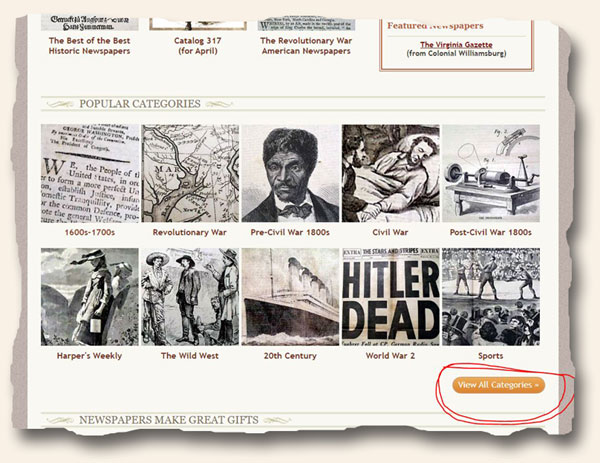

National Day of Prayer… Love our neighbors… Newspapers provide perspective…
May 5, 2022 by GuyHeilenman · Leave a Comment
As we reflect on the political, religious, racial, socio-economic, etc., etc., etc. diversity of the citizens of the United States on this National Day of Prayer, one cannot ignore what appears to be our ever-increasing polarization and wonder if our days are numbered. Is it possible to learn to appreciate our differences… to be kind… to play nice? When we were just sprouting, many of us were taught the Biblical mandate to love our neighbors – albeit a difficult task, at least we could wrap our minds around the concept.
 However, Jesus, in His famous Sermon on The Mount, upgraded this calling to a height eclipsing human reason:
“You have heard the law that says, ‘Love your neighbor’ and hate your enemy. But I say, love your enemies! Pray for those who persecute you! In that way, you will be acting as true children of your Father in heaven. For He gives His sunlight to both the evil and the good, and He sends rain on the just and the unjust alike.”
Is this really possible? Can we actually learn to love those who violently oppose us – who would wish us harm? God tells us that with Him, ANYTHING is possible. He also provides considerable encouragement when He states: “You often do not have because you do not ask.”
Reading news from the day it was first reported through historical first-hand accounts as found in Rare & Early Newspapers provides incredible perspective. Our shared heritage was built upon diversity. Did we make mistakes, have passionate disagreements, and even come to the brink of our demise? Absolutely! However, through it all we managed to stay together – to be a melting pot unlike any the world had ever experienced. Was this… is this a God-thing? One thread woven throughout our history has been the calls by our leaders (Presidents, Governors, etc.) to seek God through prayer – often given as Proclamations for a Day of Thanksgiving, Humiliation, and Prayer. The truth is, prayer has been woven throughout the fabric of our nation from the start.
So, on this agreed upon, country-wide, National Day of Prayer…
Dear Lord,
We, as a nation, need Your help. Please give us the ability too see others through Your eyes and to love those with whom we fervently disagree. We understand the truth in President Lincoln’s words: “A house divided against itself cannot stand.” We realize there are many from outside our borders who are actively fomenting such division, and rather than steeling ourselves against such attacks, we too often respond as mere pawns. Help us to unite against such nefarious intentions. Help us to appreciate our common Source – that we are all made in Your image, our common citizenry, and the abundance of our shared experiences – birth, death, and a ton of joys and sorrows in between. Help us to play nicely with one another – to seek common ground whenever possible, and to agree to live peacefully with our differences. While humanly absurd, please give us Your strength to love one another. We grasp this is a You-size quest and therefore come to You with child-like humility – pleading for You to do that which we cannot do ourselves. We, as a nation, need Your help. Thanks in advance.
Amen
The following is a post from the past which, in my opinion, is worth a second look:
America – pulling a nation back together…
 My Fellow Americans: Devastating hurricanes, Pearl Harbor, 9-11, the end of WWII, Lindbergh’s 1st flight across the Atlantic – while there is much that divides us, there have been times throughout our history when both triumphs and tragedies have inspired us to lay down our weapons and to unite as one. While these times of mutual good will are typically short-lived, they often act as a reset to help center us on that which binds us together. We need such a time!
It is was with the current atmosphere of angst as a backdrop that I was moved by an under-the-radar prayer found buried on page 11 of an issue reporting the assassination of President JFK. His death, airmailed via television directly into the living room of nearly every home in America, brought together Republicans, Democrats, and Independents alike and unified us around shared grief. May a day come when such unity of spirit flourishes without the inspiration of deep sorrow, tragedy, or war. As another assassinated President once said: “A house divided against itself cannot stand (Abraham Lincoln).” It is time for us to lay down our weapons. Much is at stake.
From the Library of Congress: “Printing Newspapers 1400-1900: A Brief Survey…”
May 2, 2022 by GuyHeilenman · Leave a Comment
 A friend of Rare & Early Newspapers recently sent us a link to an article posted on the Library of Congress’ blog titled, “Printing Newspapers 1400-1900: A Brief Survey of the Evolution of the Newspaper Printing Press” (written by Joanna Colclough and posted by Malea Walker), which we thought was quite interesting. It begins in part:
“The printing press has always been a marvel of human invention, and the printing of newspapers occupies a unique course in the history of printing machines. As demands grew for more pages, more news, and faster delivery, newspapers had to achieve greater speeds and higher efficiency.
Newspapers started on Gutenberg presses – individual type pieces arranged backwards by hand, secured in a flat bed, inked by hand, and a great leverage force applied to create the impression. The machine did one part of the job, and newspapers were often printed once a…”
To read the entire post, go to:
Printing Newspapers 1400-1900: A Brief Survey of the Evolution of the Newspaper Printing Press
Announcing: Catalog #318 (for May, 2022) – Rare & Early Newspapers (for purchase)
April 30, 2022 by GuyHeilenman · Leave a Comment
|
 May’s catalog (#318) is now available. Also shown below are links to a video featuring highlights from the catalog, our currently discounted newspapers, and recent posts to the History’s Newsstand Blog. Please enjoy.
|
The links above will redirect to the latest catalog in approx. 30 days,
upon which time it will update to the most recent catalog.
Exploring “This Day in History” through Rare & Early Newspapers…
April 22, 2022 by GuyHeilenman · Leave a Comment
Who among us isn’t a bit curious as to what occurred on our birthday (or today’s date) through time? The concept of exploring a specific day (month/day) through history has always been intriguing, but before the internet, such knowledge was not easy to obtain. However, in the present world of data explosion, websites which explore “This Day in History” do the job quite nicely and have become very popular. One of my favorites is HISTORY.COM maintained by The History Channel.
Of course, as a collector and reseller of old newspapers, this trek is amplified by the capability of holding authentic newspapers containing contemporary reporting of these events – to not only read the articles themselves, but to explore the context of what else was going on as the events unfolded.
Thanks to ongoing requests from collectors, we’ve created an interface on our website which enables the seeker to explore what is available at any given moment for any month/day. Even if you are not looking to add to your collection, perusing through the issues can be fascinating. If you have interest in giving this a try, the steps below are provided to help you get started.
This feature is available at: Explore: “THIS DAY IN HISTORY”
– – –
I tried own birthday and came up with the following: January 2nd Through Time
Don’t forget the “Sort” feature which will give you multiple ways to arrange your search results. Have Fun!

Collecting Old/Historic Newspapers: The 1600s & 1700s…
March 24, 2022 by GuyHeilenman · Leave a Comment
 At Timothy Hughes Rare & Early Newspapers (rarenewspapers.com), we are often asked what types of “old Newspapers” are worth collecting. One of the beauties of the hobby is that the possibilities are endless. While we have our own preferences, once a month we will simply direct readers of the History’s Newsstand blog to an era, theme, topic, etc. for which our collector friends have expressed interest. This month’s focus is shown below. Feel free to email me at guy@rarenewspapers.com with your own collecting preference/s. Perhaps one day we’ll feature it/them as well.
The 1600s and 1700s
Collecting Old/Historic Newspapers: The Revolutionary War…
March 17, 2022 by GuyHeilenman · Leave a Comment
 At Timothy Hughes Rare & Early Newspapers (rarenewspapers.com), we are often asked what types of “old Newspapers” are worth collecting. One of the beauties of the hobby is that the possibilities are endless. While we have our own preferences, once a month we will simply direct readers of the History’s Newsstand blog to an era, theme, topic, etc. for which our collector friends have expressed interest. This month’s focus is shown below. Feel free to email me at guy@rarenewspapers.com with your own collecting preference/s. Perhaps one day we’ll feature it/them as well.
The Revolutionary War