
Search
The Rare & Early Newspapers Hobby

Receive the Newsletter

Buy Historic Newspapers

Nothing New Under the Sun… Thomas Nast Calls Out Government Fraud…
April 20, 2026 by Laura Heilenman · Leave a Comment
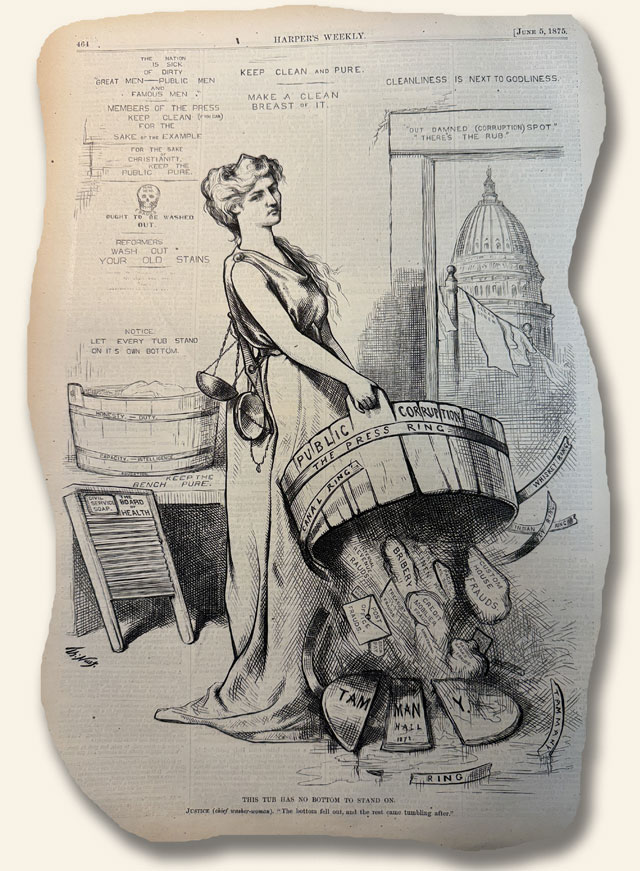 Thomas Nast’s 1875 wood engraving “This Tub Has No Bottom to Stand On,” published in Harper’s Weekly, stands as a searing indictment of Gilded Age graft. In the cartoon, blindfolded Justice hoists a washtub labeled “Public Corruption” by its handles. The metal rings binding it—each stamped with the names of notorious syndicates such as the Tammany Ring, Whiskey Ring, Canal Ring, Indian Ring, and City Ring—snap apart under the strain. The tub’s false bottom, emblazoned “Tammany Hall 1872,” plummets to the floor, spilling a cascade of documented crimes: bribery, internal-revenue frauds, Custom House swindles, Crédit Mobilier scandals, Treasury embezzlement, and Post Office graft. Nast, fresh from dismantling Boss Tweed’s machine, used the image to declare that these interlocking networks of political and corporate plunder possessed no legitimate foundation; once challenged by law or public scrutiny, the entire edifice collapsed, emptying its ill-gotten contents for all to see.
Nearly 150 years later, the United States still contends with systemic corruption that echoes those same structural weaknesses. Transparency International’s 2025 Corruption Perceptions Index gave the country a score of 64 out of 100—its lowest mark on record—ranking it 29th globally and marking a continued slide amid partisan polarization and regulatory capture.
The parallel between Nast’s era and our own is therefore not merely stylistic but substantive. Both periods feature explosive economic growth, technological upheaval, and extreme inequality that lubricate the machinery of graft; historians routinely describe the present as a “second Gilded Age” precisely because corporate-political fusion and fee-based governance have reemerged in updated forms. Yet important differences exist: today’s watchdogs, independent prosecutors, and digital transparency tools act as faster-acting surrogates for Nast’s allegorical Justice, rapidly exposing and clawing back billions that once vanished into obscurity. The enduring lesson of the cartoon therefore persists undiminished: corruption’s tub still has no bottom to stand on. When accountability is applied—whether by cartoonist’s pen or federal indictment—the contents inevitably spill, reminding every generation that vigilance and impartial justice remain the only forces capable of dismantling rings that otherwise appear impregnable.