
Search
The Rare & Early Newspapers Hobby

Receive the Newsletter

Buy Historic Newspapers

A political cartoon from 1776 themed on the Revolutionary War…
February 23, 2017 by TimHughes · Leave a Comment
 Political cartoons are ever-present in our world today. It would be difficult to find a daily or weekly publication today without at least one. And they have been around for a long time–perhaps longer than you might think.
There was the occasional political cartoon in 18th century magazines, only a few of which are American-themed, and fewer still can be found as most have been removed years ago. Although we have had a few in years past, we recently purchased not only a very nice one, but one from a title difficult to find in today’s world of collecting.
The November, 1776 issue of “The London Magazine: Or, Gentleman’s Monthly Intelligencer”, not to be confused with the more common “Gentleman’s Magazine”. A full page plate in the issue has a very political cartoon themed on the Revolutionary War, captioned: “News From America, or the Patriots in the Dumps.” and shows Lord North standing on a platform holding a letter announcing successful campaigns by the British troops in America. A distraught woman, ‘America’, holding a liberty cap, sits at the base of the platform. Others present react to the news. There are several websites concerning this political cartoon, one of which can be seen here.
Introducing: RareNewspapers.com – The Revolutionary War…
September 22, 2016 by GuyHeilenman · Leave a Comment
Collectible Revolutionary War Era Newspapers
 “History is never more fascinating than when it’s read from the day it was first reported.”
First-hand Accounts of the American Revolution
What is now American history was once current news. Revolutionary War newspapers produced daily reports mentioning political leaders such as George Washington, Thomas Jefferson, Benjamin Franklin, John Adams, John Hancock, plus military leaders (both American & British) including Gates, Gage, Carleton, Howe, Clinton, John Paul Jones, Burgoyne, and the infamous traitor, Benedict Arnold, along with other noteworthy names, such as Paul Revere and Thomas Paine.
Follow The Stuggle Against Tyranny
We offer an opportunity to own complete, genuine newspapers from the era of America’s founding fathers. Read first-hand battle reports from including Lexington & Concord, Bunker Hill, Saratoga, Ticonderoga, and Valley Forge. Immerse yourself in significant political events, such as the Declaration of Independence, the “Causes and Necessity for Taking Up Arms,” Articles of Confederation, the Stamp Act, and other historical happenings. Read of soldiers protecting the liberty of their families; the British taking over our prized cities of Boston, Philadelphia, and New York; and the struggle of the 13 colonies as they fought to be freed from the tyranny of British rule and taxation.
The Relationship Between Great Britain and the Colonies
It’s always interesting to get a glimpse into how the British newspapers reported news about “her charter colonies in America.” The London Chronicle published some terrific content on that topic in April 1774, and another article about taxing the American colonies containing the quote: “Might not America, under tax masters thus interested in their oppression, be deemed in a state of abject slavery?”
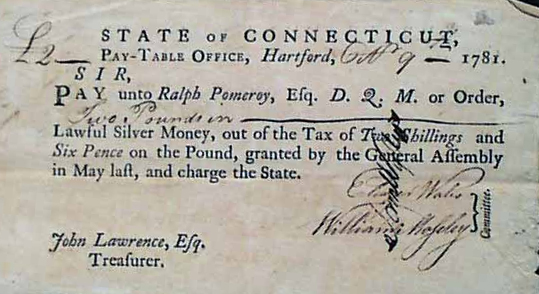
Hold History in Your Hands
It comes as a surprise to many that newspapers from the Revolutionary War that are 200-plus years-old are available for purchase, and are reasonable priced and well preserved. The reason that 18th century newspapers have held up so well is mostly because they were printed on durable rag linen. Rag linen was a common type of paper that was made from pulping linen rags often from ship sails or clothing.
Introducing: RareNewspapers.com – The 1600’s and 1700’s…
September 15, 2016 by GuyHeilenman · Leave a Comment
Collectible 1600s & 1700s Newspapers
 “History is never more fascinating than when it’s read from the day it was first reported.”
It might not be your first thought, but newspapers from the 1600s and 1700s are very similar content-wise to modern newspapers. Early newspapers contained reports on wars, natural disasters, listed items for sale, and published death notices. Sound familiar? Newspaper content hasn’t changed drastically in 300-plus years. It is interesting to read accounts from this era and realize how similar we modern folk are to our ancestors. It seems that people at their core are mostly the same, and to this day, want to read news covering similar topics. That being said, some aspects of newspapers definitely have changed.
What has changed are the dimensions (smaller then, larger now), the number of pages (fewer then), paper quality (higher quality rag linen then), and the format. Newspapers of this period typically had an inflexible format, meaning that if page three was dedicated to foreign news, even if the most amazing foreign event occurred, it would appear on page three, not page one—period.
Due to the time it would take to typeset and print an issue, breaking news of major events would often be printed on a separate sheet called an “Extra” or an “Extraordinary” that was delivered with the daily issue or sometimes was not distributed until the following day.
Much more can be said regarding newspapers from the 1600’s and 1700’s, but for now, please enjoy the Rare Newspapers dedicated page dedicated to original and historic issues from this era:
The 1600’s and 1700’s
The Articles of Confederation formally united the 13 colonies (revisited)…
August 29, 2016 by GuyHeilenman · Leave a Comment
An oldie, but a goodie…
The following post was originally published in 2008:
For a collector of historic American documents as printed in period newspapers a printing of the “Articles of Confederation” would be a very significant issue. With much credit to Wikipedia, the creation & importance of this document provides some fascinating reading:
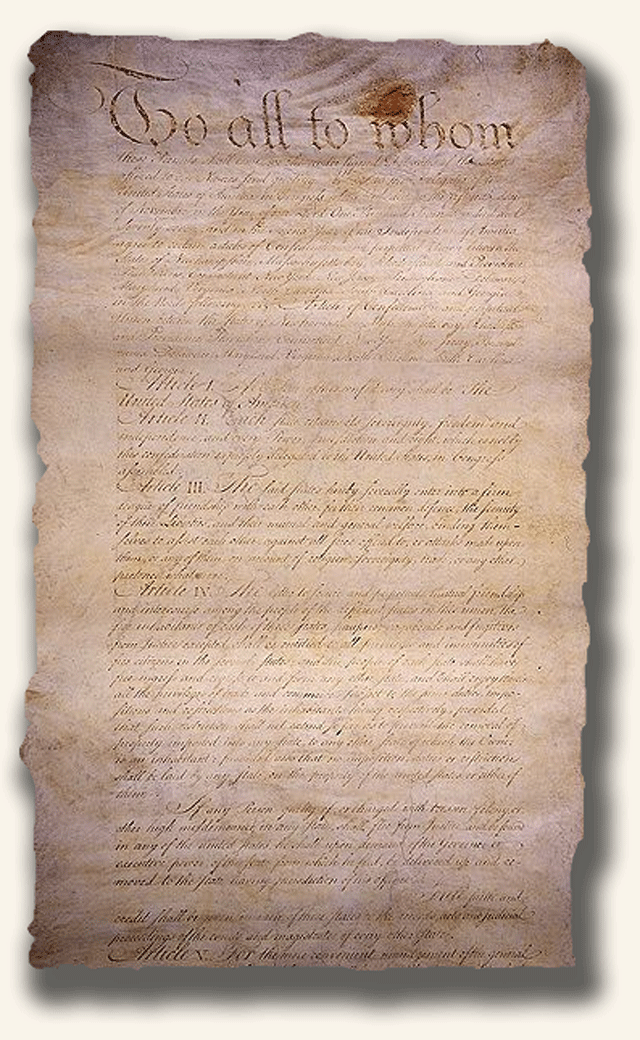 The Articles of Confederation was the governing constitution of the alliance of thirteen independent and sovereign states known as the “United States of America.” The Articles’ ratification, proposed in 1777, was completed in 1781, legally uniting the states by agreement into the “United States of America” as a union with a confederation government. Under the Articles (and the succeeding Constitution) the states retained sovereignty over all governmental functions not specifically deputed to the central government.
The last draft of the Articles was written in the summer of 1777 and adopted by the Second Continental Congress on November 15, 1777 in York, Pennsylvania after a year of debate. The Articles set the rules for operations of the “United States” confederation. The confederation was capable of making war, negotiating diplomatic agreements, and resolving issues regarding the western territories; it could not mint coins (each state had its own currency) nor could it borrow money, whether inside or outside the United States. An important element of the Articles was that Article XIII stipulated that “their provisions shall be inviolably observed by every state” and “the Union shall be perpetual”.
The Articles were created by the chosen representatives of the states in the Second Continental Congress out of a perceived need to have “a plan of confederacy for securing the freedom, sovereignty, and independence of the United States.” Although serving a crucial role in the victory in the American Revolutionary War, a group of “federalists” felt that the Articles lacked provisions for a sufficiently effective government. The key criticism by those who favored a more powerful central state (the federalists) was that the government lacked taxing authority; it had to request funds from the states. Another criticism of the Articles was that they did not strike the right balance between large and small states in the legislative decision making process. Due to its one-state, one-vote structure, the larger states were expected to contribute more but had only one vote. The Articles were replaced by the United States Constitution when created in 1787.
Our issue of the Pennsylvania Ledger dated March 11, 1778 contains the complete printing of the Articles of Confederation. The many photos will allow you to enjoy the significance of the newspaper and to appreciate how those who held this actual edition some 230 years ago might have felt knowing the independent colonies were joining together for a common cause–to not only provide a foundation for a united country which might some day–hopefully–become a world player, but for more immediate purposes, to survive the incursions of the British during the ongoing Revolutionary War. In 1778 no one knew how either effort might turn out.
Enjoy the issue!
Archaeologists uncover secrets of historic Revolutionary War battle site…
November 19, 2015 by GuyHeilenman · Leave a Comment
 While reports of the events surrounding the skirmish at Lexington & Concord (1775) are few and far between, due to their undisputed importance, authentic newspapers with first-hand accounts are highly prized. A current archaeological effort in and around the area are sure to only increase public interest. The following article brings to light some of the recent finds:
Archaeologists uncover secrets of historic Revolutionary War battle site
A rousing call for freedom…
July 1, 2015 by GuyHeilenman · Leave a Comment
We occasionally find nice editorials or letters in newspapers of the colonial era which express a concern for the relationship between England and the colonies. Most appear during the midst of the Revolutionary War, but they can be found, at times, in newspapers dated between the Stamp Act of 1765 and the outbreak of war ten years later.
The “Essex Gazette” of March 14, 1775 contains on page two a very rousing “call to arms” in support of freedom from the “tyranny” of England (one is shown below -both are viewable through the link). Hint is made for the need for freedom from British control some 15 months prior to the Declaration of Independence.
Take a moment to read this great letter, headed: “May Truth’s bright Beams and Freedom’s Rage, Confound the Villains of the Age.” A very appropriate piece as we now celebrate the 239th anniversary of the Declaration of Independence.
They put it in print… Sons of Liberty…
April 13, 2015 by TimHughes · Leave a Comment
Finding reports in centuries-old newspapers which read like they came from today’s papers are always fascinating. They provide interesting evidence that life today, in many ways, is not necessarily so much different from years ago.
A report in the October 12, 1776 issue of “The Pennsylvania Ledger” newspaper (see below) of Philadelphia contains a very interesting piece which accuses the manipulation of news, reading: “It is astonishing to see daily the insults offered by the Tories…since the news of the skirmish on Long Island; on the first report…congratulate each other…They have the effrontery to assert that it is much worse than reported, that it’s so bad that the Sons of Liberty are afraid to let it be known least the people should be discouraged. Is not this intolerable?…they propagate every intelligence they receive, taking care to calculate it so as to serve their own turn; its beyond a matter of doubt that they keep up a secret correspondence through the colonies in order to comfort one another to keep up their sinking spirits and to propagate falsehoods…” (see).
In light of on-going accusations by political parties today that news reports are manipulated to serve their own interests, it is fascinating to find the same happened during the Revolutionary War so many years ago.
They put it in print… George Washington called a quack…
February 10, 2015 by TimHughes · Leave a Comment
Newspaper reports from the “other side” always provide some fascinating reading, such as Confederate vs. Yankee accounts of Civil War battles, or Allied vs. Nazi reports of World War II battles.
The same is true of the Revolutionary War. The “Pennsylvania Ledger” was a Loyalist newspaper and they spared little in criticizing the American, or “rebel”cause as they called it, for freedom. The January 21, 1778 issue has a fascinating letter which heavily criticizes Washington’s letter to Congress of October 5, 1777 (see below or go to this issue for full details). In the letter Washington puts an admittedly positive spin on his tragic loss at the battle of Germantown, which gives this writer a cause to respond.
He begins: “Mr. Washington’s letter to Congress…is perhaps the most extravagant piece of Jesuitical quackery that has been exhibited during the present rebellion. This heroic epistle abounds in deception, and incongruous contradiction in the extremely; it is calculated to mislead…”. His treatment of Washington doesn’t get any nicer. “This military quack…” is his next reference to the American leader, and he takes on one of the more famous quotes from Washington’s letter: ” ‘Upon the whole, it may be said the day was rather unfortunate than injurious.’ what a delicate and nice distinction here is held forth!…Who can help laughing at such an heterogeneous jumble of inconsistencies. Mr. Washington & his confederates have gained immortal honour by being suddenly put to flight by his Majesty’s troops…”.
Reading from the Loyalist side offers a perspective not to be found in newspapers supporting of the cause of Independence. What a fascinating hobby!
How Paul Revere’s Ride Was Published And Censored IN 1775…
February 6, 2015 by GuyHeilenman · Leave a Comment
 Todd Andrlik, founder and editor of Journal of the American Revolution, and curator, author and editor of Reporting the Revolutionary War: Before It Was History, It Was News (Sourcebooks, 2012), has assembled and written a great piece of scholarship in regards to Paul Revere – specifically, how he was viewed by his contemporaries, using the lens of original newspapers of his day. An excerpt is as follows:
Because of Henry Wadsworth Longfellow’s famous poem, “Paul Revere’s Ride,” most people think that Revere was critical to the start of the Revolutionary War. In trying to dispel Longfellow’s myth of a lone hero, modern scholars have portrayed Revere as just one rider among dozens on 18-19 April 1775, and argued that his previous rides for the Patriot cause might have been more important. A survey of newspapers from 1774 and 1775 shows that in fact those earlier rides had made Revere prominent enough that he did stand out in reports of the fighting at Lexington and Concord, even as Massachusetts authorities kept the extent of his activities quiet.
Paul Revere was a man who wore many hats. He was well known throughout New England for his engravings, his silver work, his Masonic fellowship and his political activity. Plus, in 1774 and early 1775, Revere worked as an express rider for the Boston Committee of Correspondence and the Massachusetts Committee of Safety. He frequently carried letters, newspapers and other important communication between cities, including Boston, Hartford, New York and Philadelphia. Revere’s early dispatches related to some of the biggest American events of the eighteenth century, including the destruction of the tea, the Boston Port Bill and the Suffolk Resolves. In December 1774, at the age of 39, he rode to Portsmouth to alert local Patriot leaders that the Royal Navy was on its way to seize gunpowder and arms from Fort William and Mary. Newspaper printers would eagerly print Revere’s tidings, frequently attributing…
This is a must-read article! View Todd’s scholarship in its entirety at:
How Paul Revere’s Ride Was Published And Censored In 1775
They put it in print…
January 12, 2015 by TimHughes · Leave a Comment
 Tabloid journalism was alive and well in 18th century America. If you thought “sleazy” reports were a concoction of the 20th century, you would be wrong, as newspaper editors had, for hundreds of years, few concerns about slandering those they found offensive or who were on the other side of the political fence.
The “Pennsylvania Ledger And Weekly Advertiser” of December 24, 1777” was a Tory newspaper (loyal to the King, not the American cause of independence) and on page 2 the editor printed portions of a letter from George Washington to his wife, intercepted on its route. Obviously no friend of Washington’s, he even publishes the letter as a separate piece and offers for sale in his shop: ” “The printer has received from New York a few copies of an intercepted letter from General Washington to his Lady, dated June 24, 1776, which he is now selling at his shop in Market Street. The following is an extract.”