

Search
The Rare & Early Newspapers Hobby

Receive the Newsletter

Buy Historic Newspapers

They put it in print… The Vietnam Crisis… before it was a crisis…
March 23, 2015 by TimHughes · Leave a Comment
One of the attractions of collecting old newspapers is the ability to look at history with the benefit of hindsight. Many times writers were right on the money when it came to predicting events in the future; many times they could not have been more wrong. Both views offer interesting reading.
Not long ago we came across a report of what would become a scar on the military history of the United States, specifically the lengthy war in Vietnam. A “Los Angeles Times” newspaper as early as March 25, 1965, some ten years before the Vietnam War would  officially end (Saigon fell on April 29, 1975) had a headline announcing: “VIET CRISIS GROWS“. This report notes that Red China was committed to sending troops to fight in Vietnam if the Americans persisted in their growing involvement, and that they would: “…fight together with the South Vietnamese people to annihilate the U.S. aggressors.” This is in response to the event of 3 weeks prior when the first American combat troops arrived in Vietnam, joining a force of 23,000 American “advisers”. American involvement in the Vietnam War would only continue to grow for another 8 years.
I am sure almost no one who read this newspaper in the spring of 1965 could have guessed the future complexity and duration of American involvement in Southeast Asia. This issue constitutes half of what I would call “bookend newspapers”, or a pair of newspapers which report the beginning and end of noteworthy events.
The Traveler… taking important steps…
March 16, 2015 by The Traveler · Leave a Comment
Today I traveled to Detroit, Michigan, by the way of The Detroit News dated March 18, 1965. There I found “Russian Takes First Space Walk From  Orbiting Ship”. This was the very first time that anyone had ever taken a walk in space, going sixteen-feet from the capsule.
Also on the front page was the reporting of “Allow Capital March, Judge Tells Alabama.” “A federal judge last night ordered Alabama officials to permit Dr. Martin Luther King’s civil rights army to march the 50 miles from Selma to this state capital (Montgomery). Moreover, the state authorities must protect the marchers…”. This was the granting of permission for the infamous Selma march which took five days to complete with thousands of people participating.
~The Traveler
The City of Boston receives noteworthy journalism award…
March 9, 2015 by GuyHeilenman · Leave a Comment
 The following is a note we recently received from one of the collector friends of Rare & Early Newspapers:
Happy to report that the section “Boston Journalism Firsts” and other contents of the Boston Journalism Trail site were used to nominate Boston for the Historical Site in Journalism Award given by the American Society of Professional Journalists, the largest journalists organization in the United States. The organization gave its 2014 award to Boston, thus for the first time honoring a whole city for the totality of its contributions to journalism. The organization’s president is to present the city’s mayor with a memorial plaque to be placed in a public space in downtown Boston in 2015. Thanks for all your support over the years.
To view details:
http://www.spj.org/news.asp?REF=1260
The Civil War… March, 1865
March 5, 2015 by GuyHeilenman · Leave a Comment
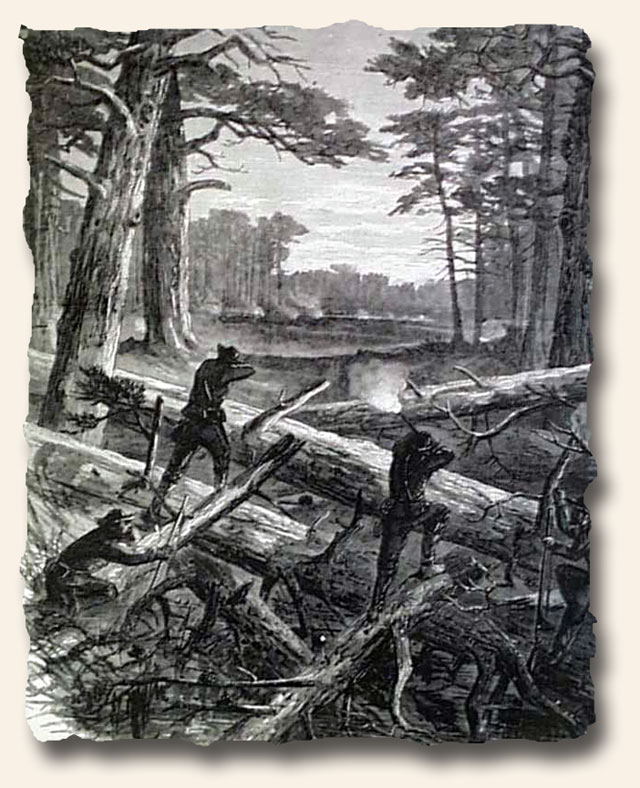 his is why we often say, “History is never more fascinating than when it’s read from the day it was first reported.” The following link will take you back in time to show the available newspapers from the Rare & Early newspapers website. There’s no need to buy a thing. Simply enjoy the walk back in time:
March, 1865
A broken heart… 200+ years ago… today?
February 27, 2015 by GuyHeilenman · Leave a Comment
Anguish… deep sorrow… pain and emptiness that engulf and suffocate… As the saying goes: “The more things change, the more they stay the same.” No matter how far we advance as a race over time, the death of a loved one elicits the same paralyzing emotions today as it did 100… 1000… 5,000 years ago, and will continue to do so as long as humanity walks this earth. Such is the case (in spades) with a parent’s crushed spirit upon the loss of a child. While searching through an original printing of The American Magazine, Philadelphia, dated May, 1792 in the hopes of finding historical content, I came across the printing of a letter from a Father who was trying to come to terms with the untimely loss of his child. Language usage and expression aside, this letter written 200+ years ago could easily have been written yesterday. It also made me thankful for a hope beyond the grave – a hope that shouts from a Father’s pen as he attempts to express his heart… his love… his hope: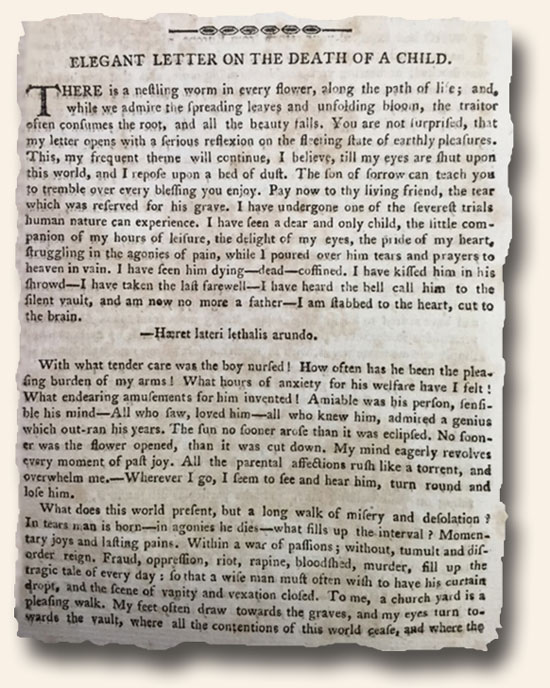

Prices of newspapers… How have the changed?
February 20, 2015 by GuyHeilenman · 10 Comments
One of the questions we often receive at Rare Newspapers relates to the collectible investment value of newspapers over time. Most indicate they do not collect for investment reasons; rather, they do so for the love of “History in your hands.” The embrace our motto: “History is never more fascinating than when it’s read from the day it was first reported.” Newspapers provide glimpses of history in the context of both the exciting and mundane of the era in which it was reported. Still, the question remains. How has the value of Rare & Early Newspapers progressed over time? We posed this question to our founder, Tim Hughes, and the following was his response:
We have to keep in mind that this hobby is a very small one, and when I began 39+ years ago there essentially was no established market, nor any sort of price guide which offered a baseline of values based on content, condition, etc.
I came from the coin collecting hobby and knew from it that the more rare the item, the more values increased through the years. Common date pennies were selling in the 1970’s for about the same prices as from a decade earlier, while the rare dates/coins had increased substantially. I took this information with me when I opted for a hobby which had yet to be exploited by an established collecting industry such as coins, stamps, books, etc. Although I purchased veraciously during my earlier years, always fearful the supply of 150+ year old newspapers would dry up, I have found that the common, generic material was always plentiful—and still is today. What has not been plentiful are newspapers with historic reports, and newspapers which are themselves very rare. The “less plentiful” issues have appreciated considerably over the last 39 years, while generic issue values are really not much different today than they were 39 years ago. Example: I always offered a 10-issue wholesale lot ever since my first catalog, then priced at $19.50. The same lot today is $24.95, and I suspect some of that increase is more to help offset increased shipping costs. And I think we have a virtually unending supply.
How much have values of historic & rare issues increased? It can be difficult to say as we have never made a point to keep comparative records as it seemed a bit meaningless for our purposes. But in general I would say they have increased 5-fold to 10-fold in the post 30 years. I’m not going to consider my first 9 years in the business as any sort of gauge as I was still feeling my way thru the hobby; raising & lowering prices as my customers would react (or not react). An anecdotal story: early on in my enterprise I purchased a bound volume of a Santa Fe, NM newspaper from 1881. Amongst the 150 or so issues was a run of, perhaps, 40 issues each having a little reward ad for the capture of Billy the Kid. Figuring a novice such as myself coming across the volume, and the fact that there were so many issues with the ad, I logically presume it was not very rare. I think I sold those issues for $35 or so each. If I would have those issues today I think we could get $700 each. That  doesn’t mean the value has increased by 2000%. It speaks more to my ignorance of what they should have sold for 35 years ago. Unfortunately that incident wasn’t my last such learning experience.
Perhaps one of the more “common” of the very historic issues would be the Gentleman’s Mag. with the Declaration of Independence. We sold it for under $2000 ten years ago, and now we sell them for $4000. So this document in this title has doubled in 10 years, and I could never say that it is “rare” as we encounter this issue perhaps twice a year. It is extremely historic, but not truly rare. Truly rare items would have increased much more dramatically. In fact truly rare items don’t come on the market any more. I have few qualms offering a truly rare event/newspaper for 4 or 5 times our last price if we only had it twice in 39 years.
As is always the case–and as it truly should be in a free market economy–the collectors ultimately determine the prices of our material. There have always been high-income collectors who have kept the rare items rising in value at a consistent rate, while more common items have languished in value because collectors are not taking them off our shelves.
I cannot say that there has been any period over the last 39 years when the hobby was either “hot” or “cold”. I think whether values have rising nominally or dramatically, they have done so in a rather consistent curve, unaffected by the economy or stock market ups & downs.
I still believe the hobby is very much in its infancy. The vast majority of people have no idea that our hobby exists, and I have always felt the time will come when that will change. I don’t have to tell you that in a comparative sense with other collectables, our hobby seem dramatically undervalued.
Tim
People collect rare newspapers for various reasons – investment purposes being one of them. Finding hidden historical gems, preserving history, immersing oneself in an era and/or event, as a companion collectible to another collectible interest, etc. What a great hobby!
The Traveler… peace…
February 16, 2015 by The Traveler · 2 Comments
 Today I traveled to Boston by the means of the Columbian Centinel dated February 5, 1815. There I found the breaking news of the “A TREATY OF PEACE between this Country and Great Britain, signed on the 24th December last… I have undertaken to send you this by Express — the rider engaging to deliver it by Eight o’clock on Monday morning… I am with respect, Sir, your obedient servant, JONATHAN GOODHUE.”
This peace treaty ended the War of 1812 between the United States and Great Britain and Ireland. Due to lack of telecommunications and time travels at that time, even though the treaty was signed December 24, 1814, the Battle of New Orleans was fought and won on January 8, 1815 and the Treaty was not in effect until it was ratified by the U.S. Senate on February 18, 1815.
~The Traveler
They put it in print… First appearance of an American flag?
February 13, 2015 by TimHughes · Leave a Comment
Many in our hobby like to pursuit the very first time “they put it in print” and the “it” can be a very wide range of announcements, reports, or images. Certainly first reports of major 18th  and 19th century battles have been among the favored issues of collectors, and most certainly the first printing of ht Declaration of Independence in a newspaper commands a considerable premium among those who are able to consummate that pursuit.
Two collectors, Michael Zinman and Steve Lomazow, raised an interesting question: what newspaper was the first to include a print of the U.S. flag within its pages? After discovering several newspapers from 1847 and then 1840 with flag engravings, we found in our database the “True American & Commercial Advertiser” from Philadelphia, 1806 which incorporates a U.S. flag (albeit a small engraving: see photo) within the masthead image (see sample). The newspaper actually began in 1798 but that didn’t mean the masthead engraving was there. Typically mastheads change, often several times, through the life cycle of a newspaper.
But a confirmation from Vincent Golden, newspaper librarian at the American Antiquarian Society, which has holdings of this title going back to issue number 1, confirms the engraving with the flag is, indeed, present with that very first issue.
So this sets the earliest appearance of the U.S. flag in a newspaper at July 1, 1798. But I’m not convinced this is the earliest date. Are any of you collectors aware of an earlier appearance? Check your collections and share with the rest of us!
How Paul Revere’s Ride Was Published And Censored IN 1775…
February 6, 2015 by GuyHeilenman · Leave a Comment
 Todd Andrlik, founder and editor of Journal of the American Revolution, and curator, author and editor of Reporting the Revolutionary War: Before It Was History, It Was News (Sourcebooks, 2012), has assembled and written a great piece of scholarship in regards to Paul Revere – specifically, how he was viewed by his contemporaries, using the lens of original newspapers of his day. An excerpt is as follows:
Because of Henry Wadsworth Longfellow’s famous poem, “Paul Revere’s Ride,” most people think that Revere was critical to the start of the Revolutionary War. In trying to dispel Longfellow’s myth of a lone hero, modern scholars have portrayed Revere as just one rider among dozens on 18-19 April 1775, and argued that his previous rides for the Patriot cause might have been more important. A survey of newspapers from 1774 and 1775 shows that in fact those earlier rides had made Revere prominent enough that he did stand out in reports of the fighting at Lexington and Concord, even as Massachusetts authorities kept the extent of his activities quiet.
Paul Revere was a man who wore many hats. He was well known throughout New England for his engravings, his silver work, his Masonic fellowship and his political activity. Plus, in 1774 and early 1775, Revere worked as an express rider for the Boston Committee of Correspondence and the Massachusetts Committee of Safety. He frequently carried letters, newspapers and other important communication between cities, including Boston, Hartford, New York and Philadelphia. Revere’s early dispatches related to some of the biggest American events of the eighteenth century, including the destruction of the tea, the Boston Port Bill and the Suffolk Resolves. In December 1774, at the age of 39, he rode to Portsmouth to alert local Patriot leaders that the Royal Navy was on its way to seize gunpowder and arms from Fort William and Mary. Newspaper printers would eagerly print Revere’s tidings, frequently attributing…
This is a must-read article! View Todd’s scholarship in its entirety at:
How Paul Revere’s Ride Was Published And Censored In 1775
The Traveler… the first admission… “black is beautiful” 1st coined…
February 2, 2015 by The Traveler · Leave a Comment
 Today I traveled to New York City by the means of two different titles… The New York Times of February 2, 1865 and the Harper’s Weekly of February 25, 1865. In the New York Times I found “J. S. Rock (Colored,) of the Supreme Court of Massachusetts, was to-day, on motion of Senator Sumner, admitted an Attorney and Counselor in the Supreme Court of the United States.”
The Harper’s Weekly includes a nice illustration of “John R. Rock, Colored Counselor”. Within the article reads “…Mr. Rock is known in Boston as a first-class lawyer. This even, following two days after the passage by Congress of the proposition to amend the Constitution so as to abolish slavery in the United States, will be regarded by the future historian as a remarkable indication of the revolution which is going on in the sentiment of a great people. Mr. Rock has never been a slave. He represents the colored freeman, as Mr. Douglass represents the freeman. This extraordinary reversal of the Dred Scott decision is an act almost sublime…”
In doing further research on Mr. Rock, he is also credited with coining the phrase “black is beautiful” while giving a speech in Boston in March of 1858 as a refutation of the western idea that the physical features of African Americans were unattractive. However, further research has found that he did not say those exact words but did in essence about the beauty of the black people.
~The Traveler