
Search
The Rare & Early Newspapers Hobby

Receive the Newsletter

Buy Historic Newspapers

Two Discoveries, One Powerful Reminder – It Started with the Pony Express…
January 26, 2026 by GuyHeilenman · Leave a Comment
From the very beginning, a recurring theme on the History’s Newsstand blog has been the joy of finding hidden gems—those golden nuggets tucked within historic newspapers. Collectors of rare and early papers know this thrill well: you acquire an issue for one reason, only to uncover something unexpected that proves equally—if not more—captivating.
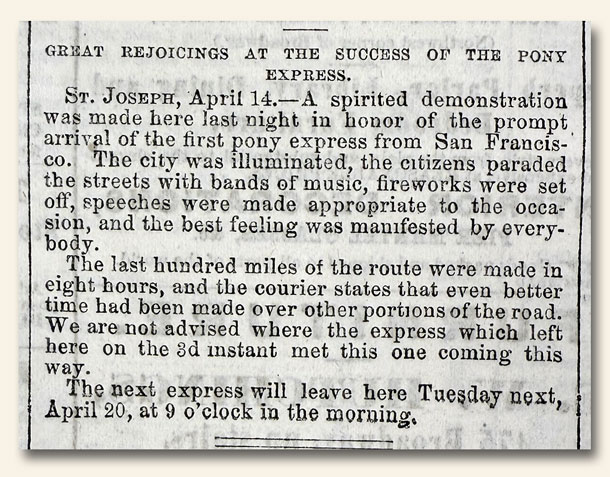
That’s exactly what happened to me recently while examining the April 16, 1860 issue of The Evening Post (New York). My original goal was to locate coverage of the completion of the first run of the Pony Express, and to my delight, I found not one but two front-page reports. Front-page coverage of such events is rare enough—but two related pieces? A true collector’s treat.
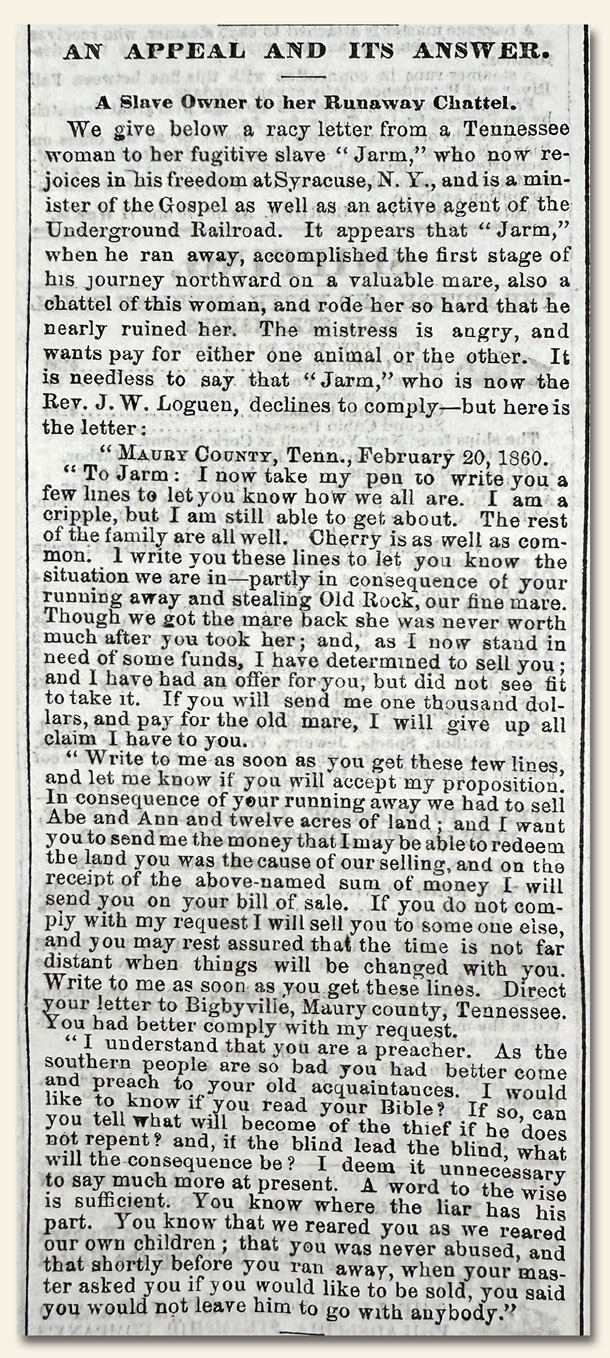
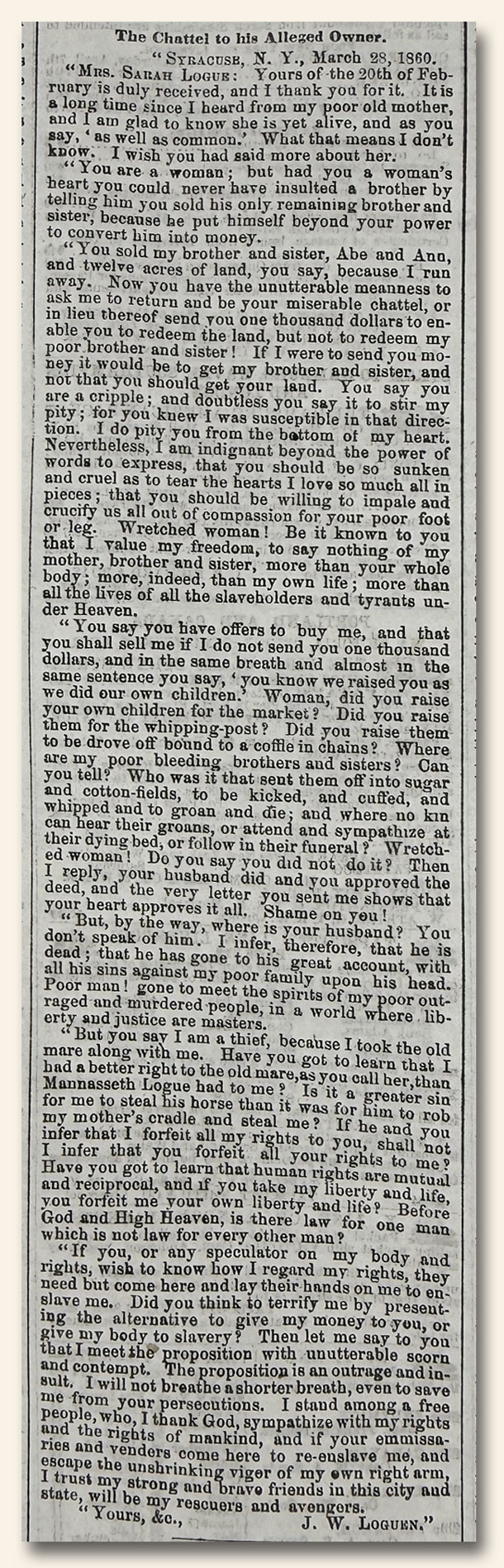
As I continued browsing for additional Pony Express material within the issue, I stumbled upon one of those unforgettable “hidden gems”: a printed exchange between a runaway slave and his former master. While not an account of a major historical event, few subjects evoke as much emotion as slavery, and reading such raw, personal correspondence in a period newspaper was deeply moving.
While the issue’s collectible value is likely anchored by its Pony Express reports, it’s this second discovery that continues to resonate with me. It serves as a poignant reminder—to me, my family, and my friends—of the immeasurable worth of every human being. Each of us, created in God’s image, carries equal and sacred value. Red and yellow, black and white—we are all precious in His sight.
All right, I’ll step down from my soapbox now. The photos below provide context for the discoveries mentioned above. Thanks for reading—and for sharing in the joy of finding history’s hidden treasures.
One of the Two Reports regarding the Pony Express
Correspondence Between the Runaway Slave and his former “Master”
They put it in print…
January 26, 2015 by TimHughes · Leave a Comment
It was such a tragedy to America when Alexander Hamilton, the founding father of the United States, chief of staff to Washington in the Revolutionary War, and America’s first Secretary of the Treasury, was killed in a duel, an event he opposed but honor forced him to participate. His words from shortly before the duel are telling: ““My religion and moral principles are strongly opposed to the practice of dueling…My wife & children are extremely dear to me…I am conscious of no ill will to Col. Burr distinct from political opposition…But it was, as I conceive, impossible for me to avoid it…”. The report is found in the “Middlesex Gazette” newspaper of July 20, 1804 (see below).
His wounds at the hand of Aaron Burr–who curiously was Vice President at the time–would prove fatal. His comments give evidence to the value of honor among the early patriots, even when they lead to a tragic end.