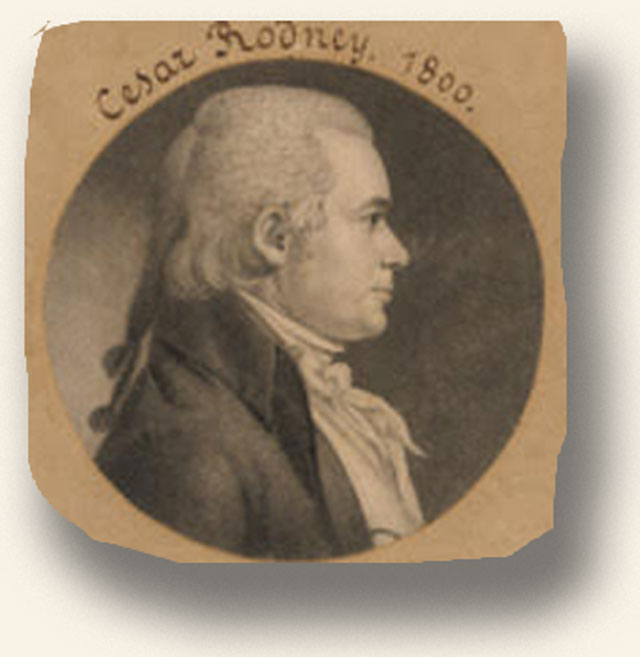
 We have all heard the poem… THE MIDNIGHT RIDE OF PAUL REVERE. Fewer of us may have heard of the midnight ride of Ceaser Rodney and yet, he is certainly an unsung hero in America’s courageous journey to Liberty.
Rodney’s most legendary moment came during the Second Continental Congress [1] in Philadelphia. By early July 1776, the Congress was debating Richard Henry Lee’s resolution for independence. Delaware’s three delegates were divided:
– Thomas McKean strongly favored independence.
– George Read opposed it.
– Caesar Rodney was absent in Dover, helping suppress Loyalist activity in Sussex County.
On the evening of July 1, 1776, McKean sent an urgent message to Rodney informing him of the deadlock. Rodney immediately set out for Philadelphia, roughly 70–80 miles away. Although his doctor forbade his going for his health’s sake, he rode through a severe thunderstorm all night. Despite suffering from lifelong asthma and facial cancer, he pushed through.
He arrived at Independence Hall on the morning of July 2, 1776, “in his boots and spurs,” muddy and exhausted. Thomas McKean reportedly met him at the door. Rodney voted with McKean, breaking the tie and allowing Delaware to support independence. This helped shift momentum; other colonies followed, leading to a unanimous vote. The formal Declaration of Independence was approved on July 4 and signed by Rodney on August 2. Rodney’s own account to his brother, Thomas, was incredibly modest: “I arrived in Congress (tho detained by thunder and rain) time enough to give my voice in the matter of independence.” Talk about an understatement! It just goes to show that some of history’s most courageous figures didn’t chase the spotlight—they just did what needed to be done.